
Benefits of the Mediterranean Diet
- At December 07, 2010
- By Katherine
- In Articles, Recipes
 1
1
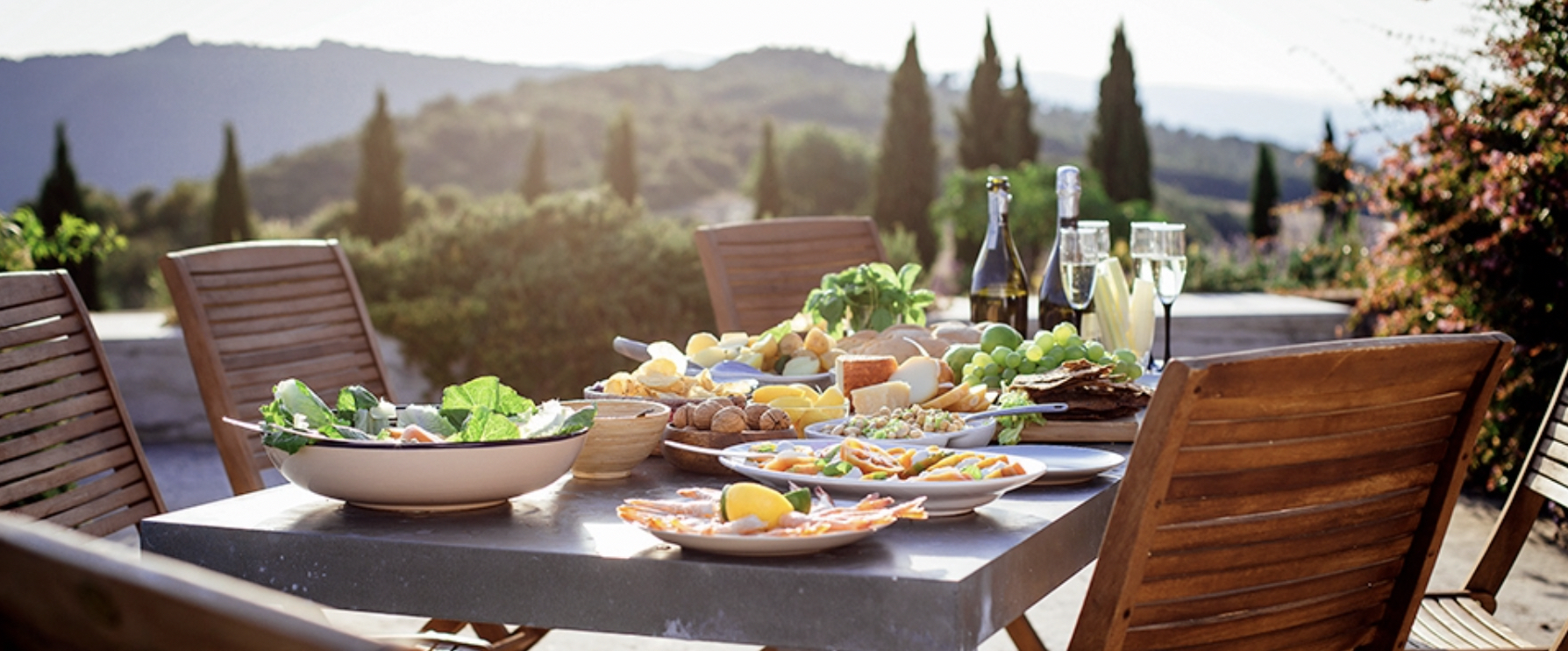
The Mediterranean Diet is widely known as one of the healthiest diets on the planet, maximizing your immune system, and significantly, lowering your risk of heart disease, cancer, diabetes, infections, neurological diseases, cognitive decline, and more. It’s a complex diet containing many foods which contribute to its health benefits. It’s plant-based, high in vegetables, fruits, legumes, whole grains, nuts, seeds, fish, low-to-moderate in dairy and meat (very low in saturated – animal – fat) and the occasional glass of wine. Olive oil is the diet’s principal source of fat. There is also a high level of physical activity.
It was first observed in the 1950s by nutrition scientist, Ancel Keys, that people in Greece, southern Italy, southern France, and other countries bordering on the Mediterranean, eating their local food, experienced few nutritional problems and rarely suffered from heart disease. Since then, many studies have confirmed that this mixture of foods, we now call the Mediterranean diet, has many important properties which may help prevent not only heart disease, but certain cancers, diabetes, Alzheimer’s, dementia, and even weight gain. These benefits are caused by establish research: a reduction of oxidation, and inflammation,
While every element in the Mediterranean diet is important, eating fresh, extra-virgin olive oil may trump everything. The type of fat you eat is critical to your health. This is because fat ends up in all of your body’s cells. It acts as a cell lubricant, improves flexibility and communication between cells, and is important for cell metabolism and gene expression. If the fat you eat is saturated – solid at room temperature – as in butter or animal fat – this decreases cellular flexibility and functioning. So, following the Mediterranean diet, but eating the wrong kind of fat, could reduce your health benefits immensely.
Olive oil, the staple of the Mediterranean diet, is unique in many ways. First, it’s made from a fruit which is exposed to the elements. This exposure forces olives to synthesize antioxidants to protect themselves and concentrates the valuable nutrients in the oil, which is high in compounds called polyphenols, Vitamin E and caretenoids. Polyphenols are also found in wine, tea and cocoa and are known for protecting the heart in many ways – reducing blood clotting, lowering bad (LDL) cholesterol, raising good (HDL) cholesterol and lowering blood pressure. Vitamin E is a well-known antioxidant, which helps prevent oxidation and cellular aging and may help prevent diseases such as cancer. Caretenoids are plant compounds giving the olive its color. They’re important for your immune system, your skin, your vision, bones, reproduction, and may reduce cancer risk. Olive oil is also high in heart-healthy monounsaturated fatty acid called Oleic acid.
To extract the oil from olives, which has been done since 3,000 B.C., it is cold pressed without heat or chemicals and this helps preserve the nutrients in the oil. Extra Virgin, the highest quality, is cold pressed only once. It maintains a certain acidity (below 0.8), which is important for its nutrient content, staying power, and superior flavor and cooking characteristics.
The stability and nutrient content of the oil depends on a variety of factors – harvesting and storage practices – but one of the most important factors I learned about in Italy was: freshness. Olive oils should be green and fruity. They should smell like fresh olives. Mediterraneans consider olive oil a seasonal food. And studies confirm that as days, weeks and months go by after harvest, the nutritional quality of the oil diminishes. “Eighteen months is currently considered to be the maximum time for keeping virgin olive oils after production,” according to the French Institute for Fats and Oils, and that’s only if harvest and storage conditions are ideal. Bruised olives, hot temperatures, oxygen, sunlight – all reduce nutrition and quality.
“Polyphenol content reduces by 40% within four months when olive oil is exposed to light,” said Armando Manni, CEO, MANNI Organic Exra-Virgin Olive Oil, at the New York University- and James Beard Foundation – sponsored conference I attended at the Villa La Pietra outside Florence, Italy last spring. “Olive oils must carry a date of harvest,” said Manni. Unfortunately, most olive oils sold in United States grocery stores don’t carry harvest dates. The rare bottle I found with a date will often be two or three years old! “Sold by” dates are not useful because some companies will make that date two or three years after harvest. Not good, according to the experts. I’ve found smaller companies will more likely carry bottles with harvest dates and I only buy olive oil from the most recent harvest – and use it up quickly!
Contrary to popular belief, eating the Mediterranean way is the most economical way to eat. It is a diet borne of poverty: the Mediterraneans ate mostly plants which were grown in their locality. This is all that they could afford and it happened to be the healthiest diet on the planet. Several studies have confirmed the cost savings of this way of living and eating:
* Researchers from the Nutraceuticals and Functional Foods Institute at Laval University studied 73 healthy women in free-living conditions for 12 weeks and found that adherence to a Mediterranean diet led to a reduction in daily dietary cost and overall caloric density concluding that increased dietary cost is NOT a barrier to the promotion and adoption of a Mediterranean diet. (Journal of Nutrition 2008;138:54-9)
* Researchers from Glasgow found that after six-weeks, a Mediterranean dietary intervention not only reduced pain and stiffness in a group of rheumatic women but presented an effective method for increasing the daily consumption of healthy foods at low cost. (Annals of the Rheumatic Diseases 2007;66:1239-43)
* After a cost utility analysis comparing the Mediterranean diet to a prudent Western diet over a time frame of ten years, a team from Monash University concluded that the Mediterraean diet was highly cost-effective for persons after a first acute myocardial infarction. They went on to state that replicating the Mediterranean diet intervention in other countries and health settings could substantially improve health outcomes and reduce the use of health care resources and that the Mediterranean Diet represented an important opportunity for cost-effective preventive care. (Journal of Nutrition 2006;136:1879-85)
For more information on the cost of eating healthy, see “Fit and Frugal.”
See the new Mediterranean Diet Pyramid.
“Olive oil should be in an opaque container (not clear glass) as sunlight destroys it. Store it in a cool, dark place, tightly covered after using it – away from heat and sunlight,” says Dennis Lurgio, President of Imports, LLC of Narragansett, Rhode Island (www. dellortooil.com). Mr. Lurgio imports award-winning, fresh extra-virgin Oleificio Dell’Orto Olive oil from his ancestral village in the Campagnia region of Italy. Lurgio only sells bottles from the most recent harvest, which he says will usually be in Fall or Winter – and his bottles carry the harvest dates.
“Olive oil buying is personal and taste-driven. You can’t go wrong with a Tuscan or Umbrian olive oil, which are strong and flavorful. It’s great for anything, dipping bread, salad dressing, cooking. Sicilian oils may be stronger, Ligurian oils may be lighter and better for fish,” says Bill Menard, Owner of Bella Italia, an Italian goods and gourmet foods store in Bethesda, Maryland. Menard, who is passionate about Italian food, says most of his bottles are harvest-dated, but he keeps track of harvest and bottling dates of all of his oils, knows all of his producers, who include Italian families in the olive oil business for hundreds of years.
The following is a typical Mediterranean dish…
Katherine’s White Beans with Garlic and Basil
Step-by-Step Pictorial Guide to Katherine’s White Beans with Garlic and Basil
excerpted from Diet Simple
My friends love these beans. I love these beans. They’re always a hit. Every time I serve them, I’m asked (begged) for the recipe. They taste deceptively rich and are easy to make. The garlic and abundance of fresh basil added at the end fills the house with irresistible aromas. This is a warm and satisfying dish which can be eaten in many ways. My friend David uses them as a dip (what can I say, he`s a shrink and a priest!). My (very healthy) friend Alan loves them so much he eats them for breakfast (another weirdo)! I bring them to pot lucks to serve alongside lean ham.
I love to fill a large plastic container with them in the frig, ladle a heap into a microwave-safe bowl, and heat them up for lunch along with a slice of hearty whole grain bread topped with smoked turkey, lean ham or light cheese (or all three) – and some crunchy lettuce. One of our favorite ways to eat these beans is with spicy sausage. Just slice a spicy chicken sausage of your choice into a microwave-safe bowl, smother with the beans and pop in the microwave. Together with a greens salad and a tart dressing, you’ve got a winning combination.
I usually double the recipe so I have plenty of servings during the week. Without any meat, it’ll last more than a week in the frig. Your colleagues at the office will be jealous when they smell your private bowl heating up. Let them eat cake!
4 servings:
1/2 pound dried small white (cannellini) beans, or 24 oz. canned rinsed bean
1 Tbsp Olive Oil
1-1/2 Onion, Chopped
4 Garlic Cloves (more or less to taste– I double it)
1 Quart defatted Chicken Stock (2 Cups if using canned beans)
Salt to Taste
12 Oz. (3 medium) fresh or canned Tomatoes, drained, peeled and chopped
1 Large Handful of Fresh Basil
Juice from 1 Lemon (1/4 cup)
Freshly Ground Pepper
If you’re using dried white beans:
Soak the beans in one quart of water overnight or up to 24 hours. Drain and rinse. Add one quart Chicken Stock (or more if you like the dish more soupy) to the beans along with one clove of garlic and 1/2 onion. Bring to a boil, reduce heat, cover, and simmer 1-1/2 hours or until the beans are almost tender. Add more water or stock to keep moiste. Add salt to taste and finish cooking until beans are tender.
Continue with your cooked dried beans or start here if you’re using canned white beans:
Heat the oil in a large, heavy soup pot or casserole and saute the remaining one onion and garlic over low to medium heat for 10 or 15 minutes or until soft. Add the tomatoes, and more salt to taste and bring to a simmer. Simmer about ten minutes then add the beans with their cooking liquid and simmer 15 – 20 minutes. If you used canned beans, rinse the beans then use enough stock to keep the beans moiste while cooking. At the end of the cooking time, add the fresh basil (it will get bitter if overcooked), fresh lemon juice, and freshly ground pepper. Mix together. Then I let the beans sit at room temperature overnight to let the flavors blend before I refrigerate and heat to serve.
You can also add greens to this dish for more authentic Mediterranean flavors and nutrition.
Nutritional Information:
Calories 290
Total Fat 4.5g 7%
Saturated Fat 0.5g 4%
Cholesterol 0mg 0%
Sodium 180mg 8%
Total Carbohydrate 45g 15%
Dietary Fiber 16g 63%
Soluble Fiber 4.15 g
Omega 3 Fatty Acids 0.21 g
Sugars 9g
Protein 19g
Vitamin A 15%
Vitamin C 60%
Calcium 15%
Iron 35%
Adapted from Mediterranean Light, by Martha Rose Shulman (Bantam Books, 1989) Mediterranean Light is one of my favorite cook books and I have been recommending it to clients for years. I know you’ll love it too.
For more recipes, buy Diet Simple: 192 Mental Tricks, Substitutions, Habits & Inspirations (LifeLine Press, 2004)
Kjerstin’s Crab Cakes
- At December 07, 2010
- By Katherine
- In Recipes
- 0
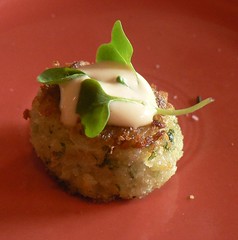
By stu_spivack
MY MOTHER’S recipe for crab cakes is very light, but tastes rich. These crab cakes are versatile, too. I’ve served them for brunch alongside fried eggs and hash browns and they make a great crabcake sandwich when placed between slices of toast. You can hold the crabcake mixture in the refrigerator for up to three days and make fresh crabcakes in an instant.
| Ingredients | 4 Servings | |
| 1 pound crab meat, fresh or canned 1/4 cup breadcrumbs 1 egg 2 tablespoons reduced fat mayonnaise 1 tablespoon bay seasoning |
1/2 tablespoon mustard juice of 1 lemon dash of Worchestershire sauce dash of cayenne pepper a few drops of Louisiana-style hot sauce (or Tabasco) |
|
Directions |
||
|
||
| Per Serving | ||
| calories 230 total fat 10g saturated fat 1.5g |
carbohydrate 7g dietary fiber 0g protein 26g |
|
Holiday and Party Strategies
- At December 06, 2010
- By Katherine
- In Articles
- 0
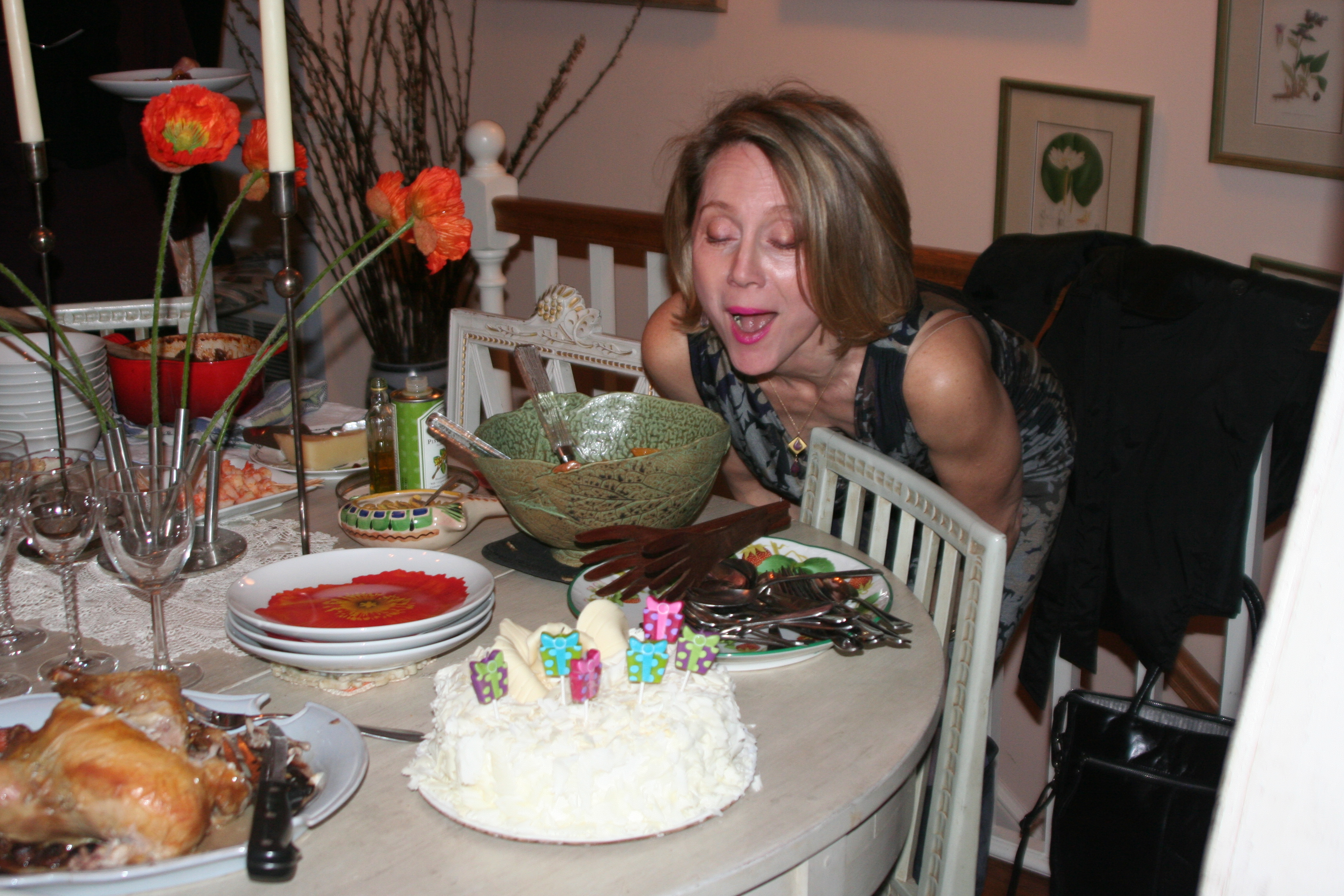 First, if you don’t care about gaining those usual 5 holiday pounds, do not read any further! I believe this is a legitimate option … Enjoy your holiday with abandon and come see me in January! If, on the other hand, you’d like some ideas for at least maintaining your health and weight this season, read on…
“The social butterflies among us are very fortunate in some ways. You’re often out and about, meeting new friends and entertaining old friends at home. Life is full. Life is grand!” says Katherine in Diet Simple.
“But then there’s the little (or not so little) issue of weight. And what about your hard-won health gains: your lower cholesterol, blood pressure, and blood glucose? The increased energy level you’re enjoying so much? The beautiful clothes you’re finally able to fit into (remember telling me how fun it was to shop in your own closet?)? All that hard work! Festivities can put a dent in even the staunchest and most determined health-gain and weight-loss resolve. Just about every party, after all, revolves around food… Fattening, delicious food, studies show, we’re naturally attracted to. Just thinking about all the calories can make me feel heavier!” says Katherine in Diet Simple.
Parties and holidays are a time for celebating life and for bringing families and friends together. No one’s perfect, and it seems almost antisocial to obsess over your weight when everyone around you is having such a great time. Still parties present a lot of opportunities for overindulging. Even if you’ve managed to master the daily routines of physical activity, eating in moderation and so on, parties and holidays don’t come around that often. Which means we don’t have as much practice reconciling social obligations and our natural attraction to fattening and delicious foods with our desire to maintain the same waist size.
Parties are not – I repeat NOT – only about food. They should not even be mainly about food. Not convinced? Well, take a minute to make an inventory of the things that matter to you – that really touch your heart around special occasions and holidays. Here are some of the thing that I and my clients have decided are important:
*Beautiful holiday decorations and music,
*Showing kindness to others and making sacrifices for those less fortunate,
*Getting together with friends and family you rarely have time for,
*Observing religious significance of holidays,
*Attending holiday plays and concerts,
*Free time for special exhibits, ice skating and skiing,
*Volunteering at the local homeless shelter.
*Looking your best and feeling confident and energetic.
Even without knowing you personally, I can say with some confidence that your list of priorities is probably pretty similar. Do we think about food when we go to parties or celebrate the holidays? Of course, but there is so much more! More tips on prioritizing…
Tips for Celebrating from Diet Simple…
* Prioritize what is most important to you about the holiday (see list above!),
* Remember, the “holidays” are only 3 days, NOT every day between Thanksgiving and New Year,
* Plan your holiday eating carefully. Savor and enjoy to the fullest every bite … every calorie,
* Prioritize your high calorie items. Choose three of your favorite holiday foods and allow yourself to enjoy them. Don’t waste calories by sampling everything,
* Prioritize your parties. Choose one or two of your favorite parties during the week and allow yourself to indulge at them. Eat before going to the other parties. If you indulge at, say, all five parties you’re invited to in one week, you may gain more weight than you would feel comfortable with,
* ALWAYS eat normally and on time the day of the party … Don’t starve yourself during the day so that you irrationally overeat everything in sight once you get there,
* Eat a snack just before arriving at your party,
* Once you’ve arrived at the party, grab some sparkling water and wait at least 30 minutes before making a food choice. This gives you time to relax, get comfortable in your surroundings and to scope out the food offerings rationally,
* Location! Location! Location! Position yourself away from the food table. Focus on conversation, not eating,
* ALWAYS follow the “Mindful Eating Techniques” … Before eating anything, take the food to a table, sit down, take three or four deep breaths, relax, focus full attention on the food while you are eating. If you want to talk with someone, put the food down and talk. When you want to eat, put your full attention on the eating. Notice the point at which you feel comfortable not full. As soon as you are comfortable, stop eating. Enjoy and savor every bite. Don’t waste any calorie by not paying attention to what you are eating,
* When you are in control of the party, try new healthy recipes to serve your family or guests. You’ll be surprised how much this is appreciated,
* Anticipate situations and plan your strategy ahead of time,
* Before the event, visualize yourself using your planned strategies and leaving the party successful,
* Reward yourself for handling the situations as you planned,
* Leftovers are what put weight on. Splurge on the holiday, then get back to normal eating asap.
* Keep up your regular physical activity, even increase it if you can (and why not since your on vacation?), to offset the extra calories.
Do’s and Don’ts for Holiday Buffets
excerpted from one of Katherine’s SHAPE Magazine articles
Been invited to a holiday buffet? Don’t panic! I’ve surveyed the trendiest holiday buffets to come up with a list of dos and don’ts so you don’t leave the party stuffed with 2,000 calories beneath your belt and 2 pounds heavier the next morning. Which reminds me: This is not the time to be shy, so wear confining clothing. There’s nothing like a death grip around your waist to remind you it’s time to leave the Swedish meatballs behind and start mingling.
Read closely. You may be shocked to find that even if you stick with all the “dos” on my list, your calories will probably top anything you’d be eating at home with your standard 600 calorie dinner. So, be picky. Don’t waste calories when you can enjoy yourself flirting… or caroling!
1. DO! Add sparkling water and a twist of lime to your two ounces of white wine. It’s only 40 calories!
DON’T! Get started with several glasses of wine at 100 calories each!
2. DO! Start with healthy crudites: dip carrot and celery strips – or any other veggies – in salsa!
(each dipped finger-sized veggie stick is about 7 to 10 calories and no fat)
DON’T! Start with chips and dip. Did you know that each dipped chip could set you back 25 calories and 2 grams of fat?? (was that about 10 that you just gulped down in 2 minutes flat?)
3. DO! Savor Smoked Salmon on a whole grain cracker (about 35 calories and 2 grams of fat for 1/2 ounce of salmon and one cracker)
DON’T! Dig into the crispy and creamy appetizers. Bet you didn’t know that tiny egg roll packs in 200 calories and 10 grams of fat! The cheese and crackers? You jest! Each tiny slab (1/2 ounce) of cheese with a Town House cracker is 65 calories and 6 grams of fat
4. DO! Take the edge off your appetite with the filling yet spicy Minestrone or Vegetable Soup at 150 calories and 2 grams of fat per 8-ounce bowl.
DON’T! Fill your bowl with the Seafood Bisque. It’ll pack on 300 calories and 10 grams of fat per 8-ounce bowl.
5. DO! Partake in the chicken or shrimp skewers; the calories and saturated fat are minimal.
DON’T! Nibble on buffalo wings. Your calories will be flying into the stratosphere with those wings – at 100 calories and 7 grams of fat each – and that’s before frying and dipping (add 50 each)!
6. DO! Start with a fresh salad. Heap your plate with fresh, young greens, sliced tomatoes and onions (25 calories at the most) Top with 1 Tbsp of vinaigrette (50 – 75 calories, 5 – 9 grams fat)
DON’T! Start with garlic bread (200 calories for two small slices)
7. DO! Head for the Turkey Carving Station. Enjoy 3 ounces of sliced turkey (imagine a deck of cards). The protein hit will take the edge off your appetite for just 105 calories and 3 grams fat.
DON’T! Head for the Prime Rib Carving Station. It’ll set you back 300 calories and 24 grams of fat.
8. DO! Walk on the Wild Side with a Side of Wild Rice! Only 80 calories and 1 gram of fat per 1/2 cup serving
DON’T! Stuff yourself with Stuffing! About 120 calories and 5 grams of fat per 1/2 cup serving
9. DO! Pile on the Grilled Vegetables like red peppers, mushrooms, and zucchini. They’re only 25 calories per 1/2 cup serving
DON’T! Get creamed with the Creamed Spinach. The cream and butter adds 150 calories to the measly 25 for the spinach
10. DO! Spoon up sorbet. It’s cool, it’s refreshing – It’s only 100 calories and zero fat per 1/2 cup.
DON’T! Spoon up the Haagen Daz! It’s 250 calories and 20 grams of fat per 1/2 cup
11. DO! Indulge in a sliver of pumpkin pie. It’s creamy deliciousness is relatively abstemious at 300 calories and 14 grams of fat for 1/8 of a 9” pie
DON’T! Indulge in a sliver of pecan pie. It’ll set you back 500 calories and 27 grams of fat!
12. DO! try a meringue cookie or ginger snap. They’re only about 30 calories a piece
DON’T! grab a chocolate chip cookie with nuts. Even a tiny one is 120 calories.
13. DO! Enjoy hot herbal tea as a night cap to help you sleep (zero calories, zero fat!)
DON’T! Indulge in a brandy. It’s 160 calories for just a 1-1/2 ounce jigger – and that’s before the cream!
Isn’t your priority looking and feeling your best?
Butternut Squash
- At December 06, 2010
- By Katherine
- In Articles, Recipes
- 0
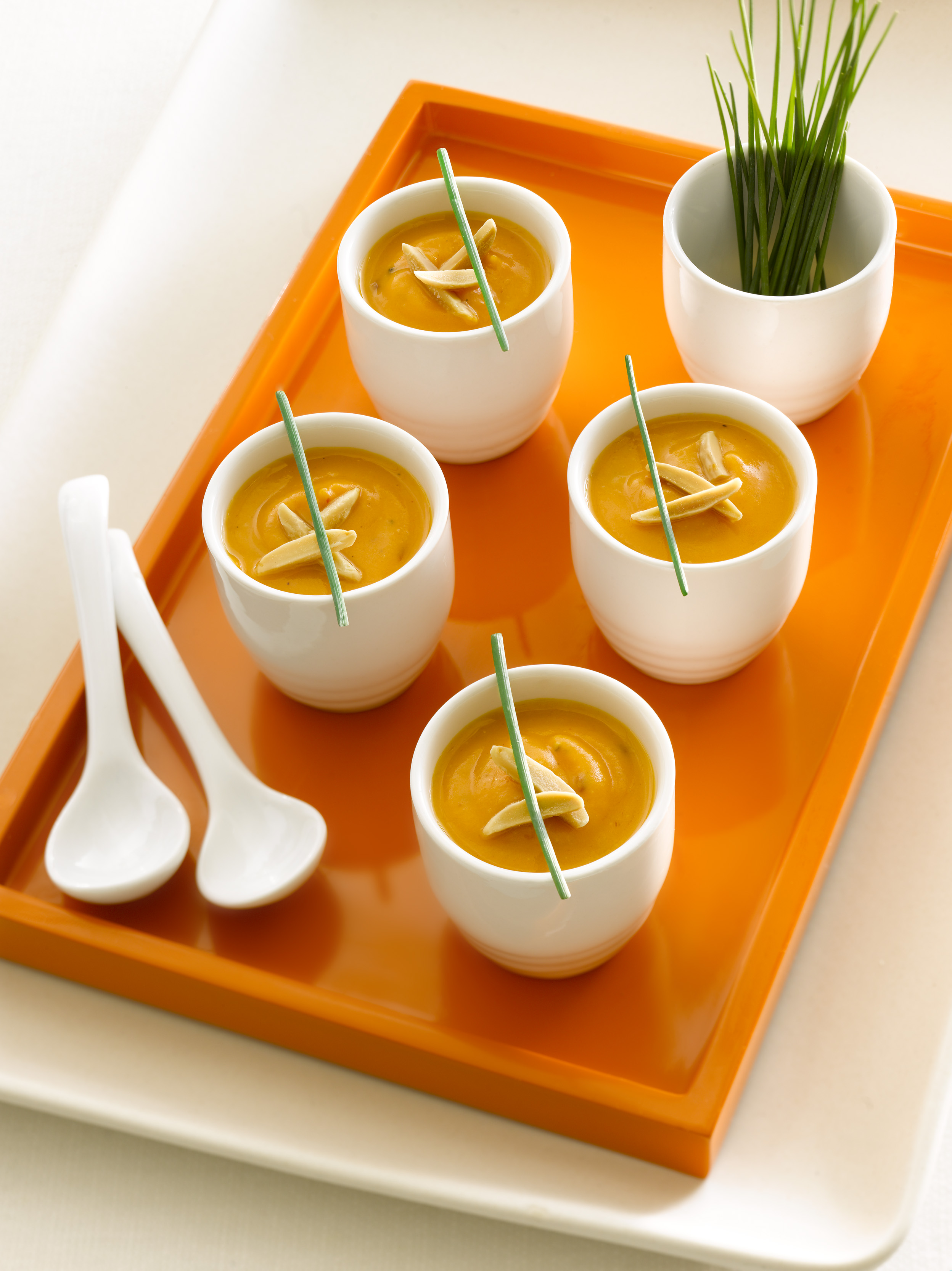
photo by Almond Board CA
By Katherine Tallmadge, M.A., R.D.
The coming of fall is symbolized, for each of us, by different events and moments: the first turning of leaves, a bracing snap of cool air, rediscovering forgotten favorite sweaters, children returning to school, the palpable shortening of September and October days.
For me, one of the harbingers of autumn is the huge winter squashes at my local farmer’s market. Squash, technically a fruit, comes in a dazzling array of sizes, shapes and flavors. Butternut is one of the most popular, flavorful and nutritious.
Winter squashes, particularly butternut, are far superior to the summer squashes and zucchini in taste and nutrition because of their deeper color and higher carbohydrate and nutrient content. The most potent squashes are the more deeply colored varieties, especially pumpkin and butternut. Their color is provided by one of the most powerful nutrients: beta-carotene.
Characterized by a chubby bowling pin shape, a buff/beige color on the outside and a deep orange on the inside, the butternut is an exceptional source of beta-carotene, an antioxidant which converts to vitamin A in your body. Beta-carotene is critical for your immune system, your skin, your vision, bones, reproduction, and more. Studies show that people who eat foods high in beta-carotene and people with high blood levels of beta-carotene have a lower incidence of certain cancers. But you won’t get the same results with a beta-carotene supplement. Study after study has shown disappointing results with the supplements. So, only the food will do! But that’s a good thing for us squash lovers.
Apparently, each squash is a bustling little factory of nutrients and phytochemicals, the plant compounds with potent powers of healing. When acting synergistically in a food, these nutrients provide a more powerful health punch than the individual nutrients alone. Some of the most important nutrients in squash are antioxidants, such as beta-carotene, alpha-carotene and vitamin C, which are powerful substances believed to reduce inflammation, improve immune function and help prevent heart disease and cancers, among other benefits.
But there are other good reasons to eat butternut squash.
Butternut squash is also a great source of fiber (good for your gastrointestinal system), potassium (important for your heart and lowers blood pressure), vitamin C (a great antioxidant important for your skin, bones and healing), magnesium (important for muscle function, the heart, bones, blood clotting, and improves diabetes),manganese (important for metabolism and bone formation) and calcium (important for your heart and bones). And a big plus: it’s low in calories, only 82 calories in a cup (7 ounces) of baked squash cubes.
Interestingly, when you buy canned pumpkin pie filling, you are most likely buying butternut squash – not pumpkin squash, according to Molly Jahn, professor of plant breeding at Cornell’s College of Agriculture and Life Sciences. Jahn has developed one of the newer and most flavorful varieties of butternut squash, called “bugle.” The bugle, smaller than the usual butternut (3 –4 pounds rather than 4 – 5 pounds) has superior disease resistance and health.
”A healthier plant makes a tastier product,” says Jahn.
The average grocery store probably will not label the variety of butternut squash. So, I encourage you to buy from your local farmer or farmer’s market, where they are sure to know if their butternut squash is a bugle.
The darker the butternut, the more ripe and ripeness adds sweetness, flavor and superior nutrition. You can even eat the seeds of the butternut squash, but the seedcoat should be removed as it’s quite hard. There are known health benefits of pumpkin seeds (pepitas) and, while butternut squash seeds haven’t specifically been studied as much as pumpkin seeds, the benefits are probably similar.
Bon Appetit!
Katherine’s Butternut Squash Soup with Curry and Ginger
About 6 servings
Ingredients:
1 Small Butternut Squash
4 Cups Water
2 Tbsp Canola Oil
1 Cup Chopped Sweet Onion (about 1 medium)
1 Clove Garlic, crushed (2 cloves, if you like it spicy)
1 tsp Curry Powder (2 tsp, if you like it spicy)
1 Tbsp fresh Ginger, about 2 inches, grated (2 Tbsp, if you like it spicy)
1 Cup Chicken or Vegetable Stock
Salt and Freshly Ground Pepper to taste
Cut Butternut Squash in half, lengthwise. Scoop out seeds. Place squash face down in baking pan with 4 cups water. Bake at 350 for 45 minutes or until soft when pierced by a fork.
While the squash is baking, prepare the aromatic vegetables and spices: Place the oil in a large iron skillet or soup pot on medium-high. Add onions and garlic and fry until golden. Stir in curry powder, ginger, and a pinch of salt and simmer on low for a few minutes.
When the squash has cooled to the touch, pour all the water in which the squash was cooked into the skillet and stir to scrape up the bits of aromatic vegetables and spices. Scoop out the butternut squash meat, leaving the skin, and stir into the mixture in the skillet. When room temperature, puree the vegetable and spice mixture in a blender or food processor with the broth. Better yet, just insert the Cuisinart Smart Stick (my new favorite toy) into the pan, using an up-and-down motion until ingredients are pureed…. So easy, mess-free and YUMMY!
NOTE: Adjust seasonings by adding more salt, pepper or spices, if desired. Adjust consistency by adding more water or broth. Also, any similar winter squash will work well if Butternut is not available.
The entire pot of soup makes about 6 cups and is about 500 calories.
Griffin Market* Butternut Squash Soup
Serves 10 – 12
5 lbs Butternut Squash
3 Tbsp Olive Oil
2 Medium Onions, coarsely chopped
4 Sprigs Fresh Thyme
1 Pinch Allspice
2 Pears, peeled, cored and chopped
2 Qts. Chicken or Vegetable Stock
Salt and Pepper to taste
Toasted Pumpkin Seeds or Pecans for Garnish
Cut the butternut squash into pieces no more than one inch thick, discarding seeds. Place squash pieces in a roasting pan and bake at 425 degrees F for 45 minutes or until the squash is very soft. Remove from the oven and let cool slightly.
Pour the olive oil into a large saucepan or stockpot over medium heat. Add the onions, thyme and allspice and cook until the onions are light gold in color. Add the onions, thyme, and allspice and cook until the onions are light gold in color. Add the chopped pears and stock and raise the heat to bring the mixture to a gentle simmer.
Scoop the squash pulp from the skins and add to the pot. Simmer for about 15 minutes. Allow soup to cool for 30 minutes, remove the thyme sprigs and puree in batches in a blender on high speed until very smooth. Do not overfill the blender. Taste the soup and add salt and pepper. The amount will vary based on how much salt your stock contained. Serve immediately or cool and divide into freezer containers.
Other varieties of winter squash such as hubbard, acorn, sugar pumpkin, or delicate may be substituted. Roasting time will be shorter for the thinner walled squashes.
*Laura and Ricardo Bonino were the owners of Griffin Market in Georgetown, which is sadly now closed. They specialized in all things Italian. Ricardo and Laura met at Roberto Donna’s Galileo where Ricardo was the sommelier (hence the fine selection of wines found in Griffin) and Laura worked as a chef at Galileo’s exclusive Laboratorio (hence the delicious freshly made delicacies available, too). They now own an Italian restaurant in South Carolina!
Super Fruits & Vegetables
- At December 06, 2010
- By Katherine
- In Articles
- 0
Every Sunday morning I rush to my Farmer’s Market (www.FreshFarmMarkets.org) to taste the latest local delicacy. It’s the highlight of my week. Lately I’ve been buying several quarts of strawberries weekly, but starting soon, I’ll have cherries, blueberries, raspberries, blackberries, plums, peaches, and more to choose from!
This is the perfect time of year to enjoy the most ripe, fresh, flavorful fruits and vegetables – as you can get just about everything you need locally. Whenever my clients make a large purchase at their Farmer’s Market, they see a nice reduction on their scale. This is because fruits and vegetables are the lowest calorie foods you can eat. But they also give you plenty of volume from their naturally high water content – and this helps you feel nice and full.
Fruits and vegetables not only help you lose weight, but improve your health dramatically.
More than 200 studies of various research designs have revealed a strong association between diets high in vegetables and fruits ( five cups daily) and a lower risk for cancer. This is why the National Cancer Institute recommends a minimum of five servings of fruits and vegetables daily.
The American Heart Association is also getting into the act. Its latest guidelines place more emphasis on eating fruits, vegetables, and whole grains, rather than on restricting fat because of fruits’ and vegetables’ influence on the prevention of heart disease and high blood pressure.
Many other health organizations, as well as the United States Department of Agriculture, are getting on the bandwagon and recommending a plant-based diet as protective against chronic diseases.
The research is clear and compelling. We‘ve known the positive statistics for decades. (Of course, our grandmothers knew them before the scientists did… and Thomas Jefferson, before that!) But scientists are just beginning to understand why fruits and vegetables prevent disease so effectively.
Apparently, each fruit and vegetable is a little factory of nutrients and chemicals — called phytochemicals — with potent powers of healing. An apple alone contains more than 150 beneficial, disease-fighting chemicals. And these are substances you can’t get from a pill. They act synergistically in the foods so the whole is greater than the sum of its parts. While an apple has only 6 mg of Vitamin C, it has 1,500 mg of Vitamin C anti-oxidant activity because of the interaction of the Vitamin C and the other nutrients in the apple.
Research has found that when some substances are added together, they boost each other and produce more than a double effect. This may explain why studies on supplements have failed to show the same health-enhancing and cancer-preventive effects as a diet high in vegetables and fruits — the whole foods..
The phytochemicals in fruits and vegetables, when eaten whole, have antioxidant effects, stimulate the immune system, enhance cancer-fighting enzymes, influence hormone metabolism positively, and even have antibacterial and antiviral effect. Phytochemicals are the compounds found in plants. (“Phyton” means “plant” in Greek.) By definition, all plants contain them. The term technically includes vitamins, minerals and fiber. But in the common usage, it has come to refer to all the other compounds in plants that our bodies have evolved uses for. Many of these compounds are potent antioxidants. Others are anti-inflammatories, and still others stimulate the body’s detoxification enzymes. You get them in sufficient quantities by eating the 5 cups of fruits and vegetables that the USDA recommends. All fruits and vegetables contain them–but the greatest concentration of beneficial phytochemicals is generally found in the most intensely colorful fruits and vegetables. (Notable exceptions would be onions, garlic and cauliflower.)
More than 900 different phytochemicals have been found in plant foods and more will be discovered. These protective plant compounds are an emerging area of nutrition and health, with new research reported every day.
Recommended book: The Color Code: A Revolutionary Eating Plan for Optimum Health
Powerful Fruits and Vegetables That Hold Promise for Human Health
While eating a variety of fruits and vegetables is recommended for maximum health, there are some which we call the “superstars,” which you should try to eat daily.
1. Broccoli Family
People who regularly consume brussels sprouts, cabbage and broccoli have reduced incidence of certain cancers, especially cancer of the colon. They actually provide potent anti cancer enzymes in the body.
2. Tomatoes
Men who consumed 10 or more servings of tomato products a week had a 35% decrease in risk of prostate cancer relative to those who consumed 1.5 servings or fewer per week. This is largely attributed to “lycopene” in the tomatoes, which is also in other red fruits such as watermelon, pink grapefruit and guava. Men with lycopene levels in the top 20% had a 46% decrease in risk of heart attack compared to those in the bottom 20%. Lycopene is a potent scavenger of gene-damaging free radicals.
3. Dark Green Leafy Veggies (kale, spinach, collard greens and turnip greens)
People who consumed spinach or collard greens 2 to 4 times per week had 46% decrease in risk of age-related macular degeneration (the leading cause of preventable blindness) compared to those who consume these vegetables less than once per month. This is attributed to the phytochemical “lutein” in the carotenoid family. Absorption of carotenoids in your body is increased by cooking and by the presence of fat (so cook in a little healthy olive or canola oil!)
4. Garlic
The Iowa Women’s Study found the risk of getting colon cancer was decreased by 32% in realistic periodic consumption of garlic. This is largely attributed the the “alliinase” found in garlic. Allinase is preserved in foods if garlic is crushed and allowed to stand for 10 minutes before it is cooked. This result should also be found in other “Allium” family foods: onions, leeks, chives, scallions.
5. Berries and Red/Purple Grapes
Red/Purple fruits and vegetables such as red and blue grapes, blueberries, blackberries, cherries, strawberries, beets, eggplant (skin), red cabbage, red peppers, plums and red apples are loaded with powerful antioxidant called “anthocyanins.” They delay cellular aging and prevent formation of blood clots. Full of potent antioxidants and anti-inflammatory compounds. In animal studies.
“In tests at Tufts University, blue foods quenched more free radicals than any other foods. Blueberries and blackberries were clear winners among fresh fruits.”
(“The Color Code: A Revolutionary Eating Plan for Optimal Health” by Joseph, Nadeau and Underwood)
Music for the New Year
- At December 06, 2010
- By Katherine
- In Articles
- 0
Music and Poetry for the New Year!
Music and poetry can move us in ways so mysterious, all we know is we feel better after hearing it…
A few of my personal favorites To Start the Day…
“Your Are the New Day” by the King’s Singers
“When You Wish Upon A Star” by Linda Rondstadt
“My Favorite Things” scene in Sound of Music sung by Julie Andrews
“Zip-A-Dee–Doo-Dah” with Uncle Remus
Some Favorite Poems and Verses from the
National Cathedral New Years’ Retreat…
Let us not look back in anger
Nor forward in fear,
But around in awareness.
by James Thurber
I will be truthful.
I will suffer no injustice.
I will be free from fear.
I will not use force.
I will be of good will to all.
by Mahatma Gandhi
In the Middle of the Road
In the middle of the road there was a stone
there was a stone in the middle of the road
there was a stone
in the middle of the road there was a stone.
Never should I forget this event
in the life of my fatiqued retinas.
Never should I forget that in the middle of the road
there was a stone
there was a stone in the middle of the road
in the middle of the road there was a stone.
by Carlos Drummond de Andrade (trans by Elizabeth Bishop)
QUESTION: What are some of the stones in the road that you experienced this past year?
The Place I Want to Get Back To
is where
in the pinewoods
in the moments between
the darkness
and first light
two deer
came walking down the hill
and when they saw me
they said to each other, okay,
this one is okay,
let’s see who she is
and why she is sitting
on the ground like that,
so quiet,as if
asleep, or in a dream,
but, anyway, harmless;
and so they come
on their slender legs
and gazed upon me
not unlike the way
I go out to the dunes and look
and look and look
into the faces of the flowers;
and then one of them leaned forward
and nuzzled my hand, and what can my life
bring me that could exceed that brief moment?
For twenty years
I have gone every day to the same woods,
not waiting, exactly, just lingering,
Such gifts, bestowed,
can’t be repeated.
If you want to talk about this
come to visit. I live in the house
near the corner, which I have named
Gratitude.
by Mary Oliver from “Thirst”
Celebration
Brilliant, this day – a young virtuoso of a day.
Morning shadow cut by sharpest scissors,
deft hands. And every prodigy of green –
whether it’s ferns or lichens or needles
or impatient points of buds on spindly bushes –
greener than ever before. And the way the conifers
hold new cones to the light for the blessing,
a festive right, and sing the oceanic chant the wind
transcribes for them!
A day that shines in the cold
like a first-prize brass band swinging along
the street
of a coal-dusty village, wholly at odds
with the claims of reasonable gloom.
by Denise Levertov from “This Great Unknowing Last Poems”
Otherwise
I got out of bed
on two strong legs,
It might have been
otherwise, I ate
cereal, sweet
milk, ripe, flawless peach. It might
have been otherwise,
I took the dog uphill
to the birch wood.
All morning I did the work I love.
At noon I lay down
with my mate. It might
have been otherwise,
We ate dinner together
at a table with silver
candlesticks. It might
have been otherwise.
I slept in a bed
in a room with paintings
on the walls, and
planned another day
just like this day.
But one day, I know,
it will be otherwise.
by Jane Kenyon from “Otherwise”
QUESTION: What are some special moments, people, places last year – or in your life – you’ll always cherish?
The Poet’s Occasional Alternative
I was going to write a poem
I made a pie instead. It took
about the same amount of time
of course the pie was a final
draft. A poem would have had some
distance to go. Days and weeks and
much crumpled paper
the pie already had a talking
tumbling audience among small
trucks and a fire engine on
the kitchen floor
everybody will like this pie
it will have apples and cranberries
dried apricots in it. Many friends
will say why in the world did you
make only one
This does not happen with poems
Because of unreportable
sadness I decided to
settle this morning for a re-
sponsive eatership. I do not
want to wait a week a year a
generation for the right
consumer to come along
by Grace Paley from “Begin Again: Collected Poems”
The Goose
Do you want to know why I am alive today?
I will tell you.
Early on, during the food shortage,
Some of us were miraculously presented
Each with a goose that laid a golden egg.
Myself, I killed the cackling thing and I ate it.
Alas, many and many of the other recipients
Died of gold-dust poisoning.
by Muriel Spark from “All the Poems of Muriel Spark”
QUESTIONS: Think back on choices you have made this year… Was there a time you chose immediate gratification over delayed gratification or vice versa?… Was there a time when you made an unconventionalor creative choice?
Crossing the Threshold Into the New Year
- At December 06, 2010
- By Katherine
- In Articles
- 0
What are your hopes, dreams and desires for 2012? The new year is an important time to consider the year that has past and to begin moving intentionally into the future.
One New Year, I attended an inspiring National Cathedral College – sponsored event, “Crossing the Threshold: A Contemplative New Year Retreat.” I have tried to describe and re-create the experience for you so that perhaps you can try the exercise yourself and come up with your own plan for the coming year.
A Plan For 2012
To start… with help from our personal calendars, the group of us reviewed the previous year’s important people, events, places, and ideas. Using poetry, music, art, prayer and time for personal reflection, I and the other participants analyzed what made us happy last year. What were our achievements? What were the bumps in the road? What would we like to do more of – or less of – this new year?
We then moved mindfully across the threshold into a new year filled with ideas, possibilities and plans! We analyzed people who will continue to be important, ideas to explore, places to spend time, important events and things to carry over from last year to this year. Most importantly, as a result of 2 days’ exploration, each of us decided on one “Summary word” for the new year (mine was focusing on feeling GRATEFUL – as opposed to focusing on disappointments or bumps in the road) and one important goal to achieve this coming year (mine is FEARLESSLY diving into a new year filled with rewarding work and love) , along with other goals.
Funny, many people chose LOSING WEIGHT, IMPROVING DIET, BEGINNING EXERCISE, IMPROVING HEALTH, or GETTING OFF MEDICATIONS as their goal for the year. I was touched by this. At the same time that I am grateful that I have achieved these goals for myself (it hasn’t always been easy) and have helped hundreds of others do the same, I felt anxious to find a way to help the others achieve these critical – but ACHIEVABLE – health goals. As you know, I feel passionate about helping people achieve their health and weight goals and feel terrible when I know someone else is miserable or feels hopeless about their bodies or their health. And, as you know, I am here for you, my friends, family, colleagues and clients. So please reach out and contact me.
As usual, everything I experience benefits (or irritates!) people I encounter. So, as I have been working with people this year and visiting friends, we’ve discussed similar passages. What was important last year? What do you feel good about? What would you like to change for this new year to come? What is your goal for the new year? I believe it is crucial that you give these questions serious thought so that you can live a happy, mindful and purposeful life.
Feeling A “Sense of Urgency”
An important aspect to making major changes in the world or in your own personal habits is to feel a SENSE OF URGENCY about your goal. A sense of urgency, according to The Dalai Lama – and scholars in this important field of psychological research, can be achieved by reminding yourself of your positive vision for your own success, but also pondering the negative consequences of not making a particular behavior change (a little fear can be a good thing – but just a little). For instance, in the morning as you’re considering two options: getting out of bed to exercise OR sleeping just a little longer, OR when you get home from work and you’re deciding to plop in front of the TV to zone out or go out and take a walk, you could think… “Do I want to feel good today or do I want to feel crummy today?” “Do I want to achieve my weight loss goal or will I accept being the same weight and having the same health problems for another year?” “Do I want to stop taking these darn medications or will I be taking them forever – and even increasing the dosage. What will my doctor say?” “What kind of example am I setting for my children, my spouse? Is this a behavior I can be proud of?” etc. You get the idea…
Achieving Increased Happiness
Outlining the consequenses of your actions and acting on your long term goals (as opposed to momentary desires) helps you grow as a person and become a happier person, according to scientific research. It actually increases your general happiness level.
Usually, when we do something that feels good momentarily, such as grab a coffee cake at the coffee shop when we originally just planned on buying coffee, or buy an extravagant meal, a piece of jewelry, a new suit, our happiness level may increase – but only temporarily. It goes back to the same level it did before once the newness of the item or the temporary experience wears off – and nothing changes in our lives. We may even become more depressed as we continue to “give-in” to these unfulfilling momentary desires and continue into a downward spiral.
If, instead, we say to ourselves, “I’d be better off going home and eating something healthy as I want to lose weight, lower my cholesterol, etc,” or “I really don’t need that coffee cake, and I’ll feel terrible after eating it,” or“That necklace is beautiful, but I really have all the jewelry I need and I could use the money for something more important,” or “That new suit is very sharp and I’ll look great in it, but will it really change my life?” Another more obvious example might be a drug addict relapsing. It feels great momentarily, but the feeling doesn’t last.
When you make a more thoughtful decision, which contributes to your longterm health – physical, psychological or financial – you are more likely to achieve your life’s hopes, dreams and goals, you can actually increase your happiness level, feel happier more often and grow as a person.
It takes effort to train your mind to work this way, but this is how we become better people and we advance as a society.
Music and Poetry
Music and poetry can move us in ways so mysterious, all we know after hearing something is that we feel so much better. I’ve made some selections that have made a difference for me and hope you enjoy them too.
Music and Poetry for the New Year
Creating a Vision for Success
Another influential behavior is creating a vision of how you’d like to be.
Having a vision guides you to your goal. Your powerful imagination, through visual imagery, can be harnessed to change your mental or physiological state. Visualization can create what you want in your life, as in the self-fulfilling prophecy. If you can envision yourself successful, you’re more likely to get it.
On the other hand, if you always assume you’ll be unsuccessful, you probably will! Many elite athletes use visualization just before they perform and swear by its ability to take them over the top to win. The downhill skier, for instance, will envision himself running the course successfully with all its twists, turns, and most difficult maneuvers until his triumph at the finish line.
The mind is a strong tool and can destroy and heal. Research shows cancer often occurs about six to 18 months after the death of a loved one. Prolonged feelings of helplessness and loss cause distress in the body, dampen the immune system’s ability to fight disease and allow diseases from colds to cancer to prosper.
But just as strongly as the mind can work negatively on the body, it can also work positively. Visualization can aid in healing and has been used successfully with people suffering from terminal illness. Many doctors have reported an increased rate of cancer remission when visualization therapy is used. The patient actually creates the positive image in his mind of the cancer shrinking and this aids in his recovery.
You already use visualization every day, but you’re probably not aware of it; daydreams, memories, and inner talk are all forms of visualization. This discussion – and future lessons – are about creating your own positive visions while rejecting the old deep-seated negative, limited, or stressful visions which may automatically pop into your mind and be a cause of mental and physical distress. These old attitudes make your situation worse and can even create negative results. But you can harness the pictures in your head in a more conscious way, change them, and create a better life for yourself.
This doesn’t mean simply “willing” yourself to lose weight or feel better, or “positive thinking.” Visualization involves the whole mind and body and effects you at a deeper more meaningful level. It involves a process of discovery, of exploring and changing attitudes and coping mechanisms you’ve had your entire life. In the process of using visualization to achieve your goals, you may begin to discover how you have been holding yourself back, keeping yourself from achieving complete satisfaction with life through old fears and negative concepts.
In today’s visualization lesson and in future lessons, you’ll learn to create what you want in your life: love, fulfillment, harmony, rewarding work, beauty, prosperity, good health, and a thinner, more energetic you; the way you were meant to be, and maybe even the you who you haven’t seen in a while!
Visualization Exercise
To begin, first create the image of how you would like to be: thinner? healthier? sexier? more energetic? more confident?
Then visualize yourself doing something you’d enjoy with your new self: walking jauntily through a garden, your favorite street downtown, or through your neighborhood. See yourself energetically walking up a hill or a flight of stairs with a smile on your face, enjoying yourself and the fresh air.
Use all your senses. What colors are you wearing or experiencing? Are you wearing a navy suit, a red t-shirt with jogging shorts, a black evening dress or tuxedo?…
What sounds are you hearing? Are cars buzzing by, birds chirping, children playing, or waves crashing against the sand?…
What are the smells? Do you smell salty air, fumes from automobiles, flowers in the garden?… Be specific;
Make your vision as real as possible, as if it is actually happening.
Bridget Jones is Not Fat
- At December 06, 2010
- By Katherine
- In Articles
- 0
Bridget Jones looks just fine to me.
I’m more than glad to let pop psychologists and movie critics hold forth on Bridget Jones’ complicated relationship with her family, men, and her career. But I do have a few words to say about another complex relationship she has: with her waistline. Bridget Jones, to put the matter simply, is not fat!
Almost everyone who has read a newspaper or watched TV in recent weeks has heard actress Renee Zellweger declare that one of the central challenges she faced in preparing to play Bridget Jones was putting on enough pounds to be the fictional British scatterbrain. Reviewers have talked about her cellulite — and her big butt careening down a fire pole. While watching the movie, I was stunned to find a normal body on Zellweger. Though, in the movie she was repeatedly referred to as chubby or fat.
I kept finding myself thinking, but she’s not fat! And, sure enough, my hunch was confirmed when I read in Us Magazine (May 7 – 14, 2001) that the 5’5″ Zellweger said she gained 20 pounds above her “normal” 110 to a “whopping” 130 to play Bridget.
Only when she reached 130 pounds, Zellweger said, could she play the chunky Jones. The truth is 130 pounds would be a perfectly acceptable weight for anyone 5’5″. According to guidelines established by the National Institutes of Health , a person who is 5’5″ and 130 pounds has an ideal body mass index of 21.6. Not until she exceeds 150 — a body mass index of 25 — would she be considered overweight by American standards.
Based on those standards, 60% of Americans are more overweight (and have fatter butts!) than Bridget Jones. It’s enough to give one an inferiority complex. In fact, Zellweger’s self-described “normal” weight of 100 to 110 pounds is considered underweight and her “fat” Bridget Jones weight is right in the middle of the range of 115 – 150 pounds, which is considered healthy for anyone at 5’5″. Clearly one could say that all of this is just movies and Hollywood stuff, but it is important to get beyond false notions of weight and body appearance.
We all need to better understand acceptable weight ranges and not get distracted and discouraged by impossible standards: such as those created by recent photographs of the once again razor-thin Zellweger exulting that she is back to her “normal” weight. I think it’s important to bring this matter to light as these impossible standards lead to extreme dieting and eating disorders.
Besides, over half of Americans are overweight, and nearly 30 percent are dangerously obese — fat to the point where their weight threatens their health and survival. These people, agree most experts, need to get the message about losing weight.
Any woman at 5’5″, 130 pounds is not among them.
Bridget Jones may be batty, she might be flighty, she might have plenty of problems. But needing to lose weight is not one of them.
Michel Richard: Citronelle’s Master Chef
- At December 06, 2010
- By Katherine
- In Articles
- 0
by Katherine E. Tallmadge
The Georgetowner
It’s a busy weekday afternoon in late November at Michel Richard’s Citronelle. The steady flow of customers is clearly warming the exuberant Richard’s heart. An assortment of elegantly dressed businessmen and women, tourists, and VIP’s stride through the restaurant and settle into tables where they prepare for an unforgettable dining experience.
From the moment you enter Citronelle, it is apparent that Michel Richard had a hand in the design. It is California fresh and bright, with accents of French glamour and a touch of Richard whimsy. The main dining area is covered in the warm, earth tones of Provence.
But the visitors come here less to bask in Citronelle’s decor — though beautiful it is — than to experience extraordinary cuisine that will be prepared by one of the nation’s — if not the world’s — great chefs and his staff.
In the enormous, glassed – in exhibition kitchen, Richard is presiding intensely over a plate, as several specialty chefs scurry back and forth with the dish’s various components. Like an artist with a palette, Richard takes an ingredient here, an ingredient there, places it just so, and voila! Each plate is an art piece worthy of a master. When it’s finally presented at the table, it’s difficult to disturb the arrangement. But worth it. Each deconstructionist bite carries a variety of textures and a symphony of flavors. This is not any ordinary culinary experience.
“I must give my customers the best,” says maestro Richard. “I want my customers to feel good, feel respected. I want them to feel like they’re coming to a second home, where they’re being taken care of by people who care.”
Richard (pronounced Ree-char) exudes perfection, attention to detail, and a need to please. His heart and talents seem boundless. He is widely regarded by his customers and colleagues as a genius.
“He’s D.C.’s new star,” says Francois Dionot, founder and director of the internationally respected French cooking school, L’Academie de Cuisine, in Bethesda.
“In my book, he has replaced Jean-Louis Palladin in Washington,” says Dionot, referring to Washington’s beloved and critically acclaimed chef formerly of Jean-Louis at the Watergate, who now has restaurants in Las Vegas and New York City.
Richard’s style is light, fresh and intelligent, focusing on innovative combinations, witty presentation and always an element of texture. Richard was a pioneer in creating the revolutionary French/California cuisine that is now so prevalent on the West Coast.
Richard says his life’s pivotal moment — when he knew he wanted to be a chef — occurred at the age of eight. He spent two weeks in the kitchen of a family friend’s restaurant. “The well-dressed ladies in the dining room, the white hats, aprons, and all the food — I fell it love with it,” he says.
But it was at age 14, when “God made me a chef,” he says. At fourteen, Richard apprenticed in a restaurant-run patisserie in Champagne, France. Three years later he moved to Paris when he quickly rose to the top position at Gaston Lenotre’s esteemed pastry shop.
But like many other chefs of his generation who came of age during the Paul Bocuse era, Richard wanted to move to America. The opportunity came in 1974 when Lenotre opened a pastry shop in the U.S. Unfortunately, America was not yet ready for Lenotre’s sophisticated French fare and the patisserie closed.
But Richard was not ready to move back to France. In 1975, he moved to Santa Fe to run a pastry shop serving simple meals. A year later he bought the shop and found the rewards of ownership creatively energizing and financially rewarding. But his talents were too large for Santa Fe.
“Santa Fe was not a dream for an ambitious young chef,” he says.
In 1977 he moved to Los Angeles and opened Michel Richard to instant success. He began traveling back and forth to France eating, learning, and cooking in three star Michelin-rated restaurants.
In 1987 Richard opened Citrus, adapting his native French cuisine to the tastes of Southern California. The critically acclaimed Citrus put Richard on the culinary map. In 1987, Traveler’s Magazine voted Citrus “The Best Restaurant in the United States,” and in 1988, Richard was inducted into the James Beard Foundation’s “Who’s Who in American Food and Wine.”
Next, Richard opened Citronelle in 1988 at an astonishing location in the Santa Barbara Inn Hotel overlooking the Pacific Ocean. But even this dream-like venue was not enough to quiet his ambitions.
Richard opened Citronelle in Georgetown in 1994 after years of attracting the glamorous and powerful to his West Coast restaurants. Four years after opening the D.C. restaurant, Richard decided to focus all of his efforts in Washington. So, in early 1998, Citronelle underwent a $2 million renovation and Richard moved from Los Angeles to Washington, D.C. to direct the kitchen full time. He now considers Georgetown his flagship restaurant.
Some may wonder why Richard chose Washington over New York City. For Richard, the answer is easy.
“I love the sophistication of Washington. It’s a piece of Europe — I feel like I’m in Paris — L’Enfant designed the town after all!” explains Richard. Though Richard says the move from Los Angeles was easy for him, his wife didn’t share those views and their marriage came to a crisis when she insisted they stay in Los Angeles.
“She complained I would work too many hours,” says Richard. But they both decided to throw themselves into Washington life and they moved their four children to the area. “We love each other too much,” says Richard.
Since opening Georgetown’s Citronelle, Richard has won more culinary awards. He was a nominee for the James Beard Chef of the Year Award for 1996. That same year he received the prestigious Five Star Fleur de Lis Award. Conde Nast Traveler magazine recently named Citronelle one of the “World’s Most Exciting Restaurants,” an honor shared by only 50 establishments worldwide, and only eight in the United States.
Richard travels the world in search of new ingredients and inspiration. He sleeps with a note pad by his bed because it’s not unusual for him to wake at 4 a.m. with a brilliant idea for a recipe. “Food is what I think about all the time,” he says. He considers himself a modern French chef, with access to ingredients from all over the world and a variety of cultures. “My pot is a melting pot of cultures and flavors,” he says.
But he can only be a great chef if he has superior ingredients, he says. And he makes the effort to find them because “it’s so fabulous every morning to get the ingredients– it makes me feel so good!”
“But it`s a fight,” he admits, as he describes the live scallops he buys at $5.00 a piece. Or the “unusually fragile and flavorful” Santa Barbara shrimp which must be flown out the same day they’re caught for him to use them the very next day. Richard wouldn’t consider using anything frozen. Everything must be fresh, seasonal and perfectly prepared. “The haricot verts aren’t cooked until they’re ordered!” he says.
His perfection is applied down to the smallest of details. Even the ground pepper is specially chosen for its sweetness (“sawak” from Indonesia) and ground at the last minute. He uses four different types of salt. And garlic is carefully roasted and sliced just before serving to prevent oxidation. Spices and herbs are roasted, ground and prepared in his kitchen “at the last second” for maximum flavor.
Richard uses unusual and exotic ingredients daily. Instead of lemon on his sauteed Santa Barbara Shrimp, he incorporated kumquat, because it is more “delicate” and gives him “more control” over the result. He uses $60.00 8-oz. bottles of olive oil, because it’s “the best oil in the world,” and one whiff of its fruity aroma tells you why.
Among top chefs, Richard is renowned as a genius with ingredients. He uses surprising combinations of textures — such as crunchiness and silkiness, and flavors — such as salty and sweet, with stunning results.
“Michelle started the trend for food having enormous contrast of texture,” says L’Academie de Cuisine’s Dionot. “His obsession with crunchiness and presentation are his trademarks.”
Richard’s training as a pastry chef gave him an appreciation for presentation. He’s one of the few chefs who started as a pastry chef. Pastry is more of a presentation than other courses and always has something crunchy with it. Most cooking never had those fine details, but Richard is one of the country’s innovators, says Dionot. “He made an impact and brought it to Washington.”
An astute businessman, Richard has plenty of ideas for improving his restaurant. He has designed a small sidewalk cafe for 30th Street that would be the new entrance to Citronelle as opposed to entering through the hotel lobby of the Latham Hotel on M Street.
“The neighborhood asked for a certain design and we think they’ll like what we came up with,” says a hopeful Richard. He admits they may not do much business outside, but he says it will be important for the restaurant’s “visibility.”
It’s ironic that a famous chef like Michel Richard would be concerned about curbside appeal but it is this attention to detail that makes Citronelle such an extraordinary restaurant, unmatched in its range and quality.
Katherine Tallmadge is a nutrition consultant, writer and speaker in Washington, D.C.
MICHEL RICHARD CITRONELLE: INNOVATING THROUGHOUT THE DAY
Washington received a new reason for a wake-up call recently when Michel Richard Citronelle began serving breakfast, making it one of the nation’s few five star restaurants to offer the morning meal.
As with everything else at Citronelle this is no blase affair. Richard has created some eye-opening dishes that include Lobster Hash with Tomato and Basil Hollandaise; a Chive Omelet with Smoked Salmon, Asparagus and Creme Fraiche and an extremely popular, non-fat Chicken Sausage.
Richard’s command of pastries makes for wonderfully delicate croissants as well as Toast d’Brioche and Pain aux Raisins et Pomme.
The same elegant service that the restaurant is known for at lunch and dinner is also standard for breakfast including the specially designed Bernardaud China and Christoffle Silver.
“Breakfast does not need to be boring,” says Richard. “It’s the most important meal of the day and I want my customers to enjoy their food as much in the morning as they do in the evening.”
Other recent innovations at Michel Richard Citronelle include the restaurant switching to fixed price options at dinner rather than a la carte. Guest are able to choose from three dinner menu ranging from $35 to $65 to $100 per person.
The change allows the restaurant to better showcase its range with more numerous courses and seasonally appropriate fare. Richard loves the fixed price approach because it lets the kitchen guide the patron through the day’s best work and prevents the temptation of intimidated diners from ordering a “green salad with dressing on the side.”
The really adventurous may want to consider an evening at the Chef’s Table where, for parties of six or more, Richard will dazzle you with specially prepared dishes in the midst of the hyper-activity of a world-class kitchen. The cost is $150 per person excluding wine but Richard guarantees he will prepare food to “your heart’s desire.”
And finally, the restaurant is open for the holidays including Christmas Eve, Christmas Day and New Year’s Eve. The special New Year’s Eve dinner is $200 per person. There can be no better way to celebrate a new year than to enjoy the wonderful food and atmosphere at Michel Richard Citronelle.
The Quiet Force Behind France’s Cultural Diplomacy
- At December 06, 2010
- By Katherine
- In Articles
- 0
by Katherine E. Tallmadge
The Washington Diplomat
I
Earlier this year, Francis Layrle was asked to prepare a nice, cozy dinner for fifty. This was not some random assortment of Washingtonians. Rather it was a collection of the city’s heaviest hitters, including Alan Greenspan, Katharine Graham, Jim Hoagland, Larry Summers, and Michel Camdesus. All had been enticed to the French ambassador’s residence for a private dinner.
Mindful of the notion that the best way to the hearts and minds of the world’s most powerful is through their stomachs, the French embassy goes all out to provide unforgettable meals. Great food and fine wine are the aphrodisiacs the French apply to nourish diplomatic relationships. They soften the mood and lull guests into a state of food-induced receptivity, a wonderful way to make a diplomatic point or to advance a commercial endeavor. And at this seductive culinary ritual, no one can touch the French.
The quiet, unnoticed man at the center of France’s cultural diplomacy most evenings is Francis Layrle, arguably the most important diplomat at the French embassy. He’s certainly been here the longest. While ambassadors have come and gone, Layrle, the 47-year-old Chef de Cuisine, has created a four-star empire unmatched by any restaurant in Washington, and perhaps the United States.
But Layrle does not take reservations. Dinners are tightly restricted to those exclusive and prestigious few: invitation only. He’s so good and so few have had the opportunity to experience his creative talents, he is virtually unknown in Washington, unless you’re high on Washington’s A-list, a world power broker, international artiste, or movie star.
From Layrle’s command post at the French Ambassador’s residence in Washington’s tony Kalorama neighborhood, he is the master of one of the most glamorous dining rooms in Washington. He has been pleasing some of the planet’s most demanding palettes and ample egos for 25 years. Guests at his table have included American secretaries of state from Kissinger to Albright, French presidents from D’Estaing to Chirac, and such luminaries as Catherine Deneuve and Yves Montand. Last year, President Jacque Chirac awarded him the Chevalier de L’Ordre National du Merite, for distinguished service to his country — a high distinction usually reserved for businessmen and public servants — and almost unheard of for a chef. This is an illustration of the premium the French place on Layrle’s contribution to its diplomatic mission and success in the United States.
In his chef whites and jeans, Layrle’s simple and relaxed attitude belies his star status. On this night, he and his two assistants are concluding preparations for the embassy’s elegant black tie dinner for 50. The kitchen is surprisingly subdued given that such a grand affair is looming. This reflects Layrle’s quiet confidence, and vast experience. Just another day at the office.
Tonight’s menu reflects Layrle’s Gascony roots and French sensibilities: Consomme Henri IV with black truffle quenelles and golden chanterelle mushrooms, foie gras with winter fruit garnish and port wine reduction, muscovy duck breasts with mandarines and blood oranges, and chocolate fondant with vanilla spice ice cream over caramelized pistachio nuts.
The day-long cooking ritual and the mouth-watering results illustrate Layrle’s uncompromising perfectionism, organization, and creativity. The preparations began when most of the guests were still eating breakfast, with Layrle and his sous chef, Vincent Riviere, and assistant Marie Mondueri, nonchalantly dividing and sharing tasks. A seasoned team, Layrle and his assistants make everything look easy. But it’s taken years to achieve this level of skill and execution. The morning cooking began with Layrle refining the hen consumme, Riviere sauteeing and roasting duck bones for the duck’s mandarines sauce, and Mondueri preparing the creme anglaise, which would eventually become the evening’s ice cream.
Every kitchen has a distinct personality, which usually emanates from the executive chef. Layrle maintains an open and respectful atmosphere. Jokes and banter are exchanged with occasional swells of soft laughter. There’s some family talk about who’s just had babies, who’s out of a job. Layrle takes the occasional cigarette break in his tiny, cramped institutional office, noting his daughter’s distaste for the habit. Visits and phone calls from advice-seeking chefs and family members are handled with ease. Madame Bujon de L’Estang, the ambassador’s wife, pokes her head downstairs a couple of times to confer with Layrle.
But these minor distraction don’t interrupt the pace. By early evening, virtually everything has been prepared but there will be a last minute rush of final touches when the guests arrive at 8:00 p.m. With a little time to spare before show time, Layrle goes upstairs to check the wines from the embassy’s extensive wine cellar. A Chateau Suduiraut 1989 with the Foie Gras (valued at $50/bottle), Chateau La Conseillante 1988 with the duck ($75/bottle), and Champagne Louis Goederer with dessert. Perfect.
Finally, the concierge announces the first guests have arrived. Layrle and his team commence the final intense preparations. For a perfect meal such as this, much must be saved for the last minute.
Upstairs, as the guests are greeted warmly by Ambassador Francois Bujon de L’Estang and his wife and served Champagn Rose. Downstairs, Layrle directs his team quietly but intensely: Riviere sautees large shrimps in olive oil with a touch of rosemary until they are perfectly cooked and remain tender. Mondueri fetches the silver platters on which greens are spread before Layrle arranges the shrimp with toothpicks on top. The trays are immediately whisked upstairs by efficient waiters in black tie. More trays are assembled, some with duck proccuitto. They disappear as quickly as they’re assembled.
Each course proceeds in this fashion. The consomme, foie gras, caneton aux mandarines, and the fondant au chocolat, are quickly heated, plated, and whisked upstairs at a frenetic, yet organized pace, with hardly a word spoken.
This high level of entertaining is crucial for the French embassy and Layrle was the quiet and unassuming star of the evening. While Greenspan, Graham, and Summers may not have been aware of who was responsible for their astonishing meal, their hosts certainly were.
“He’s in the top category of French chefs around the world,” says Ambassador Bujon de L’Estang, whose references to Layrle are laced with superlatives.
“The ambassador likes to think he’s the most important person in the embassy, but I know the most important person is the chef,” says Bujon de L’Estang, a self-described gourmand.
The ambassador’s wife underscores the importance of Layrle’s contribution.
“When Francis is in charge, I never have to worry. Everything will be perfect,” says Mrs. Bujon de L’Estang, who helps Layrle design the menus.
“People are expecting to have a very good meal and to experience French style,” says Mrs. Bujon de L’Estang. “Everybody expects more from France,” she explains.
II
French diplomats from across the ages have recognized the importance of entertaining with fine food and wine, celebrating this as an integral, even critical, component of diplomacy:
An ambassador’s “table should be served neatly, plentifully, and with taste,” said Francois de Callieres, a celebrated 18th century French diplomat.
“He should give frequent entertainments and parties to the chief personages of the Court and even to the Prince himself. A good table is the best and easiest way of keeping himself well informed. The natural effect of good eating and drinking is the inauguration of friendships and the creation of familiarity, and when people are a trifle warmed by wine they often disclose secrets of importance,” said Callieres, author of De la maniere de negocier avec les Souverains.
The French embassy in Washington has taken Callieres’ sage advice to heart. No other embassy in town is more effective at using culture and food to seduce visitors, introduce views and products, sell lifestyles and opinions, and quietly push policies to the powerful and influential.
The embassy conducts its cultural diplomacy on two fronts. First, there is the public outreach which is advanced by a blizzard of public events at the Maison Francais, a large theater and ballroom showcasing French art, music, and culture. The embassy also publishes a glitzy magazine, called “France,” which showcases the French lifestyle.
Most critically, the embassy is engaged in intense private diplomacy which centers around a number of dinners and receptions at the residence. Here, VIP guests are ushered into the astonishing Tudor mansion, served a four – star meal for the ages, lubricated with rare and unusual French wines, and seduced by the full panoply of French culture and tradition.
No embassy is better at this one – two punch of public and private diplomacy. And while the public events are truly impressive, it is the private diplomacy that is especially effective at laying the foundation for cordial relations and serious deal-making with Washington’s power elite And it is in the realm of this private diplomacy that France’s remarkable chef, Francis Layrle, looms large.
“The most important weapon the French ambassador has is his chef,” says Jacqueline Grapin, president of the European Institute, a European American think tank based in Washington. “He entertains the most important people in Washington and their weaknesses are obviously fine French cuisine.”
Grapin adds that having a good lunch or dinner and a fine wine is the beginning of mutual understanding. Entertaining is a way for the ambassador to showcase French culture and for the guests to feel closer to France, thus narrowing the cultural gap that separates Americans and the French.
“I am always impressed that people that go to the embassy feel much closer to France and French culture,” says Grapin.
The ambassador acknowledges that the embassy has become very accomplished in its entertaining, but fears this sometimes obscures the more prosaic diplomatic work it does. But he is in no hurry to alter the embassy’s strong entertainment traditions. He says France is particularly well known for food, quality of living, and elegance, so the entertaining they do must reflect this.
“Entertaining is only part of what we do but we attach a lot of importance to it,” says Bujon de L’Estang. “We are perfectionists. Either we do things very well or we don’t do them at all,” he says.
Everyone who attended last year’s Washington Opera Ball will acknowledge that the French can turn entertainment into a rare art form. It was hailed as one of the most unforgettable opera balls ever. Designed by Christian Lacroix, it was a stunningly elegant display of art, style, and haute couture.
But most of the entertaining at the embassy is less spectacular, more intimate, and more finely calibrated to appeal to the power elite.
“France occupies a certain role in the world and it’s important that social life practiced by the embassy live up to that role,” says Jim Hoagland, Washington Post associate editor and syndicated columnist.
Hoagland cites Layrle as a key ingredient to France’s successful entertaining.
“Francis has established himself as a major figure not only in Washington’s culinary world, but in that all important sense of style we’ve come to expect at the French embassy. As an executive chef, he certainly does more than cook. Francis helps Ambassador Bujon make the residence a real home that a guest enjoys visiting,” says Hoagland.
III
Sitting in his tiny basement office in the French Ambassador’s residence on an early spring day, Layrle is friendly, engaging, and refreshingly unaffected. Serene, even subdued, Layrle is very modest and needs significant prompting before he will recount his many years at the top of French haute cuisine.
A well-built 5’10”, Laryrle has an olive Mediteranean complexion, dark eyes, and thick salt and pepper hair. His casual bearing reflects his pastoral roots. He was raised on his family’s farm in Gascony, in southwest France, in a large extended family. He enjoyed cooking with his grandmother, but never intended to become a professional chef. At age 16 he entered the Pyrenees Culinary School in Southwest France to get into management and become an entrepreneur like his father, but he soon gravitated toward cooking.
“I got along well with the chefs and discovered a love for every aspect of cooking,” says Layrle.
After he graduated, he went to work in the country’s different regions. A key objective of French cooking is to highlight each region’s distinctive products, their unique produce, wines, and cheeses. Layrle embraces this tradition enthusiastically.
“Every region has its own identity,” says Layrle, “It was the best way to discover my country and its heritage.”
Layrle worked in two- and three – star restaurants in Alsace and Provence for a year. He then returned to Gascony where he worked with Maurice Conscuella, who trained at the world-famous restaurant, La Pyramide, owned by Fernand Point, the father of French nouvelle cuisine. There, Layrle says, he learned more than cooking.
“Sensibility for a chef is more essential than technique. All five senses: sound, touch, smell, sight, and finally the palette, will inform you better on the evolution of a dish instead of the strict observation of the culinary rules,” says Layrle, in heavily accented French in his most esoteric French chef – style.
When Layrle was summoned to do his year of French military service, the general of the army in Toulouse hand-picked the 20-year-old to be his chef. They got along famously.
“It was a fabulous time for me,” says Layrle, “I had the chance to work with someone with a very open mind. We were such a great team that the general became eager to invite people to his table,” says Layrle.
As his military service was coming to a close, the general told Layrle about a job at the French embassy in Washington. The general bought Layrle a train ticket to Paris where he traveled to meet the ambassador. Just hours after the meeting, he was cooking the ambassador’s family a luncheon of cheese souffle, veal saute a l’ancienne, and profiteroles with chocolate. They must have appreciated the meal because three weeks later he was in Washington working at the embassy. He has been here ever since.
Layrle relishes the freedom to be creative, try new products, and never repeat a dish. The ambassadors he has served under have been wise enough to give him that freedom and have only asked that he prepare meals that reflect the best of France’s culinary traditions.
Layrle draws his inspiration from the masters of 17th, 18th, and 19th century French cuisine: Bonnefons, La Varenne, and Menon. “They were geniuses. They had fantastic imagination,” says Layrle.
Layrle scours the United States and Europe for the best suppliers of everything.
“There is excellent product here in the United States, but it’s hard to find,” says Layrle, adding he is more than willing to look far afield to find the very best.
He buys fresh wild game from Scotland, foie gras from France, “real” Dover Sole from Dover, fresh produce, eggs and poultry from the Amish. Of course, being French, everything he buys must be organic, free range, hormone- and pesticide – free. His suppliers consider him demanding, but are willing to go the extra mile for him because he is unfailingly cordial and enjoys experimenting with their new products. He was one of the first French chefs to try Ostrich. But he doesn’t tolerate anything but the best. He recently fired his supplier of haricots verts when a shipment came too dry.
“I can function as long as I have fantastic product. Then I have more imagination and an appetite to do things,” says Layrle. He believes in a cooking style which respects each individual ingredient so it stands out and maintains its own flavor.
“The respect of the true taste of things guides you to make simple dishes,” says Layrle. “Some chefs use too many ingredients. I like simple things. If there’s one too many elements it can upset the balance. Then you no longer respect the product,” says Layrle.
His obsession with good products has earned him many devotees among chefs in the area, who have benefited from his exhaustive research and experimentation. When Jean-Louis Palladin and Daniel Boulud — celebrated four-star chefs today — first came to Washington 20 years ago, it was Layrle they turned to to help them get started.
“It was fantastic to have Francis help us,” says Palladin, formerly of Jean-Louis at the Watergate.
“After that we became very good friends and one, two, three times a week, I was at the French embassy to take coffee with him and to see what he was doing,” says Palladin.
The highly-awarded Boulud also praises Layrle.
“Francis was the man who could explain everything about how to get started as a chef in Washington,” says Boulud, who was recently in Washington signing his new book, “Daniel Boulud’s Cafe Boulud Cookbook.”
Layrle reflects on the success of his friends Jean-Louis and Daniel, and muses about striking out on his own. He has had many offers to leave the embassy and start his own restaurant, even an offer to be head chef at the Reagan White House, but something always holds him back.
“It’s a lot of sacrifice to run a restaurant. You have to give up your family life,” says Layrle wistfully. “I want a normal life.”
Layrle lives with his wife, Catherine, and 14 year old daughter, Magali, in Glen Echo Maryland. Magali enjoys the time with her dad, especially cooking together.
“We like having him around,” says Magali. “If he was in a restaurant we wouldn’t have the family life we have now,” says Magali.
Nonetheless, his friends think he should strike out on his own and enjoy the professional and financial opportunities that would come from having his own restaurant.
“While it’s very good for the ambassador, in a way it’s sad Francis is at the embassy. He could own a restaurant and be the number one chef in Washington,” says Palladin.
But Palladin, who owns the restaurants Palladin, in New York City, and Napa Restaurant in Las Vegas, sympathizes with his friend’s choice as well.
“Francis wants to live his life the way he wants to live his life. He’s laid back. He’s been able to avoid the tough time of owning a restaurant and for him, it’s fantastic. He’s cooking the best food in the world for the lucky ambassador,” says Palladin.
Layrle also leaves this possibility open, but is not anxious to join the rough and tumble world of the overworked celebrity chef, where losing some control over his dishes is inevitable and his ideals of perfection would be eroded by the press of business. Layrle is not interested in that kind of compromise.
IV
It is a Wednesday morning in February and one of France’s legendary artists, Marcel Marceau, is in town for a rare engagement at the Kennedy Center. The French embassy has seized on his visit to do a little cultural diplomacy. Not surprisingly, a small private luncheon at the residence has been arranged for Marceau. This is the perfect excuse to invite a select group over and impress them with French art de vivre.
Layrle has been called upon to prepare a very special meal and has decided to serve Asian – French fusion cuisine. The first course, he explains, is designed to produce a “burst of flavor.” He is making a lobster and sea urchin consomme with an infusion of lemongrass and garlic. It will be poured over sauteed greens, grilled scallops and steamed lobster.
The main course is sauteed artichoke hearts, mushrooms, and sweetbreads with partridge breast, foie gras and truffle juice.
The fresh wild partridge arrived from Scotland yesterday and Layrle has spent hours patiently picking out bead-sized gun pellets from the 20 tiny carcasses. He admits his work is greatly increased by using wild game, “but it’s much more interesting to work with,” he explains.
“I don’t want domesticated. The wild ones have so much more flavor. They’re tender and young — and guaranteed organic,” says Layrle.
He moves on to the fresh black truffles which will be used in a light sauce over the partridge and foie gras. He closes his eyes and takes a whiff.
“It’s going to be exquisite. The truffles are powerful,” he says.
The dessert today will be apple, apricot and pear beignets with granny smith apple sorbet: a delightful balance of tart and sweet, crunchy and creamy, hot and cold. Long lengths of peeled apple skin are deep fried, sprinkled with powdered sugar and used as a whimsical garnish atop each dollop of freshly made sorbet.
The wines selected are Les Clous 1996 from Aubert de Villaine with the consomme, Chassagne-Montrachet Premier Cru 1993 with the partridge.
The meal is a spectacular success, an intoxicating blend of subtle flavors and textures. The guest of honor, Marceau, calls for Layrle and offers his warmest compliments.
“What I like is to please. I don’t want to impress,” says Layrle as he plans his next masterpiece.