
Turning On Your Healthy Genes: Genetics in Motion
- At December 06, 2010
- By Katherine
- In Articles
 0
0
by Katherine E. Tallmadge
The Washington Post
Okay, it’s not a cure for cancer. But researchers plumbing the human genome have identified genes that play key roles in the killer epidemic of obesity and related diseases.
- Researchers have discovered “healthy” genes which, when activated, clear fat and sugar from the blood stream quickly and efficiently. The genes can be turned on by as little as a single bout of exercise. Conversely, being sedentary for a mere 24 hours turns down the genes’ activity.
A growing body of research is giving scientists a better understanding of why a sedentary lifestyle is correlated with so many chronic diseases. These findings clearly demonstrate that people have the ability, with regular exercise, to effectively turn on genes which will allow them to live healthier lives. The findings help explain why if people don’t exercise, obesity and disease will be the likely results.
“A sedentary lifestyle actually prevents the expression of some healthy genes,” said Frank W. Booth, professor of physiology at the University of Missouri Medical School in Columbia at a recent USDA-sponsored conference in Washington.
- “Keeping these genes activated may help prevent heart disease and insulin resistance or diabetes,” says Booth. “Higher blood levels of fat and sugar increase a person’s risk for these diseases.”
The two genes are referred to as “metabolic” genes. They respond to exercise very rapidly by making proteins which help transfer the food you eat into your muscles for fuel.
The Lipoprotein Lipase gene is one example. It makes the enzyme lipoprotein lipase (LPL). LPL breaks down the fat in your blood after a meal — called triglycerides — into fatty acids. The fatty acids are then taken up by the muscle and burned as fuel. But if you haven’t exercised during the preceding 24 hours, and LPL is not present or is present in lower quantities, the triglycerides stay in the blood at higher levels and for longer periods. This could possibly lead to atherosclerosis — clogging and hardening of the arteries — and obesity, because the excess triglycerides get stored in fat cells instead of going into the muscles to be burned as fuel.
In a study reported in the American Journal of Physiology last year, researchers had men use a bicycle with one leg, the sedentary second leg served as the “control” in the experiment. They found LPL increased, and fat uptake doubled in the exercised leg as compared to the unexercised leg.
Similar results were found in other studies reported in the American Journal of Clinical Nutrition and The American Journal of Physiology last year. When men and women ate high fat meals 16 or 17 hours after exercising, clearance of blood triglyceride and very low density lipoprotein, VLDL (a form of “bad” cholesterol) was significantly faster.
High levels of LPL has several benefits. Scientists suspect LPL lowers triglycerides. LPL also lowers VLDL and increases blood levels of “good” cholesterol, called high density lipoprotein (HDL).
In another one-leg cycling study, the blood coming out of the exercised leg’s vein had more HDL than the unexercised leg. Researchers suspect the LPL in the muscle actually produces HDL.
But the positive effects of LPL are fleeting. After a mere 24 hours of being sedentary, fat -clearing slows. After a week without exercise, even in highly trained athletes, fat – clearing rates return to the levels of a chronically sedentary person.
Another example of a “healthy” metabolic gene is GLUT4. After a single bout of exercise, this gene makes the protein, GLUT4. GLUT4 transfers blood sugar to the muscle so it is burned as fuel.
In a study reported in the Journal of Applied Physiology last year, researchers showed that glucose uptake into the skeletal muscle is directly related to GLUT4 protein concentration in exercising human muscle. As GLUT4 levels increase, more blood glucose is taken into the muscle. GLUT4 causes a smaller rise of glucose and insulin after a meal thereby lowering insulin resistance, and probably the likelihood of diabetes.
“Any time you have a rapid removal of glucose and insulin from the blood, you are lowering insulin resistance,” said Booth.
- Researchers have known for years that exercise lowers blood glucose and insulin levels, but the underlying biological reasons weren’t understood. Scientists are getting closer to understanding why exercise makes such a positive difference.
Testing aerobically trained athletes revealed significantly lower blood glucose and insulin levels after a meal and exercise. No surprise there. But when these athletes weren’t allowed to exercise for just 10 days, their blood glucose and insulin levels increased dramatically after meals. They became more insulin resistant, more diabetic – like. Remarkably, after the sedentary period, all it took was just one exercise bout to return them back to the healthier, exercise levels of blood glucose and insulin.
Researchers see the same effect in obese people. Although obesity increases the risk for insulin resistance and type II diabetes, a study reported in the Annals of Internal Medicine in 1999 showed that cardiovascularly fit obese people with a BMI above 27 cut their diabetes rate in half. The study showed even obese people received an independent effect from exercise.
Experts today believe part of the reason for this improvement is the activation of the GLUT4 gene. The gene responds to exercise very rapidly. An active skeletal muscle needs greater glucose removal from the blood to the muscle for energy or storage to prepare for the next exercise bout.
The activation of the LPL and GLUT4 genes, the researchers surmise, may help explain why people who exercise at least 30 minutes per day experience 30% to 40% less diabetes, heart disease, and stroke.
Of course, the implication of all of this isn’t much comfort to those who hope the genetic revolution will liberate us from the annoying realities of weight control and personal health. The bottom line remains this:
- To control your weight and reduce risk for obesity-related diseases, you need to exercise regularly. And if you don’t, you’re increasing that risk.
But now we have proof that it’s true.
Big Breakfasts Can Rev Up Your Metabolism
- At December 06, 2010
- By Katherine
- In Articles
- 0
 by Katherine Tallmadge
The Washington Post
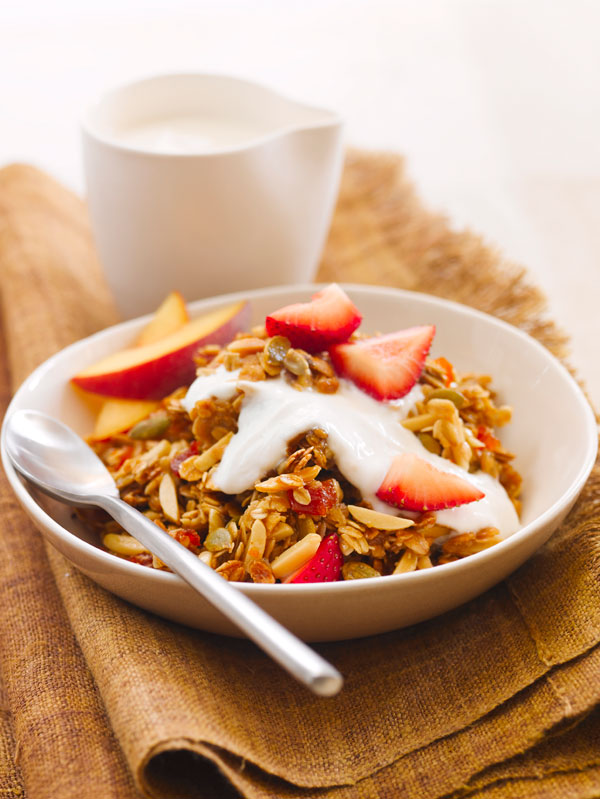
Breakfasts should contain 25 percent — or better yet, one third — of the day’s calories. Many nutritionist believe all three meals should be approximately equal in size.
“People are happy to eat a large breakfast and lose weight,” says Washington, D.C – based nutritionist, Mary Dickie. Eating balanced meals through the day maintains metabolism. It also prevents cravings and bingeing. As most of bingeing or over eating is caused by under eating.
“Most people are not eating enough calories earlier in the day
and they eat too many calories too late in the day” agrees Steven Farrell, associate director of the Cooper Institute, a medical research center in Dallas. “Skipping breakfast is one of the biggest mistakes people make.”
Because many people need 2,000 or even 3,000 calories a day to maintain their weight, a breakfast that contains a quarter or a third of that total may be hard to envision.
For a few examples of morning meals of various calorie levels:
Calcium & Weight Loss
- At December 02, 2010
- By Katherine
- In Articles
- 0
Picture by striatic
Revised from original Content, The Washington Post, Wednesday, June 30, 2004; Page F01
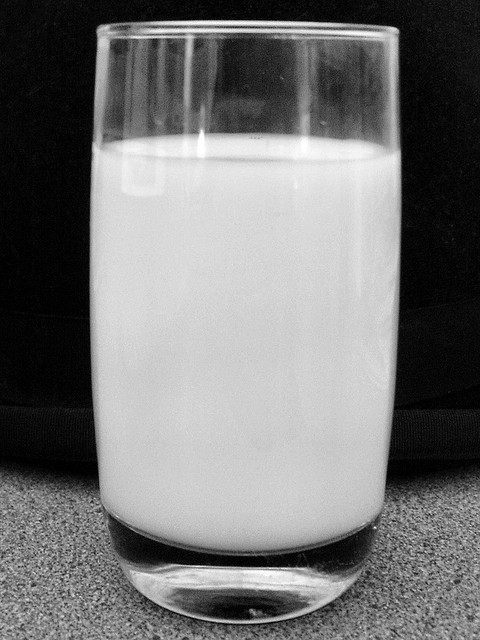
Is it possible that one of my favorite food groups-milk and milk products-not only provides crucial nutrients but can also help people maintain and lose weight? The answer, while not yet conclusive, looks encouraging. New studies are finding that calcium, particularly when in milk products, may help shed unwanted pounds and body fat.
This is doubly important news because many people slash milk products from their diets to lose weight. The research is showing that move is not only a mistake for your bones, blood pressure and overall health (which nutrition experts have been saying for years), it may also make weight loss more difficult.
Uncovering the calcium-weight loss connection was, like many scientific discoveries, a case of serendipity. In the 1980s, scientists researching the positive effects of calcium on blood pressure found that people on higher-calcium diets not only lowered their blood pressure but also lost weight. The connection wasn’t taken seriously at the time. But when large government-funded studies found links between calcium intake and body weight, researchers decided it was worth looking into.
Since 2000, observational and clinical studies of men, women and children have consistently shown that people eating diets containing calcium’s recommended dietary allowance of 1,000 to 1,300 milligrams per day have lower body weights and lower body fat. In fact, it’s been calculated that with 300 more milligrams of calcium daily, adults will weigh about seven pounds lighter than they would without the calcium.
All of the biological mechanisms aren’t completely understood. But, after many years of animal studies, the scientists, led by Michael Zemel, director of the Nutrition Institute at the University of Tennessee, have formulated the primary reason for this weight loss. When there isn’t enough calcium in the diet, the body responds by releasing hormones to help conserve as much calcium as possible for critical bodily functions (heartbeat, for one). One of these hormones, calcitriol, tells arterial muscle to contract, which increases blood pressure. But calcitriol also acts on fat cells.
“Calcitriol sends the fat cells a message to start making more fat and sends another message to slow down the process of fat breakdown and oxidation,” says Zemel, co-author of “The Calcium Key” (Wiley, 2004). Since high calcium levels have been the norm through evolution, the body assumes that food is scarce and conserves when calcium is low in the diet.
The result is that we become more efficient at storing calories as body fat, so when we cut calories to lose weight, a low-calcium diet makes it harder to break down body fat. Higher-calcium intakes (in which the body senses, rightly or wrongly, that there is plenty of food around) cause lower calcitriol levels and increased fat breakdown. So weight loss is harder for people who don’t consume enough calcium, which is the case for average Americans, most of whom consume one half the daily calcium requirement.
In the first human clinical study of the calcium and weight loss connection, Zemel and his colleagues found that the amount of calcium and its food source made a huge difference in weight loss results.
In the study published in Obesity Research in April, three groups of people ate low-calorie diets containing 35 percent fat, 49 percent carbohydrates and 16 percent protein. The first group, which ate 400 to 500 milligrams a day of calcium ( an amount of calcium typical for many Americans and less than the minimum requirement) lost an average of 15 pounds in six months. While eating the same diet with an additional 800 milligrams of calcium from a supplement, the second group lost 19 pounds. But while eating a diet high in milk products containing about 1,200 milligrams of dietary calcium per day (not from a supplement), the third group lost 24 pounds. Fat loss followed a similar pattern. The people on the high-dairy diet lost a higher percentage of body fat, maintained more lean muscle and (a finding that surprised the researchers) lost more belly fat, known as a risk factor for diabetes and heart disease. In fact, the high-dairy group significantly improved its insulin sensitivity, but it isn’t known whether that was a dairy effect or the result of the weight loss, which alone improves insulin sensitivity.
Why milk products produced more weight and fat loss than calcium supplements isn’t completely understood. But there are some theories. One theory is that milk products are simply satiating – that is they provide a feeling of fullness for relatively few calories, and over time that can cause us to eat fewer overall calories. Another theory is that milk products have many biologically active compounds, similar to the phytochemicals in plants, which work synergistically to produce a more powerful effect than a single compound, like calcium alone. And milk products also contain unusually high levels of an amino acid (the building block of protein) called leucine.
“Leucine plays a unique role in stimulating protein synthesis and is very important for maintaining lean muscle mass, especially during weight loss,” says Donald Layman, protein researcher and professor of nutrition at the University of Illinois, Urbana-Champaign. “If you eat a higher-protein diet, with high levels of leucine coming from dairy products, during weight loss you’ll lose 80 percent body fat as opposed to the usual 60 percent body fat.”
Until more human clinical research can verify these findings, remember that calcium or milk products won’t cause you to lose weight alone. Calories still count. But while this research is being verified, it can only help to include three milk servings a day. Studies show people who consume more milk products have diets higher in many beneficial nutrients such as calcium, protein, vitamins A and D, riboflavin, phosphorous, potassium and magnesium.
Strategies
Calcium experts recommend three to four servings of high-calcium milk product, containing about 300 milligrams of calcium per serving, per day. About 1 cup of milk, 1 cup of yogurt or 1 – 1/2 (ounces of hard cheese are the best examples. Here are some sources provided in The Calcium Key (Wiley, 2004):
The High-Dairy Calcium Guide **
Food Amount Calories Calcium (g)
Buttermilk 8 oz 91 264
Nonfat Milk 8 oz 86 301
Alpine Lace Reduced Fat Cheddar Cheese 1.5 oz 105 300
Brie Cheese 1.5 oz 142 78
Cheddar Cheese 1.5 oz 171 307
2% Cottage Cheese 1 cup 203 155
Hard Parmesan 1 oz 111 336
Plain, nonfat Yogurt 1 cup 127 451
Lowfat Fruit Yogurt 1 cup 225 313
**Excerpted from The Calcium Key (Wiley, 2004)
Other tips:
* Check the Nutrition Facts Panel on your food label. A good source of calcium contains at least 30 percent of your daily requirement. Also, check the calories and saturated fat: How many calories or saturated fat grams does it take to get more calcium from the food? For people watching their health or weight, the more nutrient-dense, calorie-poor and the lower in saturated fat, the better.
* If you’re lactose intolerant, remember that yogurt is usually tolerated and cheese contains virtually no lactose. You can also try lactose-reduced products or drink smaller amounts of regular milk products through the day.
* If you’re a vegan, protein expert Donald Layman says the equivalent of one cup of dairy milk would be 1-1/2 cups of calcium-fortified soy milk, in terms of its leucine content, though no studies have been published on the weight loss benefits of soy milk.
-Katherine Tallmadge
See also: How to Have Yours Each Day
A Chocolate A Day?
- At December 02, 2010
- By Katherine
- In Articles
- 0
By Katherine Tallmadge, M.A., R.D.


Is it true that a chocolate a day will keep the doctor away? That’s what many chocolate companies would like you to believe in their Valentine’s Day advertisements. While it looks like cocoa has many health benefits, the chocolates you buy from your local stores may not impart those benefits.
The cacao bean, grown mainly in Latin America, Africa and Asia, is loaded with beneficial compounds. In fact, its early uses, dating back 3,000 years were mainly medicinal. They have ranged from curing fatigue, angina, constipation, dental problems (tartar removal), dysentery, gout, an “overheated” heart, skin eruptions, fevers, and seizures. One doctor in the 1500s found it made people “extraordinarily fat” if used frequently and so it was prescribed for the thin and weak, according to an article in The Journal of Nutrition. It has been highly prized for centuries, which is reflected in its scientific name, Theobroma cacao, meaning “Food of the Gods.”
Eurpoeans discovered cocoa in the 1500s and over the next few centuries, chocolate, which we know and love so well was born. In this century, chocolate (processed cocoa with added fat, milk and sugar) has been enjoyed for its melt-in-your mouth texture and flavor, with its health giving properties largely forgotten by the civilized world, until recently.
In 1997, Harvard professor Norman K. Hollenberg published a landmark epidemiological study focused on cocoa. He found that high blood pressure was a rarity among Panama’s Kuna Indians who also didn’t experience the typical age-related increases. He at first attributed it to genetic protection. But, when the Kunas migrated to Panama City, their blood pressure increased, pointing to an environmental cause. Upon examination, Hollenberg found the Kunas drank large amounts of indigenous, unprocessed cocoa. Subsequent experiments conducted by Hollenberg and others, have found that cocoa, if high in flavanols, the beneficial plant compounds scientists believe impart most of cocoa’s benefits, relaxes the blood vessels, an important protection against hypertension and heart disease.
In the past five years, cocoa research has intensified, mainly due to the largess of companies like Mars, Inc, most famous for Milky Ways and M&Ms. What’s striking is that candy companies, such as Mars and Nestle’s, have hired respected nutrition scientists and have been largely responsible for the advancement of cocoa research. Mars has collaborated with such institutions as Harvard, the University of California at Davis, and even the United States Department of Agriculture’s Agricultural Research Service. Through their research and others, many interesting discoveries about cocoa’s health benefits have been made.
The flavanols in cocoa help maintain a healthy vascular system, relax blood vessels, they reduce blood clotting – an aspirin-like affect –reduce oxidative damage, and improve blood flow. A study in the American Journal of Clinical Nutrition found cocoa also reduces inflammation. All of which reduces heart disease risk.
There has been some suggestion that flavanols can be used to treat vascular diseases like dementia, pre-eclampsia in pregnant women, and anything related to blood flow. Emerging research is looking into cancer as well.
But what about that chocolate bar in your vending machine? Are there any health benefits there? The answer: probably not much.
Most research about chocolate’s health benefits have used unsweetened cocoa or specially formulated high-flavanol chocolate. Unfortunately, these compounds are rarely in the chocolate we eat in 21st century America. Flavanols impart a bitter taste so they’ve been removed from most popular products to improve their flavor.
Most of the flavanols are in the cocoa beans and the level decreases with each processing step when it goes from the bean, to the cocoa powder and ultimately a finished chocolate product.
Since flavanols and their health benefits are a new discovery, chocolate companies are just beginning to see if there are ways to keep flavanols consistently high, but still have a tasty, popular product.
Katherine’s Chocolate for Health Tips:
If you’re eating chocolate for health benefits, you’ll need to be very discriminating in your selections.
You’ll get more flavanols, and therefore health benefits, with less processing. The first choice is cocoa, which isn’t Dutch processed – as when cocoa is “Dutch processed with alkali” the flavanols are reduced. Look for chocolate which has the highest percentage of cocoa as possible and to save calories, look for chocolate with lower fat and sugar levels. In general, cocoa is your best first choice. Second choice is a semisweet or bittersweet chocolate with a high cocoa percentage. Some chocolates go as high as 85% cocoa, but legally can be as low as 35%. I recommend no more than an ounce a day, which may be about 110 – 150 calories, depending on the chocolate. Any more than that and you’re probably going to take in too many calories for weight control.
The numbers:
Type of Chocolate Mg Flavonols Calories
1.3 oz Dark Chocolate Bars, Average*: 82 mg 187
1.3 oz Milk Chocolate Bars, Average*: 42 mg 198
1 TBSP Unsweetened Cocoa Powder, Average*: 75 mg 12
*USDA’s Nutrient Data Laboratory
Katherine’s Hot Cocoa:
1 tsp unsweetened cocoa
1 tsp honey
1 cup Skim Milk or 1% Milk or Soy Milk
Heat in microwave for 2 – 3 minutes and stir to blend the chocolate.
Contains approximately 25 mg flavanols and 115 calories (zero saturated fat), depending on the milk used
COPYRIGHT BY KATHERINE TALLMADGE 2005. PLEASE DO NOT DISTRIBUTE WITHOUT PERMISSION. Katherine@KatherineTallmadge.com