Restaurant Eating Without the Bulge
- At December 07, 2010
- By Katherine
- In Articles
 0
0
By Katherine Tallmadge, M.A., R.D.
TABLE OF CONTENTS
Restaurant Eating Without The Bulge
Italian Dining Without Adding a Notch To Your Belt
Pasta Dishes
Pasta Menu Recommendations
Salads and Sides
Salad, Sides and Appetizer Recommendations
Main Courses
Main Course Recommendations
Pizzas and Subs
Desserts
Dessert Recommendations
Wine
Restaurant Eating Without The Bulge
I love going out to restaurants. The whole ambiance is delightful. I enjoy the solicitude of the staff, watching the people, and simply taking a quiet hour or two to relax and enjoy good food. There are times when I go out and choose healthfully, and there are other times I enjoy a good splurge and overindulge, either choice is perfectly normal.
For me, eating out is a special occasion. For millions of Americans, however, it’s a way of life. I know more than a few people who eat out all three meals 5, 6, even 7 days a week. That’s when restaurant food could present problems if you don’t know what you’re doing.
Let’s face it, one reason that the dishes we get in restaurants are so delicious is that they’re swimming in richness, and chefs choose their ingredients and cooking methods for their effects on the palate, not for their health properties or low-calorie contents. An occasional splurge won’t do any lasting damage. Indulging – or, to be frank, overindulging – on a regular basis will add some serious weight if you aren’t careful.
If you eat out frequently, I recommend some basics. Before you go, or even decide on a restaurant, look at the restaurant’s website and menu so that you know what to expect and make a note of some of the courses you think would be tasty yet healthy. This way, you’re not so tempted by the sights and smells of the fattening foods you’ll inevitably be surrounded by once you get there.
Second, if you have read about the restaurant and chef, then you may have some idea of how heavy-handed the chef is with butter or other fattening ingredients; or whether the restaurant serves a sole diner a portion that could feed four. But if the place is new to you then look around you for clues. Take a walk to the rest rooms and look at the food on other diners’ plates. How big are the servings? Are the meats, veggies, pastas swimming in sauce? What do you smell? Don’t be afraid to ask the wait staff for help. Finally, it is ok to ask for a take-home bag if the serving size is too much.
Set some priorities. Suppose, for example, you’ve booked four meals out this week. You certainly won’t lose weight, and you may even gain weight, if you eat with abandon each time. What you can do, however, is decide in advance that one of those nights is going to be your “splurge night.” Order anything you want. Enjoy every bite. Savor each and every one of those special calories. On the other three nights, order more carefully. You’ll still enjoy the experience of dining out, but you won’t take in more calories than your poor body can handle. In my book, Diet Simple, I call this strategy “The 25 Percent Blowout.”
Some diet plans and nutrition fanatics forbid, or at least discourage, eating at restaurants and enjoying yourself with abandon at all. I cannot agree. My Diet Simple approach is designed to help you enjoy your meals – enjoy life, for that matter – feel satisfied, but maintain your health and a healthy weight. Eating out with friends or family is a wonderful experience. No eating plan has a chance to last if it’s not enjoyable. What I do advise is eating (and ordering) smart. By all means, enjoy your meals away from home – but take a few simple steps to keep the calories under control.
In my new column for Washingtonian.com, starting soon, I’m taking the guess-work out of restaurant dining to help you choose healthier, lighter meals – and not just settle for fish and vegetables (though this is sometimes the most delicious choice when made by a great chef). Each month, we’ll choose three similarly – themed restaurants at differing price scales. I will give you specific menu suggestions which will allow you to enjoy your restaurant experience without adding a notch to your belt!
To give you some perspective, the average woman should eat about 1,800 to 2000 calories daily to maintain her weight. The average man, about 2,200 to 2400. My menu recommendations are based on this assumption. But a person’s calorie needs can vary widely depending on his height, weight, age and degree of fitness and activity level. To find your individualized calorie needs for weight maintenance, weight loss or even weight gain, find the personalized formula in “Stoking Your Metabolism.”
Once you determine your days’ calorie needs, I find people feel best and avoid blood sugar and appetite highs and lows, with their accompanying cravings, when they eat 1/3 of their days’ calories in the morning, 1/3 mid-day and no more than 1/3 of their days’ calories in the evenings. So, for the gals, that means your meals should be no more than about 600 calories, but if you prefer to have more food at dinner – my recommendation would be 800 at the most for a dinner out. For the guys, meals are no more than 750 calories – or 900 max for dinner out. These rules aren’t carved in stone, but they’ll give you some context when I give you recommendations or you go to a restaurant’s website to view the calorie content of some of their offerings.
Italian dining without adding a notch to your belt… at high end “Tosca,” mid-range “DaMarco” and inexpensive “Olive Garden”
The beauty of traditional Italian cooking is its simplicity: Italians have a no-fuss approach to cooking so their extraordinary ingredients shine. A little olive oil, salt and pepper, maybe an herb or two,– and voila… a light, healthy masterpiece! But for this magic to happen, the freshness of the basic ingredients is vital. Italians (in Italy) have access to the most delicious produce, nuts, grains, olive oil, pasta, cheese, seafood in the world – because they still get it from their own backyards, the neighborhood farm or the fisherman nearby. This freshness and high quality is why simplicity works – no complex cooking styles or sauces necessary, which in turn, keeps calories down and health up, especially because serving sizes are still traditionally small.
But this is where real Italian cooking and most American Italian restaurants part ways. Most Americans expect a lot of food on the plate for their money. We call it “value.” But when restaurants are expected to serve such huge amounts of food for low prices, the quality of the ingredients suffer, fattier methods of cooking, and gooier sauces are used to compensate. This is one reason why Americans who regularly eat in restaurants are fatter, according to research. In fact, one study found if a person ate in a restaurant 12 times or more per month, they were eating 20% more calories… and that can pack on the pounds very quickly!
This is not to say it’s impossible to eat healthfully in an American Italian restaurant. You just have to go in with your eyes wide open! Of course, as in any restaurant, the no-brainer healthy selection is a salad-like appetizer, a simple seafood preparation, such as grilled fish, and fruit for dessert.
But when in Rome, we want to do what the Romans do – and that’s eat pasta! Drink wine! Linger over several courses of beautiful food…! More on the Mediterranean Diet…
I’ll be giving you many examples of delicious and light menu choices so take heart. You don’t need to be disappointed – just alert and careful… Italians do interesting things with vegetables and seafood. Mussels and clams cooked in broths, or raw bar style. The beef or seafood carpaccios are excellent light and tasty choices. And always check the side-dishes and appetizers. Small servings of pastas that involve vegetables and light sauces are tasty examples. Of course, if we ate more Italian-sized portions and preparations, we’d be fine. Italians in Italy eat lightly – small pasta portions, salads, vegetables, and simple grilled fish.
Pasta Dishes
This is where Tosca (http://www.toscadc.com) shines. There, you’ll find house-made pastas in the traditional Italian amount of “six to eight ounces per pasta dish,” (about one-and-a-half to two cups of cooked pasta) said Executive Chef, Massimo Fabbri.
Da Marco Ristorante (http://www.damarcorestaurant.com), on the other hand, fills their plates to capacity. “Every pasta dish contains at least three to four cups of cooked pasta,” said Chef Giuliana Fortini, the wife of owner Marco Fortini, who makes the fettuccini and the raviolis from scratch.
For comparison’s sake, cooked pasta is 200 calories per cup (two ounces dry), quite low in calories, that is if the portion is the smaller, traditional Italian size. Of course, that’s before the olive oil, meats, cheese or sauces are added (that’s the fattening part).
Keeping that in mind, a pasta dish at Da Marco with its three to four cups of pasta would start at 600 to 800 calories before any toppings are added. That means a whole pasta dish would be a meal for two people once it has its toppings, as owner Marco Fortini likes to be generous with his meats and cheeses and says he serves at least ¼ lb. with his dishes. One pasta dish at Da Marco would feed three people in Italy as a first course, and maybe four people, depending on the amount of meat, cheese, and sauce used in the dish. So, I recommend you share one pasta dish between three or four people if you would like additional courses, such as wine, salad, a main course or a dessert.
At Tosca, with the additional meats and sauces, I would consider a pasta dish an entire meal for one person, depending on the toppings, as it would be several hundred calories lighter than a Da Marco pasta dish, containing half the pasta. But, it would still be at least 400 calories, so if you’d like to have another course at Tosca, share your pasta dish with one or more people or, says Chef Fabbri, “ask for a half portion.”
At Olive Garden (http://www.olivegarden.com), based on the calorie and nutrient content of their dishes, which can be found on line, I believe the pasta dishes – calorie-wise, if not quality-wise – are comparable to the dishes at Da Marco, averaging 1,000 calories, based on the serving size information given me by Mr. and Mrs. (Chef) Fortini.
Pasta Menu Recommendations
I recommend sharing all of the pasta dishes or getting a half portion
Tosca
Pasta alla chitarra integrale con salsa di pomodoro e pomodorini ciliegia
Housemade whole wheat square spaghetti with tomato sauce and cherry tomatoes
Linguine ai frutti di mare e pomodoro leggermente piccante
Linguini with a seafood assortment in a lightly spicy tomato sauce
Raviolini ripieni di pomodoro biologico saltati all acqua di pomodoro
su salsina al pesto
Raviolini filled with organic tomato pulp, sauteed with tomato water
and served on a basil pesto sauce
Pappardelle alla carota biologica con ragu di coniglio locale e timo fresco
Carrot flavored pappardelle with a rabbit ragu in a white wine sauce and fresh thyme
Da Marco
Linguine or penne pasta
Pasta with homemade tomato sauce
Penne Caprese
Penne pasta with cubes of fresh mozzarella and tomatoes with a light touch of anchovy paste and balasamic vinegar
Gnocchi di patate
Housemade potato dumplings served in a pesto or tomato sauce
Linguine con le Vongole
Linguine pasta with clams in a tomato or white wine sauce
Linguine ai Gamberi
Linguine pasta with fresh shrimp in a white wine and garlic sauce (avoid the rose sauce which is made with butter and cream)
Fettuccine ai Funghi Porcini
Fresh housemade pasta with imported Porcini mushrooms, extra virgin olive oil and garlic
Olive Garden
Linguine alla Marinara
Children’s Menu Spaghetti & Tomato Sauce
Salads and Sides
In all of these restaurants, it’s tricky to have more than one course. Even the salads and appetizers can contain the calories of whole meals. For instance, the salads at Da Marco contain one quarter pound of cheese or meats, according to Fortini, which is the maximum recommended by health experts for an entire meal – and alone can contain 400 calories, or more. The cheese/nuts salads at Tosca, according to Chef Fabbri, provide two ounces of cheese and one ounce of nuts, also about 400 calories. With dressing, that will come to 500 + calories for a salad in both restaurants. So, if the salad contains cheese or meats, it is your main course. Add a glass of wine, and fruit for dessert and consider it dinner!
On the other hand, if you order the house salad, ¼ pasta portion in Da Marco or Olive Garden or ½ pasta portion in Tosca, you may be able to choose a light entrée and still have a glass of wine (woo hoo!).
Salads, Sides, and Appetizer Recommendations
Tosca
Insalata mista organica delle fattorie al condimento di aceto balsamico e olio novello
Organic mix greens salad with balsamic vinegar and extra virgin olive oil dressing
Capesanta arrosto su purea di fave, pancetta la quercia e salsa al tartufo nero
Roasted scallops with pureed fava beans, braised domestic Pancetta
and black truffle sauce
Zuppetta fredda di sedano con mortadella in due modi, e pistacchi Italiani
Chilled celery soup with Mortadella two ways and Italian pistachios
Sautéed cauliflower
Sautéed mushrooms
Warm spinach salad with pine nuts
Grilled asparagus “grandmother style”
Da Marco
House Salad:
Mixed greens in balsamic & extra virgin olive oil w/cucumber, tomatoes, onion
Bruschetta
Fresh tomatoes, basil and garlic on toasted Italian bread
Crostino
Black and green olive spread on toasted bread with a side of artichokes
Olive Garden
Chicken & Gnocchi (One serving)
Garden-Fresh Salad
Minestrone
Mussels di Napoli
Pasta e Fagioli
Zuppa Toscana
Main Courses
In all three restaurants, many of the main courses contain at least one half pound of meat, chicken or seafood. This is too much for most people to eat in one meal. Usually, the health recommendation is three to four ounces of protein per meal. But I can look the other way with 6 ounces if the seafood or meat is extremely lean, such as shellfish or a white fish. But, you’d be better off sharing the protein in most main courses, then ordering extra vegetables to round out the meal. Da Marco owner, Marco Fortini says his chicken and veal main courses contain about eight ounces of meat.
Tosca’s Branzino is about seven ounces, the pork tenderloin about 10 – 12 ounces and the Halibut about eight ounces, according to Chef Fabbri. Fabbri also stresses that only one tablespoon of sauce is used with the meats and fish, keeping calories down “otherwise it’s a soup!” he says he “just brushes the top for color.”
Some appetizers or salads make excellent main courses and contain just the right amount of protein for a healthy meal. This way, you can afford a salad, pasta, some wine, and maybe even dessert (YAY)!
Main Course Recommendations
Tosca
Branzino del Mediterraneo con zabaglione all’aceto balsamico
e spinaci ai pinoli ed uvette (recommend sharing)
Roasted Mediterranean sea bass with a balsamic vinegar sabajon
and sautéed spinach with pine nuts and raisins
Filetto di maiale in crosta di funghi selvatici, fagiolata marinata all’aglio novello, zucchini biologici e salsa al Marsala (recommend sharing)
Wild mushroom crusted pork tenderloin, bean salad marinated with spring garlic,
organic zucchini and Marsala wine sauce
Halibut arrosto in crosta di nocciole Piemontesi, baby granturco, fagiolini
e salsa al burro e limone (recommend sharing)
Pan roasted Halibut in a Piedmont hazelnut crust served with baby corn, green beans
and butter-lemon sauce
Duo di carpaccio di pesce alla Tosca
Tosca interpretation of artic char and tuna carpaccio
Insalata di astice con pomodori heriloom, cetrioli “diva”, pisellin e Bellavista
Lobster salad with heirloom tomatoes, diva cucumbers, english peas and Bellavista
Capesanta arrosto su purea di fave, pancetta la quercia e salsa al tartufo nero
Roasted scallops with pureed fava beans, braised domestic Pancetta
and black truffle sauce
Da Marco
Vitello Pizzaiola (recommend sharing)
Tender slices of veal sautéed with red wine topped with homemade tomato sauce with a side of linguine tomato sauce
Filetto di Pesce (recommend sharing)
Lighly fried tilapia with a side of housemade fettuccine in a lemon or tomato sauce
House Salad
Mixed greens in balsamic & extra virgin olive oil w/cucumber, tomatoes, onion with grilled chicken or shrimp
Olive Garden
Herb-Grilled Salmon
Venetian Apricot Chicken
Children’s Menu Grilled Chicken with pasta & broccoli
Children’s Menu Cheese Pizza
Children’s Menu Chicken Fingers with Broccoli
Pizzas and Subs
For the more casual Italian meal, you may prefer a pizza or submarine sandwich. My recommendation: Be Ready to Share!
The sub sandwiches in Da Marco are probably at least 1,000 calories each. The bread, when weighed by Chef Fortini, is 1/3 pound – that’s about 5 ounces. And with most plain breads being 70 to 80 calories per ounce that means the bread alone is 350 to 400 calories. Then they “fill the sub so it’s as full as possible, so for example one-third pound of meat is typical (another 250 calories – it it’s lean, to 500 calories – for cured, fatty Italian meats). Then we add oil (another 100+), vinegar, cheese (another 100+) and vegetables,” said Chef Fortini. “People usually eat a whole one.” Oops!
I have the same recommendation for the “individual” pizzas. Olive Garden’s starts at 910 calories. With meat toppings, add another 260 calories. Veggies only add 40 calories at the most. Da Marco’s pizza with a 14” thin crust probably starts at about 1,500 calories, plain.
My recommendation would be to have a salad and a portion of the pizza – “individual” or not!
Desserts
We all love sweets, but they tend to be calorie bombs. So, to treat myself, I occasionally (not too often) will eat a dessert for dinner. When I was growing up, one of my favorite dinners cooked by my Swedish mother was crepes with lingonberries and whipped cream. Yummy! Who wants to waste calories on the dinner when all you really want is the Tiramisu, the cappuccino mousse cake, or the warm cherry cobbler with vanilla ice cream? They’re usually just as many calories as the whole meal. Or, if you simply can’t go that deeply into debauchery, I recommend a very light, healthy dinner of, say, lobster tail and salad, or tuna carpaccio with greens or a light seafood soup … followed by the fattening dessert of your choice. Either way, you can have your cake and eat it too! But the following recommendations are exceptions and shouldn’t add a notch to your belt.
Dessert Recommendations
Tosca
Granita al cocomero e melone
Watermelon and cantaloupe granita
Selection of 3 sorbets
Da Marco
Ooops… can’t find anything… except for those “calorie bombs” I discussed
Olive Garden
Berries & Zabaione
Children’s Menu Sundae
Wine
I’m a great believer in wine’s therapeutic value and almost never eat a meal in a great Italian restaurant without a glass. Wine is only 25 calories per ounce – a glass contains anywhere from 4 – 6 ounces. And, as long as we follow health recommendations: maximum 5 ounces daily for women and 10 ounces daily for men, I always encourage my clients to celebrate their meals with a good “salute!” And plenty of eau du Potomac is always at arms’ reach as well! (no bottled water, please, for the environment’s sake!)
The Protein Puzzle
- At December 07, 2010
- By Katherine
- In Articles
- 0
The Washington Post
By Katherine Tallmadge
When I work with clients who are interested in losing weight I urge them to avoid falling into an easy, tempting but very unhealthy trap: making draconian cuts in their consumption of protein. Not all of us are on low-carb, high-protein diets. We love our soup and salad at lunch, and adding protein can mean adding calories.
Protein is essential for healthy living. It is one of the most important nutrients in the human body.
“Bone health, muscle function, muscle strength, muscle mass and immune function — all are impaired with a low protein intake,” says Carmen Castaneda, protein researcher and acting director of the Nutrition, Exercise Physiology and Sarcopenia Laboratory at the Human Nutrition Research Center on Aging at Tufts University.
But how much protein do we need, dieting or not?
I first became interested in this issue when I came across a study that found that people who ate the recommended dietary allowance of protein experienced alarming bone losses as compared with those who ate higher protein levels. This grabbed my attention. The recommended dietary allowance (RDA) is a guideline for healthful eating that is set by the Food and Nutrition Board of the National Research Council of the National Academy of Science. The amount of protein it recommends depends on several factors, such as sex and age. But if the study found that people who were eating the recommended amount of protein were still losing bone mass, what could it mean for those of us who weren’t eating even the minimum requirement? Or for those of us who were trying to lose weight by cutting back on protein?
New research has found that a higher protein diet is essential to effective weight loss: it’s more likely to minimize muscle loss and maximize fat loss. Keeping muscle stores high is critical for several reasons.
“Losing muscle decreases resting metabolic rate, making it harder to maintain a healthy weight and lose body fat,” says William Evans, director of the Nutrition, Metabolism, and Exercise Laboratory at the Donald W. Reynolds Center on Aging at the University of Arkansas for Medical Sciences.
Protein is also essential for bone health. Should we risk bone loss tomorrow to lose pounds today?
Your bones, composed of protein, calcium and other minerals, are constantly in a state of flux and in need of replenishment to keep them strong and dense. Until age 30, you are building bone mass. After your early thirties, you’re losing it. It’s critical to maximize your bone mass, so that your bones are strong and dense enough to prevent osteoporosis. Osteoporosis leads to humped backs, broken bones and pain for its 10 million sufferers in the United States.
For many years, scientists have observed that protein undernutrition was associated with osteoporosis, frailty and bone fractures. But the relationship had never been fully understood until researchers decided to test the theory for the first time in a group of 855 participants from the Framingham Study (originally established in 1948). Researchers analyzed food intake and bone mass every other year for four years. Their findings, published in the Journal of Bone and Mineral Research in 2000, were dramatic.
The subjects eating the lowest protein diets lost the most bone mass — 4 percent in four years. People who ate the highest protein diets experienced the smallest losses — less than 1.5 percent in four years. Think about it: If you’re losing as much as 4 percent of your bone mass in four years, that means that one-fifth of your bone mass will be lost in 20 years. That is not a positive development.
And while these studies were conducted on older men and women (68-plus years old), Katherine Tucker, Associate Professor of Nutritional Epidemiology at Tufts University, says the data may be important to people of all ages.
“At younger ages, you need the protein to build the bone, and after age 30 you need the protein to protect the bone from being lost,” said Tucker. “Keeping bones is a life-long effort,” she said.
This study and others have shown that eating about 20 percent of your calories as protein protected bone mass most efficiently — but that’s more than the recommended dietary allowance (RDA) for protein, which is about 15 percent of calories.
Should the requirement be changed?
It’s been reported for years that high-protein diets result in high levels of calcium in the urine, and it’s been assumed that this would affect bone mass negatively and might produce kidney stones. But it appears, instead, to be a function of just how much protein is consumed and how balanced the diet is. The National Academy of Sciences, in a recent report, recommended Americans never exceed 35 percent of their calories as protein, as that may be when adverse symptoms begin to appear. Other researchers surmise that if protein is extremely high while carbohydrates are very low, this may be responsible for the negative consequences.
It may take years before this new research is confirmed by additional studies and in turn can result in changes in the offcial recommended protein levels.
In the meantime, it would not be harmful to increase protein intakes to 20 percent of calories, says NAS food and nutrition board protein panelist Peter Garlick.
“Even though the National Academy of Science’s Food and Nutrition board did not change the RDA for protein because we’re still waiting for more evidence to show that it’s necessary, these are safe and reasonable levels,” said Garlick.
In Pursuit of Protein
Although for most Americans the recommended dietary allowance of protein may be adequate, if you’re losing weight or are worried about bone loss, consider increasing your protein.
Protein can be found in a wide range of foods. Animal protein is in seafood, dairy, meat, poultry and eggs. Vegetarian protein can be found in legumes, soy, vegetables and grains. And while it’s true that high-protein foods often bring fat and calories along as uninvited guests, it doesn’t have to be that way.
The lowest-calorie animal protein sources are the leanest. Go for seafood, poultry with no skin, lean veal cuts, pork tenderloin, lean beef cuts such as the round or tenderloin or 95 percent lean hams (less than 3 grams of fat per ounce). Soy products also provide great low-calorie options.
Toss four ounces of lean beef, chicken or seafood or 12 ounces of spiced tofu into your salad and gain 28 grams of high-quality protein and no more than 150 to 200 calories.
HOW MUCH PROTEIN DO I NEED?
At present, the recommended dietary allowance for protein is computed using the following formula:
0.37 grams of protein per pound of body (this usually means people are eating about 15 percent of their calories as protein).
But some evidence suggests that to protect bones and muscle we can consume more, though the amount of protein should never be more than 35 percent of daily calories.
So, if you weigh 150 pounds, this means the minimum amount is:
150 pounds X 0.37 grams protein per pound = 55.5 grams of protein
But you could safely increase your protein intake:
150 pounds X 0.45 grams protein per pound = 67.5 grams of protein
150 pounds X 0.55 grams protein per pound = 82.5 grams of protein
So, the sample 150-pound active woman should get between 67.5 and 82.5 grams of protein per day
WHERE DO I GET PROTEIN?
8 ounces milk/yogurt . . . . . . . . . . . . . . . . . . . . . . . . . . . 8 grams protein
1/2 cup cooked beans/tofu . . . . . . . . . . . . . . . . . . . . . . . . 8 grams protein
1 ounce meat/fish/chicken/cheese (the leaner the meat,
the more protein and the fewer calories). . . . . . . . . . . 7 grams protein
1 large egg . . . . . . . . . . . . . . . . . . . . . . . . . . . . . . . . . . . 7 grams protein
1/2 cup cooked or one ounce dry
(1 slice bread) grain . . . . . . . . . . . . . . . . . . . . . . . . . . . 3 grams protein
1/2 cup cooked or one cup raw vegetables . . . . . . . . . . . . 2 grams protein
— Katherine Tallmadge
Katherine discusses a healthy vegetarian diet with Chef Emeril Lagasse on Discovery Channel’s “Emeril Green.”
- At December 07, 2010
- By Katherine
- In Articles
- 0
Vegetarianism is a lifestyle which many studies find promotes good health. However, it must be practiced with knowledge in how to get appropriate protein and nutrients.
There are mainly two types of vegetarians: vegans, those who eat only plants and lacto/ova vegetarians, those who will also consume animal by-products such as dairy and eggs. In order to get levels of the nine essential amino acids equal to the highest quality protein, vegans (those who eat only plant foods) must eat soy protein, the only vegetable protein as complete as animal protein, or mix beans and grains and receive Vitamin B-12 supplementation (only found in animal products). If not done carefully, vegans also risk low levels of calcium, vitamin D, and iron.
On the other hand, lacto-ova vegetarianscan receive complete proteins in the animal by-products (dairy and eggs) they consume, as well as by eating soy protein and mixing beans with grains each day.
You should eat a high quality protein at each meal. To determine your protein needs, read:
The American Dietetic Association has developed this “Daily Food Guide for Vegetarians”
Milk and Milk Alternatives Group: 6 to 8 servings daily
- 1/2 cup milk, yogurt, fortified soymilk
- 3/4 oz. natural cheese
- 1/2 to 1 cup cottage cheese
- 1/4 cup calcium-set tofu
- 1 cup cooked dry beans (soy, white, navy, great northern, kidney)
- 1/4 cup almonds
- 3 Tbsp Sesame Tahini or Almond Butter
- 1 cup cooked or 2 cups raw bok choy, Chinese cabbage, broccoli, collards, kale, okra
- 1 Tbsp blackstrap molasses
- 5 Fig
Dry Beans, Nuts, Seeds, Eggs, and Meat Substitutes Group: 2 – 3 servings daily
- 1 cup cooked dry beans, lentils, or peas
- 2 cups soy milk
- 1/2 cup tofu or tempeh
- 2 ox. vegetarian “meats” or soy cheese
- 2 eggs or 4 egg whites
- 1/4 cup nuts or seeds
- 3 Tbsp nut or seed butters
Fruit Group: 2 – 4 servings daily
- 3/4 cup juice
- 1/4 cup dried fruit
- 1/2 cup chopped, raw fruit
- 1/2 cup canned fruit
- 1 medium size piece of fruit such as banana, apple or orangeVegetable Group: 3 – 5 servings daily
- 1/2 cup cooked or chopped raw vegetables
- 1 cup raw, leafy vegetables
- 3/4 cup vegetable juice
Bread, Cereal, Rice, and Pasta Group: 6 – 11 servings daily
- 1 slice (1 ounce) bread
- 1/2 small bagel, bun or English Muffin (or 1 ounce)
- 1 ounce ready to eat cereal
- 2 Tbsp Wheat Germ
- 1/2 cup cooked (1 ounce dry) grains, cereal, rice or pastaSaturated Fats, sweets: use sparinglyOther essentials for those who consume little or no animal products:
- Vitamin B-12 fortified foods or a supplement
- Vitamin D-fortified foods or a supplement
- Omega-3 Fats: 1 to 2 daily servings; 1 tsp flaxseed oil, 3 Tbsp walnuts, 4 tsp canola oil
Congress Flunks on Healthy Living
- At December 07, 2010
- By Katherine
- In Articles
- 0
By: Katherine Tallmadge
If I had a dollar for every time I’ve heard someone in Congress quote the Hippocratic oath during this year’s debate on health care reform — “First, do no harm” — I could retire early. What I have not heard quoted by anyone is an admonition almost as well-known and much more appropriate to the current debate: “Physician, heal thyself.”
As a nutrition and diet consultant in Washington who has worked with members of Congress and congressional staff over the past two decades, I have more than a passing knowledge of the people now making decisions that will affect the health of millions of Americans. And I can tell you they are about the last people in the world who can speak about what it takes to be in good health.
Congress’s lifestyle precludes balanced eating or regular physical activity. Lawmakers — and their staffs — work long, 10-to-14-hour days. They rarely see daylight. Walking to work a few blocks or eating a balanced breakfast is thought to be a waste of time. There are parking spaces to fill and a breakfast meeting with cheese Danishes and who needs exercise when you can have all the coffee you need to stay alert? Lunch breaks are frowned upon, and needing a good night’s sleep is a sign of weakness. Healthful eating and exercise smack of elitism (you didn’t mention arugula, did you?), and relaxation and time for family are for sissies. “It’s a very intense life. Long hours are expected, and your job is everything. You’ll make the sacrifices, including health, exercise, family,” says one of my clients, who worked as a staffer in the offices of one of the most prominent health care proponents (and yo-yo dieters) in Congress before finally deciding she had to quit. She described working on Capitol Hill as “a toxic combination of stress, long hours and unhealthy food.”
Another client broke up with her senator boyfriend because she couldn’t take the unhealthful lifestyle she was inevitably being dragged into. It was beginning to affect her health and weight and at the same time was negatively affecting their relationship.
“It was too painful to be a part of such an unhealthy life,” she explained. “His work was everything. He wasn’t finished at the office until late every night. By then he was ravenous, as he never fed himself proper meals during the day and would inhale huge steak dinners. He was becoming more and more overweight and was being warned by his doctor to shape up. I tried to get him to exercise with me, go walking, or just come home to have healthy meals. But nothing worked. He seemed to be stuck in this unhealthy lifestyle and couldn’t give it up.”
Junk food is pervasive on Capitol Hill. It’s found in abundance — from the candies, cookies and snacks given by lobbyists on everyone’s desks, to the vending machines in office hallways, to the well-stocked candy desk that has been on the Senate floor for 40 years. Who needs balanced meals? Members and staffers regularly grab free food at the continual receptions down the hall or across the street. They live on canapés, cheese and crackers, prime rib, chocolate mousse. Their waistlines expand, but they just buy new clothes, and besides, nobody notices or mentions the result. We’re doing important work here!
The few members inclined to be healthy have access to a House or Senate gym with showers and cut-up fresh fruit. If they need to stay late at work, a cafeteria with a whole crew must, by law, stay to feed them (subsidized by taxpayers). If they travel beyond this tiny and exclusive universe, they are driven, flown and “handled.” And if, heaven forbid, members fall ill, they have access to the best medical care and health insurance in the country. There are even medical offices in the Capitol where members and staffers have access to doctors or nurses as needed at no cost to them. Of course, they work hard and deserve this kind of care. But who doesn’t?
With the limos and the staff and the constant schedule of business breakfasts, lunches and dinners, members of Congress don’t really live like other people. Except in a sense, they do. Their bad habits are an exaggerated version of the things their constituents do, making them overweight and out of shape and ultimately a huge burden to all of us who have to spend money on health care.
Let’s hope that lawmakers can somehow get past their own disregard of good health and make the right choices for the rest of us. We need a system that keeps people healthy, one that actually prevents the most serious and costly chronic diseases, most of which are caused by poor eating choices, a sedentary lifestyle and/or excess body fat. As Congress works hard to reform health care, there is a temptation to simply upgrade the current very expensive system instead of developing an actual health promotion system.
Sound too simple? Well, it isn’t! In my personalized nutrition practice, by teaching people healthful habits of eating and physical activity, I see “miracles” every day. My clients — and others who are lucky enough to work with health care professionals such as me — get taken off diabetes drugs, blood pressure drugs, cholesterol drugs, arthritis pain medications and antidepressants. Studies show that people who improve their eating and activity habits and achieve their ideal body weight report an improved quality of life, level of energy, mobility, general mood and self-confidence. They experience improvements in their physical health and interactions with others.
We either ignore or simply pay lip service to the importance of prevention, perhaps because our “health care system” has no incentives for disease prevention. Who profits when people are healthier? Certainly, Big Pharma, insurance companies, hospitals and junk food manufacturers would lose their obesity cash flow bonanza of the past decades.
Some proposals that will start making a difference are no-brainers and won’t cost taxpayers: labeling calorie content on restaurant menus, getting vending machines with sodas and junk foods out of schools and getting rid of junk food ads and violent video games and television for underage children. We should teach respect for personal health in schools — nutrition, physical activity, cooking and stress management — for students and their parents. After-school physical activity and healthful snack programs should be available for children who live in poor homes or unsafe neighborhoods. Nutrition and weight loss counseling by qualified dietetics professionals should be reimbursed by Medicare, Medicaid and insurance companies.
So why aren’t we doing any of this? One reason may be that the people who make the laws don’t understand the need to take care of oneself and adopt prevention. And they don’t understand it, because very few of them actually practice it.
There are exceptions, of course. Rep. Ron Kind (D-Wis.) starts every morning running or cross-training in the House gym. And his personal experience has shaped the kind of remedies he sees as necessary. Kind proposes giving tax credits for going to gyms and supports legislation that would require schools to inform parents of their children’s participation in physical education programs. “It’s very easy to lose touch with what most people have to do — even if you’re conscientious,” says Kind.
My plan for health care reform, then, is to start at the beginning, with the people debating, writing and ultimately enacting health care legislation. President Obama is a pretty good role model — assuming he cuts back on those hamburgers he seems to like so much and finally quits smoking. Now it’s time for Congress to follow his lead. Members of Congress and political leaders need to understand what leads to good health — and practice it. Then they’ll be in a position to tell the rest of the country what to do.
Katherine Tallmadge, president of Personalized Nutrition, is a counselor, author (“Diet Simple,” 2004) and speaker and has designed nutrition, wellness and weight loss programs for individuals, government and corporations for more than 20 years.
© 2009 Capitol News Company, LLC
Stoking Your Metabolism, Eat More to Lose Weight
- At December 07, 2010
- By Katherine
- In Articles
- 0
photo by ADA
by Katherine E. Tallmadge, M.A., R.D.
Naomi, like many American women, is a wounded veteran of the diet wars
She had tried everything, especially if it promised quick results. The cleansing fast with nine days of lemon juice. The cabbage soup diet. The no-carbohydrate diet. Eating only fruits and vegetables. The diets would all “work” — she’d lose weight quickly, but the pounds had a way of coming back.
She would lose nine pounds in nine days, but gain back 15 in four days.
After a dozen years of yo-yo dieting, she wasn’t just getting nowhere, she was losing ground.
When she hit 200 pound she finally sought help from an expert and discovered the reason for her troubles. Because of her long-term serial dieting, her metabolism — the rate at which her body burns calories — had dropped by about 20 percent. This meant that, just to stay the same weight, she had to slash her caloric intake by 20 percent. To lose weight, she’d have to cut her consumption even more –and thereby risk slowing down her metabolism again.
She had been a severe calorie restrictor on and off for many years, and that stripped her body of muscle mass. Restrictive dieting and muscle mass loss are the main reasons why most people have low metabolisms.
This was Naomi’’s harsh introduction to the complex, sometimes baffling world of the human metabolism, which embeds one of the cruelest ironies in all of dietdom. Restricting calories — which is necessary to lose weight — can slow down the body’s metabolism, stunting one’s ability to burn calories, making weight loss virtually impossible.
Subjecting the body to repeated ‘famines’ causes a chronic dieter’s body to slow down into survival mod..
The less you eat, the more your body slows down, requiring you to eat even less. And when, out of frustration or exhaustion, you resume “normal” eating, your body grabs onto those extra calories and sends them into deep storage with a vengeance.
A growing body of scientific evidence confirms that the human body is an extraordinarily adaptive and delicate instrument whose instinctive drive for survival complicates the plans of even the most dedicated dieter. Henderson’s woes and those of others show clearly that losing weight and keeping it off require a careful understanding of the body and, specifically, its metabolic needs.
Each body’s calorie needs are largely determined by two factors: one’s level of physical activity and one’s resting metabolic rate (RMR).
About one third of the calories you burn are the result of physical activity, which includes anything other than resting–brushing your teeth, folding clothes, working at your computer, walking around the block, or exercising in your health club.
he other two-thirds are burned as a result of regular metabolic function. This includes the calories needed to sustain basic function: maintain body temperature, heart beat, breathing, organ repair and basic chemical reactions. Because RMR accounts for a large majority of calories burned, keeping your RMR high is essential to losing weight and keeping it off. In fact, it is more important to your weight-loss plan than is physical activity.
All of which raises the questions: How do you find out what your RMR is? And how can you raise it?
Your RMR is influenced by a variety of factors including genetics, body size, muscle mass, age, gender, body weight, pregnancy, hormonal status and, yes, physical condition. (More on this below, but the main point is that a fit and muscular body burns more calories while at rest than an unfit, less muscular one.) To make things more difficult, RMR naturally declines through adulthood at about 2 percent per decade, usually because of muscle loss. Chronic dieters exacerbate muscle loss through repeated quick weight reductions.
You can determine your RMR using Diet Simple’s Formula for Calculating Your Resting Metabolic Rate and Calorie Needs — free of charge and in the comfort of your own home and use that figure and a controlled diet to determine whether your RMR is lower than normal. First, determine what your RMR should be. Then continue the calculation to account for your level of physical activity and see how many calories you need to consume just to maintain your weight. Next, subtract 250 to 500 calories to determine a safe daily weight loss calorie level, which should produce a 1/2- to one-pound per-week weight loss.
Using the Diet Simple Formula, for a 150 pound, 5’4″ 40-year old lightly exercising woman, that would mean consuming about 1,978 calories per day to maintain weight and about 1,428 – 1,728 calories daily to lose weight. For a 200 pound, 6’1″ 50-year-old regularly exercising man, that would mean about 3,060 calories per day to maintain weight and about 2,560 to 2,810 calories daily to lose. (see examples)
Once you’ve done the math, spend at least one week –or up to a month — eating the calorie level you calculated should lead to a 1/2- to one-pound per-week weight loss. If you do not lose weight, and you’re sure you’ve calculated your calorie needs and your food intake correctly (cheating here will do you no good, folks), then that’s the sign your metabolism is probably low. This is an indication that you may benefit from visiting a clinic and getting tested to verify your metabolic status.
Using this equation is just a formalized way of discovering what many dieters do by trial and error. The dieter is eating what he or she believes is a weight-shedding calorie level, and documents it rigorously, yet the weight is not coming off.
If your metabolism is normal, in a way you’re lucky. Losing weight probably will require nothing more — to be fair, that probably should be “nothing less” — than consuming slightly fewer calories than you burn each day. Yes, it requires will power, and yes, it requires some exercise, but it can work, particularly if you run a modest daily caloric deficit (250 to 500 calories per day) and take the weight off slowly.
If, on the other hand, your metabolism is low, you might decide to meet with a doctor to find out why, and to learn what to do next. Your metabolism would be considered low enough to act on if it is six percent or lower than the equation predicts.
In addition to the repeated calorie restriction of yo-yo dieting, other factors that can contribute to lower metabolism include genetics and thyroid abnormalities. Thyroid levels can be tested in a physician’s office. It’s important to request a full thyroid work-up, including active thyroid (T-3), which isn’t usually tested, according to experts. If abnormal, it should be treated with medication. Once treated, a normal diet and exercise regimen should be able to take the weight off.
But a past of severe calorie restriction is the most common — and easily controllable — cause of a low RMR. And that requires a different plan of attack.
It doesn’t take a long history of dieting failures to affect metabolism. In fact, large increases or decreases in calorie intake for as little as several days can raise or lower RMR. Though for chronic dieters, because their bodies have been primed to go into survival mode — their metabolisms can lower in just 24 to 48 hours, according to experts.
It is widely accepted that, in response to starving, the body reduces levels of various hormones and chemicals that help determine metabolic rate: insulin, active thyroid hormone, norepinephrine (similar to adrenaline). This is a powerful survival mechanism, as it permits the body to slow the nervous, cardiovascular, and gastrointestinal systems to help it conserve resources of energy and calories during a period of assumed scarcity of food.
The groups most likely to have provoked their bodies into below normal metabolism are long term, yo-yo dieters; dieters who restrict their calories too severely; and people with eating disorders such as bulimia and anorexia nervosa, who either starve or alternate starving with binging.
The change in metabolic rate as a result of food restriction may vary from person to person. Studies show if a 200 pound woman is limited to 800 calories a day, after three weeks her metabolism may decline by 15 percent — possibly prompting further, unrealistic calorie reductions which cannot be sustained. Remarkably, exercise may actually exacerbate the problem. If a person isn’t consuming enough calories and is exercising,the body — which automatically does the math and reacts to an even more severe calorie deficit — will reduce its metabolism further.
Most people are told to eat less and exercise more, and it may not work for every person.
A low RMR has other consequences. The decline in metabolism makes it almost impossible to maintain weight loss. For example, if the metabolism for a 150-pound woman is just 6 percent below normal, that means she must eat 100 fewer calories per day to avoid weight gain. If it drops to 25 percent below normal, she must reduce daily consumption by 400 calories to stay even. This is a huge food deficit that few can maintain over a life time and contributes to the long term failure rates of diets, according to the experts.
So the dilemma is this: If restricting calories lowers the metabolism, endangering health and making weight loss and weight maintenance nearly impossible, how can weight loss be accomplished without wrecking the RMR? The answer, at the risk of appearing flip: Very carefully.
Experts agree that if the calorie restriction is minimal, the weight loss slow, and a cardiovascular exercise and muscle building program initiated, weight loss can be achieved safely and effectively, and a low metabolism can be reversed.
THREE ESSENTIAL ELEMENTS
Three factors are crucial for losing weight, maintaining it and keeping metabolism high.
First, since metabolism is dependent on lean body mass, muscle-building is an important type of exercise, regardless of whether your metabolism is high or low. The more lean muscle you have, the more calories your body burns. And since muscle mass naturally declines as you age, building muscle as you age is essential to keeping lean. In fact, as you become stronger and use heavier weights in your workout — an indication that you’ve gained muscle — you can eat more food because your need for calories naturally increases with muscle gain.
An average woman will lose five to seven pounds of muscle between age 35 to age 50 due to disuse. Add restrictive dieting to the equation, and even more muscle can be lost. For every pound of muscle lost, you lose the capacity to burn 35 to 50 calories per day. That means if you’ve lost seven pounds of muscle at 50 calories per muscle, that’s 350 calories you can’t eat just to prevent weight gain, let alone lose weight.
The American College of Sports Medicine recommends strength training all of your major muscle groups twice a week.
Second, cardiovascular activity burns body fat and calories (and, of course, improves your heart and general health). As you improve cardiovascularly, your body becomes more efficient and burns more fat with each exercise bout. A fit body also continues to burn more calories even after the workout has ended. The recommendation by most health groups is to accumulate at least 30 minutes per day of cardiovascular activity for health and weight maintenance. You may need to exercise more to lose weight, according to metabolic experts. I recommend all my clients wear pedometers to determine their overall activity level daily. I have found, likeit or not, 10,000 steps per day maintains health and weight. But if you want to lose weight, 12,000 steps or more is necessary.
The final element is diet. If you want to lose weight without affecting your metabolism negatively, the key is keeping calories as high as possible — but still slightly lower than what is needed to maintain weight. The metabolic experts recommend a daily caloric deficit of no more than 250 to 500 calories below the calorie level necessary to maintain your weight. Using the formula that 3,500 calories equals one pound, a daily deficit of 250 to 500 calories would produce losses of 1/2 – to one- pound every week. To prevent lowering metabolism, it’s important not to cut calories more than 500 per day under what would be needed for maintenance.
A study published in the American Journal of Clinical Nutrition, showed exercising women who lost 20 pounds in about 4 months — a slow rate compared with most diets — experienced no decrease in metabolism.
Studies confirm that weight losses on very low calorie diets produce reductions in RMR. And the thinking among weight loss researchers for years has been that this lowering of RMR during weight losses could not be prevented. They asserted that once a person lost weight, he would have to live with a metabolism which is lower than his same weight counterparts who never had to lose weight.
But metabolic experts today disagree with these long-held beliefs. They say these studies, conducted at some of the nation’s most prestigious institutions, were all done with very low calorie diets or modified fasts (such as the Optifast program), and this is the reason metabolisms dropped. The drop in RMR is not inevitable, they argue, if the weight is lost slowly, and calories are not restricted drastically.
So, don’t starve! If you eat the amount of calories necessary to sustain your metabolism, RMR does not decrease during weight loss. The key is avoiding starvation diets, and building and maintaining lean body mass through cardiovascular and resistance exercise.
If you’re starting with a low RMR, chances are you are eating too little. Once you raise your daily calorie intake using the recommended method, your metabolism will begin to rise. Your body will begin to reverse the negative physiological consequences of semi-starvation. In response to more food, the blood insulin level increases, hormone levels improve, the nervous, cardiovascular and gastrointestinal systems begin functioning up to speed.
But this process takes time, and you may maintain or even gain a few pounds at first. Normalizing metabolism, which is necessary before permanent weight loss can take place, may take several months for a chronic dieter. For an anorexic, it may take years. It depends on the severity of the problem. And, at first, you may experience an increase in weight, due mostly to increased water gain, but also because it takes time for the metabolism to reverse. An increase in water weight may occur once normal eating is resumed after starving. That’s one reason weight seems to rush back on as soon as normal eating is resumed after a restrictive diet. One way to reduce this discouraging, but expected, water gain is to keep carbohydrate intake lower than normal during the calorie-increasing process, as carbohydrates attract water and may increase water weight if you’ve been starving. (One reason a low carbohydrate diet seems to work so well is it causes water loss!)
Simply increase calories incrementally to reduce sudden weight gain. This gives the metabolism time to adjust to the new calorie levels and minimizes water gain. For instance, add an extra 100 calories every week or every two weeks,
Naomi’s RMR was low due to chronic dieting coupled with a lack of exercise. It was markedly improved in about four months via exercise – and calorie restriction only slightly below what her body required. It took two years to lose the unwanted 20 pounds and bring the metabolism completely back to normal. And because Naomi built so much muscle, her size changed more that the pounds on the scale reflected. She proudly proclaims she went from a size 18 to a size 12.
She first had to build up the muscle and then use the muscle to burn the excess fat on her body. The secret to a high metabolism and weight control is to combine aerobic activity and weight training.
But Naomi’s diet needed a makeover too. When she was gaining weight, she was eating a high starch and fat diet, with most of the calories eaten in the evenings.
She rearranged her diet, reflecting the U.S. Dietary Guidelines (15 to 20 percent protein; 20 to 30 percent fat, 50 to 55 percent carbohydrates). She added more protein, fruits and vegetables and reduced fat and starches. Her nutrition program started with about 1600 calories But as she gained muscle and normalized her metabolism, she was able to add 100 more and continue to lose weight — a veritable feast compared to the depressingly restrictive diets she was used to.
She began spreading her calories more evenly through the day (a key principle in Diet Simple). Other metabolic experts agree this is an important step for a variety of reasons. Evidence suggests a pattern of eating three large meals per day, including planned mid-morning and afternoon snacks, if desired, increases metabolism slightly. After eating, food stimulates an increase in the metabolism. So increasing the number of meals eaten starting in the morning takes the best advantage of this phenomenon, called the “thermic effect of food.” (Protein and carbohydrate have a higher thermic effect than fat.)
People who skip breakfast or lunch may have lower metabolisms. But, most importantly, eating a breakfast, lunch, and dinner of equal size decreases food cravings and overeating in the evenings — a cardinal sin, according to metabolism experts. Other evidence suggests people who eat heavily in the evenings are heavier than those who eat the same calories spread throughout the day.
Understanding the importance of spreading out her meals and spending time taking care of herself with regular physical activity were important breakthroughs. When coupled with an understanding of her metabolism, this has allowed her to live a more vigorous and slender life.
Most importantly, with a calorie level that is satisfying and a well-trained body, your results are more likely to endure over a life time.
Diet Simple’s Formula for Calculating Your Resting Metabolic Rate and Calorie Needs*
(for people over 17 years old)
WOMEN
1. Begin with a base of 655 calories 655_______
2. Multiply your weight in pounds X 4.3 __________
3. Multiply your height in inches X 4.7 __________
4. Add together the totals from #1, #2, and #3 ___________
5. Multiply your age X 4.7 ___________
6. Subtract result of #5 from total of #4 ___________ (your normal RMR)
7. Multiply #6 by your activity factor**___________ (your daily maintenance calories)
8. Subtract 250 calories ________ (your daily weight loss calories)
**For most of my client, I use 1.3 as their activity factor and it seems to be correct.
MEN:
1. Begin with a base of 66 calories 66______
2. Multiply your weight in pounds X 6.3 ________
3. Multiply your height in inches X 12.7 ________
4. Add together the totals from #1, #2, and #3 ________
5. Multiply your age X 6.8 ________
6. Subtract result of #5 from total of #4 ________ (your normal RMR)
7. Multiply #6 by your activity factor** _______ (your daily maintenance calories)
8. Subtract 250 – 500 calories ________ (your weight loss level)
**For most of my client, I use 1.3 as their activity factor and it seems to work for most of us desk jockeys…
For activity, multiply:
RMR times 1.2 for extremely low levels of activity (sedentary)
RMR times 1.3 for light physical activity (2 – 4 hours/week)
RMR times 1.4 for moderate physical activity (4 – 7 hours/week), and
RMR times 1.6 for high levels of activity (regular exercise or manual labor)
Some athletes may double or even triple their RMR to determine their daily calorie needs
*Based on the Harris Benedict Equation
Nora Pouillon’s Ratatouille
- At December 07, 2010
- By Katherine
- In Recipes
- 0
 excerpted from Diet Simple (2004)
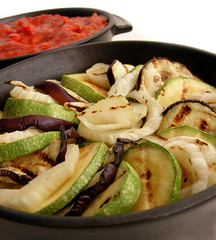
Ratatouille is an authentic aromatic Provençal ragout of onions, eggplants, peppers, (zucchini) and tomatoes, stewed slowly in olive oil and flavored with garlic and fresh herbs.
Cutting up the vegetables is time consuming and that is why I like to make double or more than the amount I need and use the leftovers …
- at room temperature the next day with grilled chicken or fish.
- mixed with eggs and cheese for a Quiche Provencal.
- heated up and stirred with beaten eggs, spiced with chilis and served with sliced ham, Proscuitto, or cooked lean sausage as Piperade or Basque dish.
- reheated and used as sauce for freshly cooked pasta, garnished with feta or goat cheese, with the addition of pitted black olives if desired.
- As Minestrone, heated with vegetable or chicken stock, adding a can of drained cannelini beans and maybe a spoon of pesto on top.
The trick of a good ratatouille is not to overcook the vegetables. They have to be added one after the other, depending on the amount of time they need to cook to be just tender. Of course, Nora recommends all the vegetables be organic.
6 – 8 servings
1/2 cup olive oil (Nora doubles this)
1 large onion, chopped
1 Tablespoons garlic, minced
1-2 eggplants (2 lbs) cut into 1-inch cubes
2 peppers, red, green or yellow, cut into 1-inch squares
2 zucchini (1.5 lbs) cut into 1-inch cubes
1.5 lbs tomatoes, peeled and cut into 1-inch cubes
salt and freshly ground black pepper
1 Tablespoon thyme, minced
1/2 Tablespoon rosemary, minced
2 Tablespoon parsley or basil, minced
Heat the olive oil in a large skillet until hot.
Add the onions and stew for 10 minutes until soft. Add the garlic, then the eggplants and peppers, cover and cook slowly for 20 minutes.
Add the zucchini, cook for 5 minutes, then lastly add the tomatoes and cook for an additional 5 minutes or less.
Season with salt and pepper and the minced herbs.
Calories 220
Calories from Fat 150
Total Fat 16g 25%
Saturated Fat 2g 11%
Cholesterol 0mg 0%
Sodium 15mg 1%
Total Carbohydrate 18g 6%
Dietary Fiber 6g 22%
Soluble Fiber 1.13 g
Omega 3 Fatty Acids 0.14 g
Sugars 10g
Protein 3g
Vitamin A 60%
Vitamin C 160%
Calcium 4%
Iron 8%
Nora Pouillon, true believer in a sustainable lifestyle, is a longtime advocate for increasing the quality and nutritional value of the food supply. She is the chef and owner one of Washington, D.C.’s most popular restaurants, “Restaurant Nora”. Featuring organic, multi-ethnic cuisine, the internationally-known Nora opened in 1979 and has been praised for its delicious, high quality food, and healthy approach to eating in publications as varied as The Washington Post, The Wall Street Journal, New York Times Magazine, USA Today, Gourmet, Self, Vogue, and Modern Maturity. In April 1999, Nora became the first certified organic restaurant in the country which means that at least 95% of all the ingredients served in the restaurant are certified – and proving you can successfully run an upscale restaurant that is good for you and for the environment.
Goody’s Vegetable Soup
- At December 07, 2010
- By Katherine
- In Recipes
- 0
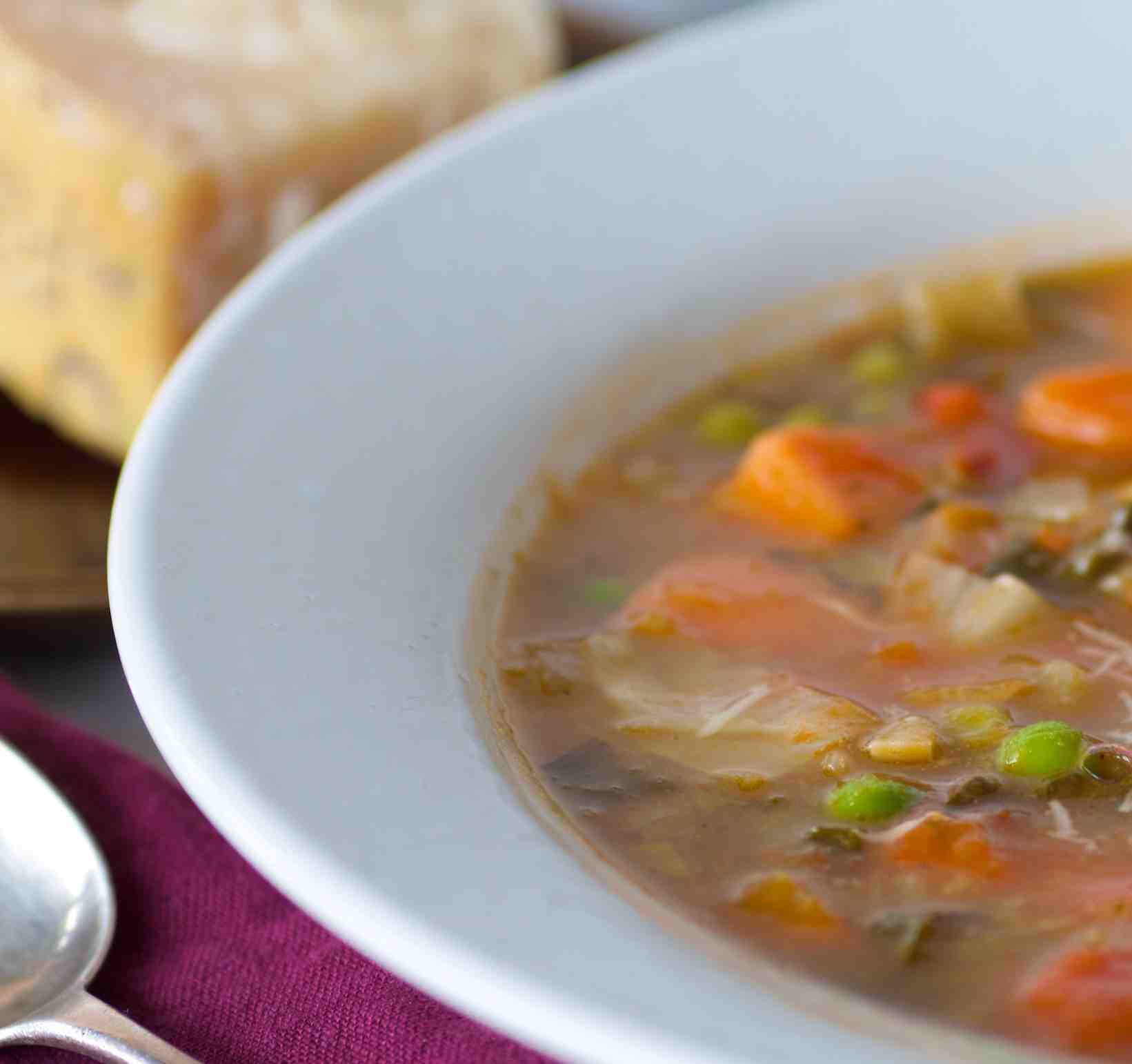 I first experienced this soup at a pot luck dinner with a group of colleagues in Les Dames d’Escoffier, a professional group of women in the food and wine fields. My fellow Dame Goody Solomon made it and when it was passed around, I was mesmerized by the soup’s delicate aroma. When I tasted it, I was surprised that a simple vegetable soup could be so delicious. The tender vegetables imparted a sweet and complex flavor. I couldn’t get enough. This was the only dish I got seconds of.
I love it and swear by it as a weight loss aid. Eat this with every meal and you’ll not only be bowled over by its flavor and look forward to every meal, you’ll see results.
10 – 12 servings
4 Quarts Defatted Chicken Stock (see Goody’s recipe for Chicken Stock)
1 Large Can of Tomatoes with Juice,
2 Parsnips,
1 Large Potato
5 Carrots
1/4 Large Cabbage
2 Stalks Celery
1 Medium peeled Onion
1/2 tsp butter or light margarine per serving (optional)
Bouquet Garni:
1 Large Clove Garlic
4 Sprigs of Fresh Parsley
2 Sprigs of Fresh Dill
Cut all of the vegetables into bite size pieces. To make the “bouquet garni,” place the garlic, parsley and dill in a cheese cloth, tie with a string. Put vegetables and bouquet garni in the chicken stock and simmer until potatoes and carrots are soft – about 40 minutes.
When serving, garnish each bowl with 1/2 tsp of butter or light margarine.
Goody Soloman is the executive editor of the Food Nutrition Health (FNH) News Service in Washington, D.C., in which she reports on government policies affecting food, nutrition and health. Her career has been multi-faceted with stints as an award-winning syndicated food columnist, a restaurant reviewer, consumer correspondent, magazine writer, television personality, book author, public speaker and teacher.
Calories 100
Calories from Fat 0
Total Fat 0g 0%
Saturated Fat 0g
Cholesterol 0mg
Sodium 320mg 13%
Total Carbohydrate 14g 5%
Dietary Fiber 3g 13%
Soluble Fiber 0.89 g
Omega 3 Fatty Acids 0.04 g
Sugars 4g
Protein 10g
Vitamin A 100%
Vitamin C 25%
Calcium 6%
Iron 15%
Analysis with 1/2 tsp butter
Calories 120
Calories from Fat 20
Total Fat 2g 3%
Saturated Fat 1g
Cholesterol 5mg
Sodium 340mg 14%
Total Carbohydrate 14g 5%
Dietary Fiber 3g 13%
Soluble Fiber 0.89 g
Omega 3 Fatty Acids 0.04 g
Sugars 4g
Protein 10g
Vitamin A 100%
Vitamin C 25%
Calcium 6%
Iron 15%
Blizzard Bloat
- At December 07, 2010
- By Katherine
- In Articles
- 0
Watch out for Winter Weight Gain
Have you noticed your weight creeping up this winter? Are you experiencing more cravings than usual, especially for heartier, more fattening foods? Well, take heart. You’re not the only one experiencing “blizzard bloat,” the creeping up of body fat hitting a large number of people during the winter months.
In the animal kingdom, fattening up in winter is critical for survival. Animals overeat to store enough excess fat to survive until spring. The human animal has a similar natural instinct, probably leftover from the days when food was scarce in winter and shivering in the cold caused us to burn our fat stores too quickly, leaving us too thin to survive (aaaah, those were the days!). But now, with temperature control, improved agricultural techniques and a cupcake shop on every corner, that leftover but highly frivolous instinct just causes trouble. We humans fatten up just for the fun of it!
Though these old instincts are plausible as a cause of winter weight gain, there are more complex—and controllable—causes too. The most important probably involve decreases in both sunlight, and its negative side-effects, and physical activity. Together, they can contribute to enough of a calorie imbalance to cause weight gain. Here’s how.
Sunlight. Some people are particularly susceptible to light deprivation, caused by the decrease in daylight hours during the winter. This affects the neurochemical serotonin, responsible for your mood and appetite, prompting increased food cravings and weight gain.
Physical Activity. When it’s cold outside, we’re less physically active and cut back on subtle calorie-burning activities such as short walks and light outdoor chores. These caloric expenditures may only add up to about 100 calories per day, but this translates into a 3-4 pound weight gain during the winter months.
What should you do to both improve your mood and curb your cravings?
Increase your exposure to sunlight. Bundle up and go outside to reverse the symptoms of light deprivation. You’ll feel refreshed and less bored, and your appetite may be more controllable. The amount of needed daylight varies for each individual. In general, the more the better. One hour daily in the morning, ideally at sunrise, is most helpful. If you’re not an early bird, several hours on the weekends may help make up for a lack of sun during the week. Also, try taking little walks outdoors at lunchtime or any time you can get a break during daylight hours.
Increase your activity level, even just a little. During just one exercise bout, your brain releases feel-good chemicals, called endorphins into your body. These chemicals reduce pain, increase feelings of well-being and elevate your mood. If you’re regularly active, these benefits multiply. A brisk 30-minute walk just three times a week relieves major depression just as effectively as an antidepressant in most adults, according to a study published in the Archives of Internal Medicine. Wear a pedometer to keep track of your activity level and to motivate you to get more (I recommend the “Omron HJ 112”).
- Increase your intake of a colorful array of fruits and vegetables. These low-cal but filling carbohydrates increase seratonin production, helping to regulate mood and appetite. They also help you feel more satisfied for fewer calories, and research shows adding them to a meal could save at least 100 calories (translating to 4 or 5 pounds during the colder months).
Some Tips:
- To lower the calories and increase the portion size of a favorite recipe, pump up the volume by adding vegetables as often as you can. This way, you can eat your usual portion for fewer calories.
- Choose fresh fruits over dried fruits or juices. For 100 calories, you could eat 1/4 cup of raisins or two cups of grapes. (You’re more likely to fill up on the grapes.)
- Start lunch or dinner with a bowl of broth-based vegetable soup or a big vegetable salad with low-calorie dressing.**
- Turn main courses into soups or salads by adding broth or vegetables.
- Try the following recipes
The Flat Abs Diet
- At December 07, 2010
- By Katherine
- In Articles, Recipes
- 0
(with recipes)
(excerpted from Katherine Tallmadge’s SHAPE Magazine article)
Just can’t get rid of your flabby belly, even though you do sit-ups and crunches until you’re ready to drop? Or maybe you’re so mortified by the condition of your fat abs that you’ve relegated your best suits, bathing suits and skinny jeans to the dark recesses of your closet.
Before you dump on (or just plain dump) your workout for not giving you killer abs, you should know the real culprit could be your diet-and even your high-stress lifestyle.
When it comes to going from fat to flatter abs, new research shows that what you eat is just as important as how–or even how much– you work out. And lifestyle counts, too, because while stress doesn’t just mess with your head-it can also induce a pooch.
As a longtime weight-loss specialist, I can assure you that flat abs aren’t an impossible dream or something seen only on fitness models. In fact, I’ve helped thousands of people (myself included) whittle flabby middles into beautiful flatter bellies by combining an eating plan especially designed to decrease fat and bloating with aerobic exercise, strength training and stress management.
Following are eight strategies from the country’s leading weight loss, nutrition and stress experts, all designed to take you from fat abs to flatter abs in just four weeks, plus delicious recipes that fill you up without making you feel or look bloated. With my plan, you’ll build show-off abs that are the center of attention when you’re wearing a fitted suit, a bathing suit, a pair of skinny jeans–or nothing at all!
Tired of going undercover every summer to avoid exposing your less-than-ripped abs? From analyzing your protein needs, eating more fiber and less salt to reducing stress, the following eight strategies are all the secrets you need to build a better, bare-it belly worthy of any bathing suit. So make this the summer you finally ditch the beach shifts and baggy shorts you’ve been hiding behind.
Tip 1. Personalize Protein Intake!
When you lose weight or body fat, unfortunately, you lose muscle along with it, so even if you lose weight, you’ll still be flabbier! But new research has found that finding the right amount of protein to eat, distributing it strategically through the day, and before and after work-outs, is essential for not only effective weight loss, it’s more likely to minimize muscle loss and maximize fat loss, taking you from fatter to flatter abs. Keeping muscle stores high is critical for several reasons.
“Losing muscle decreases resting metabolic rate, making it harder to maintain a healthy weight and lose body fat,” says William Evans, director of the Nutrition, Metabolism, and Exercise Laboratory at the Donald W. Reynolds Center on Aging at the University of Arkansas for Medical Sciences.
In addition, bone health, muscle function, muscle strength, muscle mass and immune function – all are impaired with an inadequate protein intake.
But, how much protein do you need? And, how can it be maximized to protect – and even build – muscle as you lose body fat?
In Pursuit of Protein
Although for most Americans the recommended dietary allowance of protein may be adequate, if you’re losing weight or are worried about the inevitable bone and muscle loss which accompanies aging (starting in your 30s!), consider increasing your protein.
Protein can be found in a wide range of foods. Animal protein is in seafood, dairy, meat, poultry and eggs. Vegetarian protein can be found in legumes, soy, vegetables and grains. And while it’s true that high-protein foods often bring fat and calories along as uninvited guests, it doesn’t have to be that way.
The lowest-calorie animal protein sources are the leanest. Go for seafood, poultry with no skin, lean veal cuts, pork tenderloin, lean beef cuts such as the round or tenderloin or 95 percent lean hams (less than 3 grams of fat per ounce), fat free dairy products such as skim milk, yogurt and cheeses. Soy products also provide great low-calorie options. Toss two to four ounces of lean beef, chicken or seafood or 12 ounces of spiced tofu into your salad and gain 14 to 28 grams of high-quality protein and no more than 100 to 200 calories.
How much protein do I need?
At present, the recommended dietary allowance (RDA) for protein is computed using the following formula:
0.37 grams of protein per pound of ideal body weight (this usually means people are eating about 15 percent of their calories as protein). Though, this may not be enough if you’re trying to build muscle or prevent muscle loss while dieting, exercising heavily or aging.
New evidence suggests that to protect bones and muscle, to achieve flatter abs and a fitter, more muscular body, we should consume more, though the amount of protein should never be more than 35 percent of daily calories (we’re not talking Atkins Diet levels here). Balance is everything. It’s important to avoid eating too much – or too little!
Personalized Protein Formulas
If you’re trying to maintain muscle, multiply your ideal weight by 0.45 grams of protein per pound
Sample for a (ideally) 200-lb man: 200 lbs x 0.45 grams protein per pound = 90 grams protein daily (in no more than 30 gram increments per meal *see below)
Sample for a (ideally) 130-lb woman: 130 lbs x 0.45 grams protein per pound = 59 grams protein daily (in no more than 20 gram increments per meal *see below)
If you’re trying to build muscle, and you’re weight training, multiply your weight by 0.55
Sample for a (ideally) 200-lb man: 200 lbs x 0.55 grams protein per pound = 110 grams protein daily (in no more than 30 gram increments per meal *see below)
Sample for a (ideally) 130-lb woman: 130 lbs x 0.55 grams protein per pound = 72 grams protein daily (in no more than 20 gram increments per meal *see below)
If you’re a serious body-builder, multiply your ideal weight by 0.69
Sample for a (ideally) 200-lb man: 200 lbs x 0.69 grams protein per pound = 138 grams protein daily (in no more than 30 gram increments per meal *see below)
Sample for a (ideally) 130-lb woman: 130 lbs x 0.69 grams protein per pound = 90 grams protein daily (in no more than 20 gram increments per meal *see below)
How is protein most effective?
You cannot eat a large amount of protein in one meal and expect it to be effective. Protein must be distributed through the day in no more than 20 gram increments per sitting (for women) and 30 gram increments for men. A “sitting” is separated by at least two hours. Eating an amount above these levels at any one meal or snack cannot be utilized as protein in your body, so it is wasted as pure calories. To maximize the availability of protein to your muscles (and not waste it) you’ll need to distribute it more evenly through the day. For most of you, that means finding ways to eat more protein earlier in the day and less in the evening (when most of you get the lion’s share of your protein). And possibly even adding high protein foods, such as nonfat yogurt, a skim latte or even edamame (fresh soy beans) to your mid-morning and afternoon snacks.
There is also evidence that if you eat protein 30 minutes before your workout and a little immediately after, this will enhance muscle-building. But remember, don’t bother exceeding the total of 20 grams for women or 30 grams for men, unless there is at least two hours between feedings. For instance…
Women: eat 10 grams before the workout and 5 – 10 grams aferward
Men: eat 10 – 15 grams before the workout and 10 – 15 grams afterward
WHERE DO I GET PROTEIN?
8 ounces milk/yogurt . . . . . . . . . . . . . . . 8 grams protein
1/2 cup cooked beans/tofu . . . . .. . . . . . 8 grams protein
1 ounce meat/fish/chicken/cheese (the leaner the meat,
the more protein and the fewer calories). . 7 grams protein
1 large egg . . . . . . . . . . . . . . .. . . . . . . . . . 7 grams protein
1/2 cup cooked or one ounce
dry (1 slice bread) grain . . . . . . . . . . . . . 3 grams protein
1/2 cup cooked or 1 cup raw vegetables . . 2 grams protein
Tip 2. Eat more fiber
Not eating enough fiber may be a major reason people are getting fatter and flabbier, says leading fiber researcher David Jenkins, M.D., Ph.D., professor of nutrition and medicine at the University of Toronto, and a member of the National Academy of Sciences’ Food and Nutrition Board. To ditch the fat and show off firm, beautiful abs, you need to eat at least 25 grams of fiber (women) daily (38 grams for men) he says. Fiber, which is the indigestible part of fruits, vegetables, legumes and whole-grain foods, helps give you flat abs for three reasons:
- The “bulk” factor Imagine a dry sponge. That’s what fiber is like. When it fills with water in your digestive tract, it makes everything move through more quickly. Not eating enough fiber causes constipation, which can make your stomach stick out and add up to five pounds more on the scale.
The “fill” factor Because high-fiber foods like fruit and vegetables add bulk to your meals without adding a lot of calories, they keep you full longer and help you lose weight, say researchers at the Human Nutrition Research Center at Tufts University who concluded that lowfat diets work only if they’re also high in fiber-rich foods like fruits, vegetables and whole-grain foods, all of which fill you up on fewer calories and less fat. Lowfat diets that are also low in fiber and high in sugar, salt and preservatives can lead to bloating and weight gain.
In a study conducted by Barbara Rolls, a professor at Pennsylvania State University and author of Volumetrics (Avon, 2000) subjects who ate vegetables with their meals consumed about 100 calories fewer without making up for the caloric deficit later. While saving 100 calories a day may not sound like much, it translates into losing 10 pounds in one year. Use just this one trick–and there goes your tummy!
The “chew” Factor The psychological “chew” factor also plays a role here. “High fiber foods require more chewing and take longer to eat,” explains Leslie Bonci, R.D., author of The American Dietetic Association Guide to Better Digestion (Human Kinetics Press, 2002). “Because your mouth is more involved in the eating of high-fiber foods, you feel more satisfied with a high-fiber meal that provides fewer calories but tons more food than a low-fiber meal,” she says.
How to add fiber to your diet comfortably One cautionary note: It’s important to add fiber slowly but consistently to prevent side effects. “Make higher fiber choices throughout the day, don’t have all your fiber in one bunch,” says fiber expert Jenkins. “This is particularly important with ‘viscous’ fiber–a type of soluble fiber found in beans, oats, barley, and rye, which also has the benefit of lowering blood cholesterol,” he says. For best results, increase your fiber intake slowly over the course of two months and drink plenty of water to keep your food moving. Below is a 4-week guide on how to up your fiber intake from 3 to 26/38 grams without developing uncomfortable side effects. In fact, the only change you’re likely to notice is your stomach getting flatter and flatter.
4-Week Fiber-Up Guide
Week 1:
Add one to two servings of Whole Grain Cereal (adds 4 – 8 grams of fiber) as your breakfast cereal every morning. Enjoy one cup of fresh fruit on the side (adds 2 – 6 grams of fiber)
*Fiber countdown: 6 – 14 grams daily
Week 2:
For lunch, make a sandwich every day using two slices of 100 percent whole-wheat or whole rye bread instead of white bread (adds 4 – 6 grams of fiber). Add 1 cup vegetable salad on the side (adds 2 grams of fiber)
*Fiber countdown: 12 – 22 grams daily
Week 3:
For dinner, sprinkle 1/4 Cup to 1/2 cup garbanzo, pinto or black beans in a salad, soup or stew (adds 4 – 8 grams of fiber). Add 1/2 cup sautéed greens on the side (adds 2 grams of fiber)
*Fiber countdown: 21 – 26 grams daily.
(Note: To reduce discomfort and bloating, the key is to keep your fiber high consistently every day and throughout the day. You may experience gas if you’re eating a low fiber diet with the occasional high fiber food. Your body doesn’t get a chance to get used to it. If you have problems, try nonprescription products like Beano)
Week 4:
Add 2 cups or pieces of fruit as a mid-morning and afternoon snack every day (adds 4 – 12 grams of fiber).
*Fiber countdown: 25 – 38 grams daily! See how easy that was?
Tip 3. High Quality Carbohydrates
Consuming too many carbs promotes fat abs. For flatter abs, make 45-65 percent of your total daily calories carbs. Balance is the key here, so don’t go below 45 percent (You NEED at least 120 grams daily for brain functioning as carbs are the only fuel your brain uses) or above 65 percent which can lead to water retention, bloating and temporary weight gain that shows up in your middle.
When you eat carbs, they break down into glucose, which is stored as glycogen in muscle and the liver. When glycogen is stored, it carries with it four times its own weight as water, compared to no water at all for protein and fat, according to Peter Garlick, Stoneybrooke University professor of nutrition. If you eat an extremely high-carb diet or in one meal eat more carbs than usual, you’ll store excess water, experience bloating and gain temporary water weight. (This is why people who go on no to very low-carb diets lose weight so quickly. They’re really just losing water.) To avoid bloating and weight gain caused by consuming too many or the wrong kind of carbs, follow these tips:
- Fill up on fruits and vegetables These are the least bloat-promoting foods because they contain plenty of water and fewer carbs and calories for their volume.
- Avoid high-carb/empty calorie foods like fast food, snack cakes, cookies, chips, crackers, candy, etc. These foods are high in carbs, sugar and sodium, which causes bloating and weight gain, and are low in fiber and nutrients.
- Focus on balanced eating. To get flat abs, it’s essential to eat the right amount of healthy carbs-or 202 – 292 grams daily (based on eating 1,800 calories daily). For best results, eat at least three to five 4-ounce servings of veggies (15 to 25 grams of carbs); two to four 4-ounce servings of fruit (30 to 60 grams of carbs) and about 1 cup (8 ounces cooked or 2 ounces dry, the equivalent of 2 slices of bread) of whole grains per meal (90 grams per day).
- To determine how many healthy carbs you need to build flatter abs, multiply your daily calorie intake by 0.45 (if you want the lowest amount of carbs recommended) or 0.65 (if you want the highest amount recommended) then divide by 4 calories per gram. If you eat 1,800 calories daily, for example, that’s 202 – 292 grams of carbs per day Tip 4. Drink up!
Many people believe that drinking too much water will give them puffy abs, but just the opposite is true. Not drinking enough water will leave you bloated. That’s because when you get dehyrated or consume excessive salt, your body produces the hormone aldosterone. which causes your kidneys to retain sodium to restore normal blood volume. Since water naturally follows sodium, water retention increases-and you wind up with fat abs.
“Even though we associate water with being bloated, drinking more water can help to flush sodium out of the body, and that reduces the bloat,” said Jeff Hampl, Ph.D., R.D., nutrition researcher and assistant professor at Arizona State University. An easy way to tell if you’re drinking enough is by checking the color and quantity of your urine. If it’s pale yellow and high volume, you’re doing OK. If it’s dark and scant, you are probably dehydrated. And if you’re thirsty, you’re already dehydrated. Follow these tips and you’ll stay hydrated and healthy:
- Drink at least eight 8-ounce glasses of water per day. If you are trying to lose body fat, why fill up on high calorie beverages? If you eat a lot of high water-containing foods such as fruits, vegetables and low sodium soups, you can count half the volume as water. Plus, you get the benefit of filling up with fewer calories!
- The National Academy of Sciences’ Food and Nutrition Board says you require a millileter of water for every calorie. So, to determine your water needs, simply divide your daily calorie need by 30 ml/ounce. If you need 1,800 calories daily, your water need is 60 ounces per day. Add at least 50% more water if you’re extremely active or you’re spending time in hot weather.
- · Go for cold or iced beverages rather than warm or hot ones. Choose cold liquids like plain, cold water. These empty from your stomach more quickly than warm or hot beverages because the cold temperature stimulates your intestines to contract and liquids keep moving through faster to reduce bloat.
- Avoid carbonated drinks Fizzy drinks, including soda pop and spritzers, slow down stomach emptying and increase bloating BECAUSE…. of the excess air trapped in the bubbles creates gas and slows down stomach emptying.
- Watch your intake of alcohol and caffeine Both are natural diuretics, which increase fluid loss and don’t replace your body fluids as effectively as water, juice and caffeine- and alcohol-free beverages. Because they promote dehyration, alcohol and caffeine can also fatten abs.
Tip 5. Watch the sodium!Sodium may have a bad rep, but it’s actually essential for regulating body fluids and blood pressure as well as for nerve transmission, muscle function and absorption of important nutrients. We just don’t need much for all this to happen. According to the NAS’ Food and Nutrition Board, the average person needs just 500 milligrams of sodium a day. Most of us consume five times that, or 3,000 to 6,000 milligrams per day. The consequence of all this sodium-most of which is consumed as salt and preservatives in processed foods, fast foods and restaurant foods–isn’t pretty for your abs. That’s because where sodium goes, water follows. When you eat a high-sodium meal, say, from your favorite Chinese take-out at 3,000 mg per entree, your body responds by retaining water. This results in edema and, possibly, a rise in blood pressure. Sodium’s visible traces are outlined the next day when you stand sideways in your full-length mirror: major B-L-O-A-T! Even though bloating is temporary, it’s hardly any consolation if you want to wear something fitted that day. Here’s how to keep your sodium intake at a healthy level.
- Limit salt to 1 teaspoon daily. The American Heart Association recommends you consume no more than 2,300 milligrams of sodium daily-roughly 1 teaspoon of table salt- which you will get while eating natural foods through the day. That’s enough sodium to replenish your supply even if you’re working up a major sweat.
- Choose fresh, natural foods over fast foods, commercial or packaged foods Instead of ordering French fries ( 290 mgs of sodium) have a baked potato (10 mgs). Instead of a pickle (1,730 mgs), enjoy a fresh cucumber (6 mgs). Instead of store-bought tomato sauce (1/2 cups has 520 mgs), try topping your pasta with fresh, diced tomatoes (10 mgs per tomato). And beware of cured meats. Three ounces of ham packs in 1,180 mgs of sodium, compared to just 30 mgs for the same amount of roast pork. Soups are also notoriously high in sodium; some canned varieties contain more than 1,200 mgs per cup. Read labels carefully and stick with low-sodium brands like Healthy Choice. Tip 6. Eat lite at night
It never fails. If you have a heavier-than-normal evening meal or snack and weigh yourself the next morning, you’ll be up by several pounds. But as depressing as it may seem at the moment, a quick gain like that is always water weight; you simply cannot gain that much fat overnight. So if you eat lighter the following night, it may all just disappear. But eat heavily too many nights in a row and that temporary water gain becomes permanent fat gain-and fatter abs.
Evening eating is problematic for most people, as it can be related more to emotional issues than real hunger. You’re tired, lonely, bored, anxious, you want to relax, want a reward, want to party, etc. There are tons of reasons for eating too much at night which have nothing to do with hunger.
In a study conducted by C. Wayne Callaway, M.D., a former metabolic specialist in Washington, D.C., people who skipped breakfast or lunch and ate their largest meals later in the day had lower metabolisms, meaning they were burning fewer calories making it harder to lose or maintain body fat..
Some tips to get you started: ·
Evenly distribute your calories/meals throughout the day. Eat 1/3 in the morning, 1/3 at lunch and no more than 1/3 of your calories in the evening. For most people, it means doubling up their breakfast and lightening up their evening meals considerably. By staying full and energized, you’ll avoid hunger pangs, maintain an even energy flow, and make better food choices (no bingeing or craving) and enjoy the most efficient burning of calories.
Studies show people who eat proportionately more earlier in the day end up eating fewer overall calories, and that helps turn fat abs to flatter abs.
If you absolutely have to eat at night because you’re hungry, pick something low in calories, but high in protein/nutrients so it doesn’t produce a pooch in the morning! Try fruit, vegetables, or maybe a hot cup of skim milk with a dash of honey, vanilla, and/or cocoa powder. It may not be what you’re craving, but once you eat it, you’ll realize it hits the spot perfectly. You will go to bed feeling light and will wake up hungry for a nice, big breakfast – a great start to the day!
Tip 7. Reduce Stress!
How you eat and exercise is not the only thing affecting whether your abs are fat or flat. New research shows that stress triggers the hormone cortisol to turn up your appetite and deposit fat around the organs in your abdomen. This weight is associated with heart disease, diabetes and cancer. It particularly becomes a problem after the age of 30 because of the natural shift in hormones already occurring.Simple stress that goes away rapidly doesn’t cause much of a problem–think quick traffic jam. But if you’re ruminating and worrying over an issue that will not go away, this can lead to prolonged increases in your cortisol, one heck of a stress-related appetite–and fat abs. To reduce stress-related eating, try incorporating the following suggestions:
- Move it or lose it A recent study conducted at the Fred Hutchinson Cancer Center in Seattle showed cardiovascular exercise is especially effective in reducing midsection weight gain.
- Chill out. When you feel stress building, take a few moments to breathe deeply and regroup. Then consider some enjoyable alternatives to eating that can ease your tension. Consider taking a bubble bath, getting a massage, listening to some soft music, making a phone call to a loved one, taking a yoga class, walking around the block-whatever it takes to get out of the high stress lane and into the relaxation zone.
-
- · Listen to your body signals. If you’re hungry, eat! If you’re craving food but you’re not sure if you‘re hungry, wait a little while. You’re probably not. (Hunger is a lot like love – if you’re not sure, you’re probably not!)
- Make sure you eat enough calories To lose weight without sabotaging your metabolism or experience low metabolism bloating, keep your caloric intake as high as possible but still slightly lower than what you need to maintain your healthy weight. Never cut your calories so that you’re eating more than 250- 500 calories below the calorie level necessary to maintain your weight, according to the metabolic experts.
- Cardiovascular exercise burns body fat and calories, and improves health. Studies show that simply walking is ideal for losing belly fat. As you improve cardiovascularly, your body becomes more efficient and burns more fat with each exercise bout. I’ve found that a minimum of 4 – 5 miles per day or 10,000 steps (if you’re using a pedometer) is necessary for flatter abs and a leaner body,
- Strength training: metabolism is dependent on lean body mass so muscle-building is important to increase your metabolism permanently and keep your need for calories high, And since muscle mass naturally declines as you age (starting in your 30’s!), building muscle is essential to keeping lean. In fact, as you become stronger and use heavier weights in your workout — an indication that you‘ve gained muscle — you can eat more food because your need for calories naturally increases with muscle gain. The American College of Sports Medicine recommends strength training all of your major muscle groups twice a week.
8. The One-Two Punch: cardio and strength training
To keep your metabolism firing and flab loss consistent and predictable, regular cardiovascular activity is a must.
Katherine Tallmadge’s Favorite Stirfries
Stir Fried Shrimp and Vegetables
(excerpted from Diet Simple)
Serves 8
Shell and clean 1 lb. uncooked shrimp; dredge with a mixture of 2 T soy sauce, 1 t fresh ginger, chopped, and 1 T sherry. Heat pan, add 2 tsp oil and saute the dredged shrimp. Remove shrimp from pan.Reheat pan, add 2 tsp oil, and partly saute 1-1/2 C onions, sliced lengthwise, and 1 C celery, cut in 2-inch lengths. Add 12 water chestnuts, sliced lengthwise, 1/2 lb. (3C) fresh bean sprouts or snow peas or 1 can (1 lb) drained bean sprouts and the sauteed shrimp. Add a mixture of 1 T cornstarch and 1/2 C soup stock or water. Cook until thickened, stirring constantly. Serve hot over rice or vermicelli.
calories: 110, fat: 3 g, sat fat: 0, carbohydrates: 9 g, fiber: 2g, protein: 11 g
Stir Fried Pineapple Chicken
Dredge one pound of uncooked chicken meat, cut in one-inch pieces, with a mixture of 1 Tbsp cornstarch, 2 tsp cold water, and 1 Tbsp soy sauce. Saute 1-1/2 cups onions, 1 cup celery 10 water chestnuts, sliced lengthwise, in 1 Tbsp sesame oil for 2 minutes or less and remove from pan. Saute the dredged chicken in 2 tsp oil until brown. Add the vegetables, 4 large slices of canned pineapple, cut in wedges, and finally 4 Tbsp pineapple juice to the chicken and simmer until thoroughly heated. Serve hot over rice or vermicelli. Serves 6.
calories: 230, fat: 11g, sat fat: 2.5g, carbohydrate: 16 g, fiber: 2g, protein: 17 g
These recipes are adapted from the out of print “The Art of Chinese Cooking” by the Benedictine Sisters of Peking (Charles E. Tuttle Company, 1956)
The French Culinary Institute’s
Veal Stew with Carrots, La Boutarde
excerpted from Diet Simple
This Veal Stew is one of my favorite all time recipes. I have served it several times to guests, who most of the time ask for seconds. It’s the perfect meal for a brisk Fall or Winter day, sitting in front of the fire with a nice glass of wine and a good piece of bread. The aromas fill the house with comfort., they make you feel like your (fantasy) French grandmother is whipping something up for you and your friends in the kitchen.
This is also a very simple recipe. The preparation time is not long. But you do have to smell those wonderful aromas for an hour or two before you can take your first bite. I add at least an hour extra to the cooking time because I double the vegetables – and the herbes de Provence. I also use wine only (no water). But this is the beauty of a recipe like this. The measurements are not precise. You can cook to your own taste.
The veal rump can be found at a butcher’s or a specialty market, if you can’t find it at your grocery store. A substitute would be veal shoulder, which is typically used for veal stews, but is not as lean as the rump. If you’re on a budget, beef round is an excellent — and very lean — substitute, than the veal shoulder.
Serves 4
1 Tablespoon Olive Oil.
2 Pounds Veal Rump, well-trimmed and cut into 2” cubes
Salt and Freshly Ground White Pepper
2 Medium Carrots, cut into 1/2″ slices
1 Medium Onion, chopped
1-1/2 Cups Dry White Wine
1 Cup Water
2 Medium Very Ripe Tomatoes, peeled, cored, seeded, and chopped
2 teaspoons Herbes de Provence*
1 Bay Leaves
3 Small All-Purpose Potatoes, peeled and quartered
Warm the oil in a large saute pan over medium-high heat. When hot, add no more than half of the veal and sear for 3 minutes, or until the veal has evenly browned on all sides. Do not crowd the pan or scorch the meat. Using a slotted spoon, transfer the veal to a Dutch oven. Continue searing the veal until all of the meat has been browned. Season with salt and pepper.
In the same saute pan over medium heat, saute the carrots and onions for 3 minutes, or until the onions are translucent. Reduce the heat and stir in the wine. Using a wooden spoon, stir vigorously to lift the browned bits from the bottom of the pan. Pour into the Dutch oven. Add the water, tomatoes, herbes de Provence, and bay leaf.
Place the Dutch oven over medium heat and bring the stew to a boil. Reduce the heat to medium-low, cover, and simmer for one hour. Add the potatoes and simmer for 35 minutes, or until the potatoes are tender. Taste and adjust the seasoning. Remove and discard the bay leaf.
Place an equal portion of the stew in each of 4 warm shallow soup bowls.
Chef’s Note: Herbes de Provence is a mixture of dried herbs that often includes basil, lavender, rosemary, sage, thyme, and others. Look for it in the spice section of your supermarket.
Per Serving:437 Calories, 12 g Total Fat, 4 g Saturated Fat, 149 mg Cholesterol
How Variety Effects What – and How Much – Food You Eat
- At December 07, 2010
- By Katherine
- In Articles
- 0
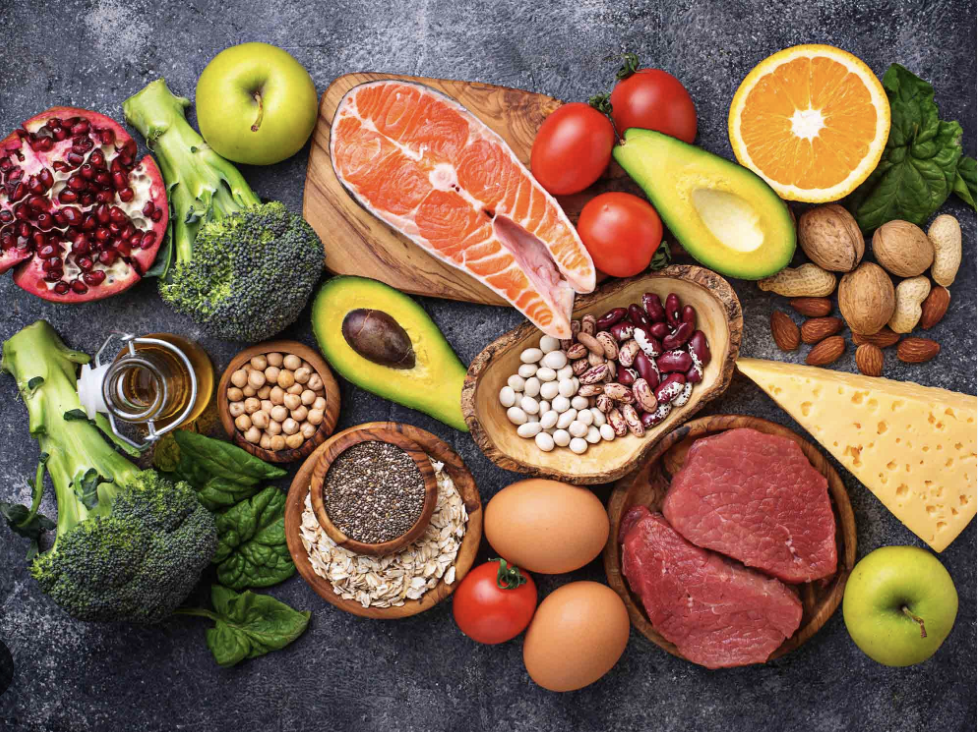
Scenario one:You’re at a party and there is one type of cookie offered – chocolate chip with walnuts. How many will you have? One? Two? Three? You’re at another party and there are eight types of cookies. How many will you have? One of each? More?
Scenario two: For your snack, you have a choice of eating apples OR a fruit salad filled with a variety of fruits like tart berries, mangoes, pineapple, sliced sweet bananas, crunchy apples and nuts. Will you eat more of the apple or the fruit salad?
A client of mine recently attended a dinner party with the clear intention of just nibbling on a few things. But by the time her evening was over, she was stuffed, what she ate seemed a blur, and the food lingered in her stomach like a rock. Her plan that evening was to eat conservatively: to taste just one of each passed hors d’oeuvre before she sat down to dinner. What she hadn’t counted on was “one of each” turned out to be five fattening little hors d’oeuvres, and that was before sitting down to a four course meal! Her experience is not unusual.
Over the years, I’ve noticed that my clients who attend a lot of receptions, parties, and restaurants have more trouble losing weight than their eat-at-home counterparts. I always assumed the problem was the fattening nature of the food or the large portions you’re more likely to get while out.
And while these may indeed be important issues, new research is indicating that the single most important factor causing excessive caloric intake may instead be: too much variety.
Variety? I’ve always been taught that variety was the spice of life – a good thing. My advice has always been that eating a variety of foods is the basis of good nutrition, and that’s been the mantra of nutrition experts through the centuries.
Wouldn’t it be ironic if one of the very things we Americans hold dear – variety and freedom of choice among the most diverse and expansive food supplies in the world – is the very thing making us fat?
The urge for dietary variety is important for health and was helpful during evolution. People who ate different types of food each day were – and are – more likely to obtain all the essential nutrients. Infants embrace variety and when presented with a large array of different healthful foods will naturally select a well-balanced diet, according to a classic study from the early 1900’s. But today, because of the wide array of unhealthy, fattening food available, our attraction to dietary variety may be getting us into trouble. The scientific evidence has been building for decades.
Animals eat more when given variety, according to several studies conducted over the past forty years. When rats are switched from regular rat chow to a variety of choices, they eat more calories, causing weight gain
Studies confirm that humans don’t react any differently than rats. More is eaten during a meal containing a variety of foods, than during a meal with just one food, even if that one food is a favorite, concluded a classic study published two decades ago in the American Journal of Clinical Nutrition.
This study found that when people were offered different shapes or flavors, they ate more. When subjects were offered more than one shape of pasta in a bowl, for instance, they ate more than when there was just one shape in the bowl. Apparently, as you’re eating the same food, the pleasure of its taste and appearance decreases, while a different food still remains attractive. This, concluded the study, promotes consumption of a varied diet.
At the time, researchers weren’t as concerned about overconsumption and didn’t know if the effect would last over time or cause weight gain. But, given the recent concern over Americans’ expanding waistlines, the concept was recently tested. Two studies, published in 1999 and 2003 in the American Journal of Clinical Nutrition, found that when people are exposed to more dietary variety and restaurants (where there is more variety by definition) over six months, overall calorie intake and body fatness increases. Interestingly, people react the same way in cultures as diverse as American and Chinese.
“Variety has an enormous passive effect on calorie intake,” says Susan B. Roberts, the study’s co-author and professor of nutrition at the Tufts University Medical School. “The higher the variety of items you are confronted with, the more most people consume without even realizing it.”
My client’s dinner experience was the perfect illustration of the concept. She ate more, simply because there was more variety. Even if she became satisfied with one course and didn’t finish it, a new flavor from the next course created excitement. Had there been fewer courses or only one type of hors d’oeuvre, she would have eaten less – and been satisfied. But because there were five types of hors d’oeuvres, she ate five! (though she was tempted to eat more of one or two, which she liked more than the others)
Today’s variety is overwhelming and usually involves an array of high fat and calorie options, which the studies showed increased body fatness. (though, vegetable variety increased leanness, but we too rarely benefit from this fact)
“Variety creates torture,” says Barry Schwartz, professor of psychology at Swarthmore College and author of “The Paradox of Choice: Why More Is Less” (Harper Collins, 2005). “At a buffet, people may choose everything for fear that if they only choose some things, they’ll regret their choice. Of course, taking everything guarantees you’re going to take too much.”
Schwartz and Roberts both agreed that this urge is so innate that limiting choices is the only solution to overeating and weight problems. This may be why rigid diets seem to work well – at least temporarily – no matter what type they are, or why going to a spa where choices are limited, is such a relief for some people. Roberts suggested an even more extreme measure.
“If I could move everyone in America to Senegal, an agricultural community, everyone would be thin!” says Roberts.
But minus the ability to eat by rigid, depriving – and often unhealthy – dietary rules indefinitely, luxuriate at a spa, or move to Africa, what’s a person to do?
* Serve a variety of fruits and vegetables to your family and guests, and they’ll eat more healthy foods, without being the wiser,
* Reduce the variety of fattening appetizers, side dishes, and desserts, no one will notice,
* Control the food in your environment, since you’ll tend to eat whatever is accessible. Make sure a variety of fruits, vegetables and healthy foods are more easily available,
* Eat as much variety of flavors, textures, colors and shapes at each meal – within your calorie allotment – to feel the most satisfaction with the meal,
* Before going to a restaurant, review the menu (ie, online) and make your choice ahead of time so that you’re not tempted by the fattening array of choices once you’re there,
* Always grocery shop with a list, so the variety of fattening food doesn’t suck you in.