Chef Janis McLean’s Asparagus Frittata
- At April 01, 2012
- By Katherine
- In Recipes
 0
0
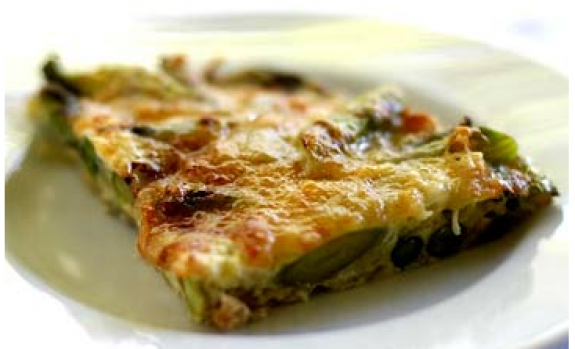
Janis McLean’s Asparagus Frittata
This is one of Janis’s favorite quick spring suppers. “Serve this frittata with a loaf of crusty (whole grain) bread and a nice green salad and you can have dinner on the table in nothing flat!! Also lovely on a spring brunch table. It can be served room temperature, so it is perfect for entertaining, as it can be done ahead!” said Janis, Bistrot Le Zinc’s executive chef.
Serves 1
4 asparagus spears (2 oz)
1 scallion (spring onion)
1/2 tablespoon Canola or Extra Virgin Olive Oil
3 eggs
1 heaping tablespoon of ricotta cheese
1 pinch salt
1 good grind of the pepper mill
Preheat oven to 4000degrees
1. Wash the asparagus spears in cold water (rather than holding it under running water, dunk it in a pan of water so that you can clean the tight heads). Starting at the head — cut it into thin slices on the bias (angle), working your way down until you reach the woody end. Discard the bottom end which will be tough. Slice the scallion in the same manner (on the bias) starting at the white end and working up the onion until you reach the raggedy end (discard tippy-top dark green portion).
2. Heat a 7’ skillet over medium-high heat until hot, but not smoking (3 minutes). Toss in the oil – it should sizzle. When the foaming subsides, add the asparagus slivers and cook over brisk heat until tender (about 1 ½ to 2 minutes). Meanwhile break the eggs into a medium sized bowl, add the ricotta cheese, salt and pepper and whisk until thoroughly blended.
3. Turn the heat down to low, add scallions to the asparagus in the pan and tip in the egg mixture — it should sizzle when it hits the pan. Using a heatproof rubber spatula, gently draw in the base of frittata as it set — pulling in from the sides toward the center — working your way around the outside circle of the pan — in a clover leaf pattern — this will allow what is unset to flow to the bottom of the pan. Once you have made two complete passed around, stop or you will have scrambled eggs, not a frittata.
4. Place in 4000degree oven, and cook until the frittata is set through (about 3 minutes). Place a heatproof plate over the pan, and carefully tip it all upside over to remove the frittata (what was the bottom, is now the top!). Then carefully slide it back into the sauté pan — set it back in the oven for 1 minutes to allow the bottom side to set. (or turn on the broiler to finish the top)
5. Remove from the oven. Slide out onto a plate. This also makes a lovely snack if you cool it to room temperature and serve, cut into wedges.
(c) Janis McLean, all rights reserved
Puree of Asparagus Soup with Tarragon
- At April 01, 2012
- By Katherine
- In Recipes
- 0
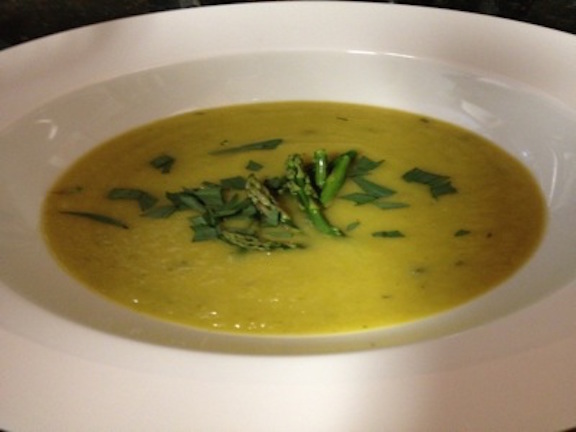
Puree of Asparagus Soup with Tarragon (by Mark Indre)
Puree of Asparagus Soup with Tarragon
This sublime, pale green soup may be served warm or cold.
Serves 8 to 10
Ingredients:
2 pounds Asparagus, cleaned, tough ends removed, cut into 1.5 inch pieces
1 Tablespoon Canola Oil
1 Leak, cleaned and sliced, white and light green parts only
1 medium Onion, chopped
1 clove of Garlic, mashed
Pinch of Salt and Freshly Ground Pepper
Vegetable Broth (see recipe) or Chicken Broth
2 Medium Potatoes, diced
1 Bay Leaf
A few sprigs of Fresh Thyme and Parsley
1 Tablespoon Fresh Squeezed Lemon Juice
Garnish: 1 Small Bunch Fresh Tarragon, chopped
Vegetable Broth:
Use the cleaned tough ends and scraps of the asparagus and leek. Add 1 onion, 1 garlic clove (or more), and 2 quarts of water. Other vegetables you happen to have could also be thrown in, such as a carrot and/or a celery stalk. Let simmer about 30 minutes and strain.
Soup Preparation:
Clean the asparagus, break off tough ends. If you wish, peel the stalks for a more tender vegetable. Slice the asparagus stalks into approximately 1.5 inch pieces.
Heat oil in heavy-bottomed pan. Add the leak, onion and garlic and cook over medium heat until softened, about 5 minutes. Add the broth, the potatoes, and herbs and simmer about 30 minutes. Add half of the asparagus and simmer another ten minutes. Remove the herbs.
Using an immersible hand blender (ie, Cuisinart’s Smart Stick), puree the soup, add the lemon juice and salt and pepper to taste.
Meanwhile, steam or broil the remaining asparagus for 5 minutes, until barely tender. Strain and cover in ice water to stop the cooking process and prevent limp, over-done asparagus.
Serve the soup, garnishing each bowl with the sliced asparagus and a pinch of chopped fresh tarragon.
Puree of Asparagus Soup with Tarragon is adapted from “The Vegetarian Feast” by Martha Rose Shulman, a cookbook I highly recommend.
Asparagus Salad in a Vietnamese-Style Dressing
- At April 01, 2012
- By Katherine
- In Recipes
- 0
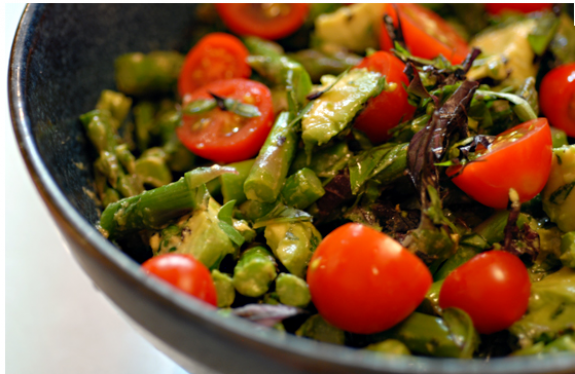
Asparagus Salad in a Vietnamese-Style Dressing
Serves 4 to 6
Ingredients:
1 pound Asparagus, cleaned, tough ends removed, cut into 2 inch pieces
1 large Tomato, seeded and diced, or 2 Cups Cherry Tomatoes halved or quartered
1 teaspoon Canola Oil
3 Scallions, chopped
3 Tablespoons roasted, unsalted Sesame Seeds
¾ Cup Vietnamese Salad Dressing (see recipe)
Ingredients for Vietnamese Salad Dressing:
1 teaspoon Canola Oil
1/3 cup White Vinegar
¼ cup Water
¼ teaspoon Salt
½ teaspoon freshly ground black pepper
1.5 Tablespoons Granulated Sugar
2 Garlic Cloves, Minced
1 Small Sweet Onion, thinly sliced
First make the dressing by mixing together the oil, vinegar, water, salt, pepper and sugar. When the sugar is dissolved, add the garlic and sliced onion. Refrigerate until cold.
Clean the asparagus, breaking off tough ends. If you wish, peel the stalks for a more tender vegetable. Slice the asparagus stalks into approximately 2 inch pieces.
Add the asparagus to boiling water in a medium saucepan. Cook for about 3 minutes, dump into a colander and quickly rinse with ice water to stop the cooking process. Or, if the dressing is cold enough, toss the asparagus immediately into the cold dressing. Do not overcook the asparagus!
Meanwhile, heat the oil in a frying pan, sautee the chopped scallions for a few seconds and add to the asparagus and dressing. Add the chopped tomato and sesame seeds to the mixture and toss before serving.
About 400 calories for the entire recipe.
Vietnamese Asparagus Salad is adapted from “The Vietnamese Cookbook” by Diana My Tran, a cookbook I highy recommend.
Pasta with Pesto, Roasted Asparagus Spears and Cherry Tomatoes
- At April 01, 2012
- By Katherine
- In Recipes
- 0
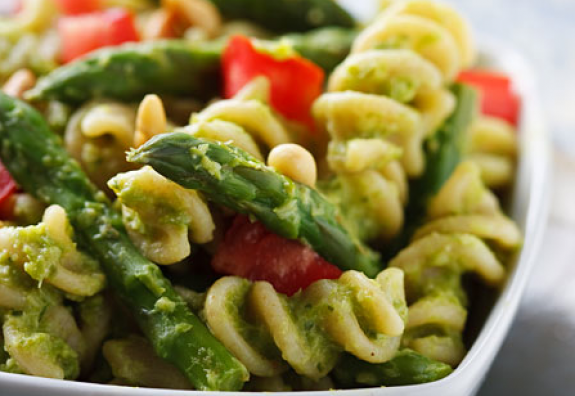
Whole Grain Pasta with Pesto, Roasted Asparagus Spears and Tomatoes
Serves 4 – 6
Ingredients:
1 pound Asparagus, trimmed
1 Tbsp Canola or Olive Oil
1 Quart Grape or Cherry Tomatoes
¼ Cup Basil or Tarragon Pesto
1 Pound Whole Grain Linquine or pasta twists, dry (My favorite brands are “Bionaturae” or “Barilla”)
Salt and Freshly Ground Pepper, to taste
Roast the asparagus and tomatoes:
Preheat oven to 425 degrees. Clean the asparagus, break off tough ends. If you wish, peel the stalks for a more tender vegetable. Slice the asparagus stalks diagonally into bite-sized or approximately 1.5 inch pieces. In a large bowl or plastic bag, toss the tomatoes and asparagus pieces in 1 Tablespoon of Canola or Olive Oil and a light sprinkling of salt and pepper until the asparagus is coated lightly with oil. Place on a baking sheet in a single layer and cook for 5 minutes in the middle of the 425 degree oven. Do not overcook!
When finished cooking, pour the asparagus and tomatoes into a large bowl containing the pesto and toss. Add the cooked pasta and mix all ingredients. Serve warm or chilled. About 200 calories per serving (1/6th of recipe).
Salad of New Potatoes and Asparagus with Lemony Garlic Herb Mayonnaise
- At April 01, 2012
- By Katherine
- In Recipes
- 0
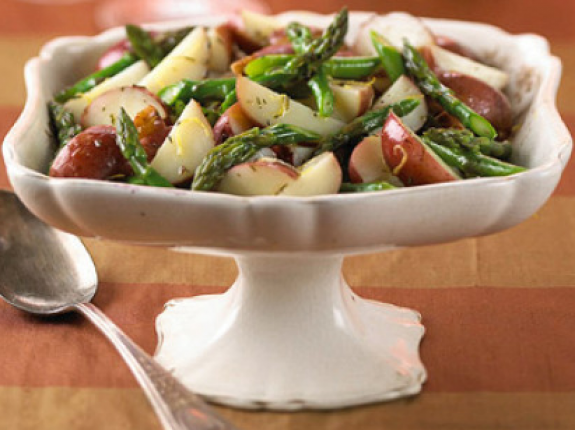
Salad of “New” Potatoes and Asparagus with Lemony-Garlic-Herb Mayonnaise
This salad can be served warm, for instance, as a great winter holiday side dish – with or without the potatoes – or enjoyed cold for spring. The mayonnaise dressing brings out the flavor of any vegetable, especially if allowed to soak into still-warm, just cooked haricots verts (the tender French green bean) or asparagus, delicate, small, thin-skinned “new” potatoes, or broccoli.
Serves 6 to 8
Mayonnaise Dressing:
1/4 Cup Mayonnaise, preferably made with Canola or Olive Oil
Grated Zest and Juice of 1 Lemon
2 Garlic cloves (or more, to taste), mashed
1 Tbsp (or more, to taste) Tarragon or other fresh herb such as Dill
Salt and Pepper, if desired (none needed)
Vegetables:
1 quart Asparagus, tough end removed, slice diagonally in 1.5 inch pieces (or Haricots Verts)
1 pint small New Potatoes with skin, cleaned but not peeled (optional)
2 Red Bell Peppers, roasted (if desired) and chopped
1 pint cherry tomatoes, sliced in half
1 Bunch (about 4 – 5) Green Onions, chopped
Prepare the dressing in a bowl large enough to fit the salad ingredients by mixing the mayonnaise, the lemon, garlic and fresh herb of your choice. Place in refrigerator to keep chilled.
Steam or boil the asparagus for about five minutes (in a small amount of water) until they are al dente (firm, but not hard, with resistance to the bite). Drain and immediately place in the bowl of cold mayonnaise. Toss to coat with mayonnaise dressing. Put the bowl back into the refrigerator to halt the cooking process.
Slice the small potatoes in half or quarters, depending on their size. Boil the potatoes for about 5 or 10 minutes, until tender when pierced by a fork. Drain and place in the bowl with the mayonnaise and asparagus. Toss to coat with the mayonnaise dressing. Place in the refrigerator.
Roast the red bell peppers if desired, chop, and add to the mix. Chop the white part of the green onions, cut the cherry tomatoes in half, and place in bowl with the other vegetables; toss.
Asparagus Already? Katherine’s Favorite Asparagus Recipes
- At April 01, 2012
- By Katherine
- In Articles, News
- 0
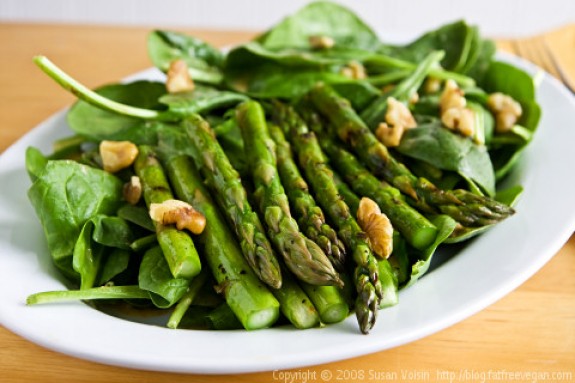
If any food says SPRING loudly and clearly, it’s ASPARAGUS!
Asparagus season is earlier than usual because of the record-setting warm winter weather, and I, for one, am grateful. As someone who almost exclusively buys my produce from the farmers’ markets, I’ve been feeling a bit bored with winter’s kale, potatoes and beets… Kale and potatoes and beets, oh my!
I have several luscious asparagus recipes I’ve been dying to get into. Before I share them with you, let me tell you why asparagus is so good to eat (besides being uniquely delicious).
Asparagus is packed with nutrients. Low in calories, it’s an excellent source of folic acid, thiamin, vitamin C, and B6. Asparagus, like other fruits and vegetables, is sodium- fat- and cholesterol-free. It is an important source of potassium and nutrients for boosting your immune system, reducing inflammation, lowering blood pressure, and preventing heart disease and cancer. Asparagus is especially high in glutathione, one of the body’s most potent cancer fighters, according to the National Cancer Institute. It’s also high in rutin, which is valuable in strengthening the blood vessels.
When buying asparagus, it should be bright green with tight, firm tips. And you’ll need to get to the farmer’s market early, as it goes fast! I’m not the only one eager for change…
My favorite asparagus recipe is one I developed with my client, Rebecca. We made a mess in her kitchen with several bundles of asparagus in each corner. We roasted it, steamed it, and sauteed it. We tried a variety of dressings and accompaniments.
The result? “Chilled Asparagus in a Creamy Tarragon, Shallot, and Roasted Walnut Vinaigrette.” How delicious is it? Let me just say my friend Cindy Mize, who I immortalized in my book, Diet Simple, as having just lipstick and fingernail polish in her refrigerator (during her younger days in Washington), says she can’t sleep knowing it is in her refrigerator. In her new life as president of Miami Capital Properties in Key Biscayne, Florida, she has many dinner parties at which my asparagus recipe is featured. After her dinner guests leave, she says she sneaks to the refrigerator at midnight to scarf up the leftover. I can hardly believe the transformation of this southern gal who claimed she would only eat “brown” or “white” food: but I guess that illustrates the power of a great recipe!
A few of Katherine’s favorite asparagus recipes…
Chilled Asparagus in a Creamy Tarragon, Shallot and Roasted Walnut Vinaigrette
Salad of New Potatoes and Asparagus with Lemony Garlic Herb Mayonnaise
Pasta with Pesto, Roasted Asparagus and Cherry Tomatoes
Asparagus Salad in a Vietnamese-Style Dressing
Puree of Asparagus Soup with Tarragon
Chef Janis McLean’s Asparagus Frittata

- Cindy Mize during her non-vegetable-eating days in Washington, D.C.
Liquid Calories
- At March 27, 2012
- By Katherine
- In Articles, News
- 1
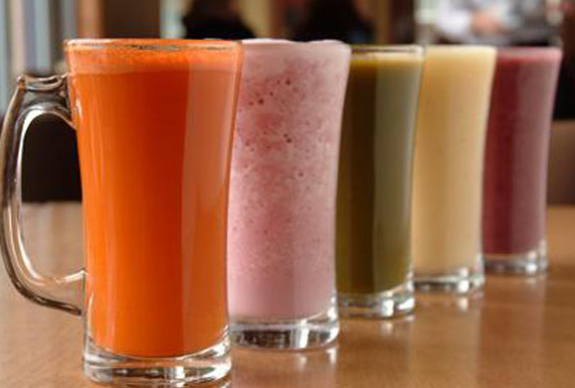
Listen to Katherine discussing juicing on National Public Radio’s Kojo Nnamdi Show on WAMU 88.5 FM.
Juicing is all the rage these days, with juice cleanses, celebrity juicers, and Starbucks opening its first Juice Bar. On National Public Radio’s Kojo Nnamdi Show, I discussed juicing and juices. Find the link below…
I’ve been drinking orange juice every morning of my life. You’d think I’d be sick of it by now. But every morning, I look forward to my “sunshine in a glass,” and it never disappoints. Especially on those occasions when it’s fresh-squeezed. I could live on the stuff. Just thinking of it makes me salivate!
But I save my juice for 4 ounces in the morning because, while it packs a nutritional punch, it also puts on pounds, and fast! Here’s how…
My client, Caroline, who was successfully losing weight, was disappointed one recent week that she didn’t lose weight as usual. It didn’t make sense to either of us. Her food intake was stellar. She was even a little more physically active than usual. It wasn’t until we reviewed her food diary thoroughly that we discovered the culprit was liquid calories, and they added up in a way that surprised her. In her case – as is the case with many of us – that extra glass of wine or mixer, juice as a snack here and there, can add up in ways we don’t expect.
Liquid calories in just about any form, whether alcohol, juices, or sodas, are stealth calories. They come in undetected under the radar screen but have an impact that can be enormous. Scientific evidence is confirming that though these liquids count as calories, our bodies don’t detect them the same way they would if we were eating solid food. When we eat calories in the form of solid food, we naturally compensate by reducing the rest of our meal’s or day’s food intake. But when people ingest liquid calories, studies show, they don’t compensate for them by eating fewer calories.
“Fluid calories do not hold strong satiety properties, don’t suppress hunger and don’t elicit compensatory dietary responses,” says Richard D. Mattes, MPH, PhD, RD, Professor of Foods and Nutrition at Purdue University. “When drinking fluid calories, people often end up eating more calories overall.”
This may help explain the results of the Harvard Nurses Health Study of more than 50,000 women over eight years. The researchers found those who increased their intake of sugar-sweetened beverages, such as sodas or fruit punch, from one per week to one or more per day, increased their calories by 358 daily and gained significant weight. Women who reduced their intake cut their calories by 319 calories and gained less weight. Earlier studies demonstrated that consumption of sugar-sweetened soft drinks increased the likelihood of obesity in children, but this is the first finding from a long term observational study in adults.
The mechanisms controlling hunger and thirst are completely different, and liquids, even if they contain calories, don’t seem to satisfy hunger even if they quench your thirst. Physiologically, your thirst is quenched once your blood and cell volume is increased by water. This signals your brain that you are no longer thirsty.
Hunger is regulated in your stomach and intestines. While you’re eating, nerves in the stomach wall detect that it is stretching and send satiation signals to the brain. The intestines also release nerve regulators and hormones. At the same time, the hunger hormone, ghrelin, released by the stomach when it is empty, goes down. All of which help you feel satiated.
There are several theories explaining why liquid calories cause lower satiety and increased overall calorie intakes, but it’s still not fully understood. First, cognitively, people have a harder time realizing that liquids count. Also, the mouth-feel of a liquid versus a solid may generate different signals, less time and involvement with food, and reduced psychological satisfaction. Finally, liquids, because they travel more quickly through the intestinal tract, alter the rate of nutrient absorption, which can affect satiety hormones and signaling. It’s likely that all of these reasons are relevant.
Emerging research is finding the hunger hormone ghrelin may play a physiological role.
“When the number and type of calories are the same, the calories in liquid form won’t suppress ghrelin as effectively as if the same calories were in solid form,” says David E. Cummings, associate professor of medicine at the University of Washington and the Veterans Affairs Puget Sound Health Care System.
While Cummings hasn’t tested many types of fluids and their varying effects on ghrelin, other researchers have found drinking fluids may produce varying degrees of satiety, depending on what they contain.
It’s fairly well-established that alcoholic beverages and sugary liquids, especially sodas and fruit drinks aren’t completely registered or compensated for and simply add extra calories.
“Some beverages cross over the line into being a food,” says Barbara J. Rolls, professor of nutritional sciences at Pennsylvania State University. She conducted studies which found people felt more satiated and consumed fewer calories when they had milk-based drinks at the beginning of a meal. The high protein levels in addition to cognitive beliefs about milk being a food may make it more satiating. Also, fluids with food in them, such as soups, are very satiating.
But most caloric fluids Americans consume are not satiating. When you consider that an appropriately sized meal is anywhere from 400 to 700 calories, and one Big Gulp is 640 calories, you understand the scope of the problem! A Starbuck’s Frappuccino can total anywhere from 300 to 600 calories. One glass of wine contains at least 100 calories. And one mixed drink can set you back 300 calories or more. Double or triple these numbers at any given party, tack on the calories in your meals, and you can understand how weight gain is the inevitable result.
My clients who have become aware of liquid calories have achieved impressive results. Take Bob Levey, former Washington Post columnist. Bob wrote about the importance of cutting out his daily lemonade in his successful weight loss effort. My other client, Julie, easily switched her daily Frappuccino to a skim coffee latte and saved 250 calories. My friend, Linda, slowly phased out her daily soda by adding more and more ice to it each week until she was only drinking water. She lost 30 pounds over a year.
Most people find reducing liquid calories is an easy change. Since liquid calories don’t contribute to feelings of satiety, cutting them doesn’t lead to feelings of deprivation or hunger. And there are so many great substitutes. The one liquid that’s important to keep drinking is water. In the winter time, I love sipping water as herbal teas through the day. In the summer, it’s selzer with a twist of lemon or lime, and the occasional diet soda.
Of course, if we are mindful of our calorie intake, a moderate daily dose of wine or other caloric beverage can easily be integrated into our routines. The key is mindfulness and moderation.
Listen to Katherine discussing juicing on National Public Radio’s Kojo Nnamdi Show on WAMU 88.5 FM.
Harvard Study: Fruit Reduces Diabetes Risk
- At March 19, 2012
- By Katherine
- In Articles, News
- 0
-
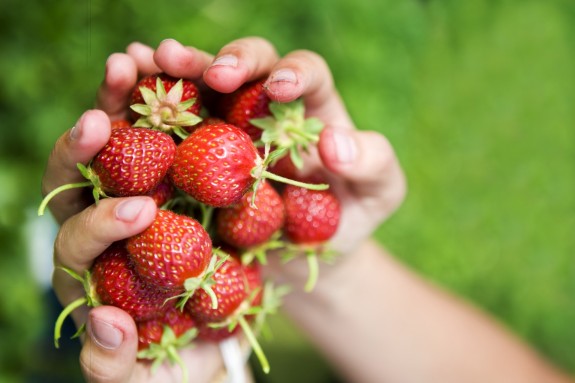
- Swedish Strawberries (Photo: Swedish Embassy)
People are always asking me if fruit is too high in sugar to eat, especially if you have diabetes. This fear of fruit, I believe, is leftover from the Atkins craze, making foods like fruits, and even vegetables like carrots, verboten. This is one of the most tragic consequences of this diet fad, because avoiding fruit can actually damage your health.
People who eat fruit have a lower incidence of Type 2 Diabetes, the most common form of the disease, according to a recently published Harvard study. But this study isn’t alone in its conclusions. It corroborates decades of research showing the nutritional value and health benefits of fruits.
Fruit is high in water content and fiber, which help you feel full with fewer calories. Even though it contains simple sugars and carbohydrates, most fruits have a relatively low glycemic index, that is, when you eat it, your blood sugar raises only moderately, especially when compared with refined sugar or flour products.
Fruit is loaded with nutrients scientists believe protect people from major chronic diseases such as heart disease, cancer, type 2 diabetes, and more. The potassium in fruit helps lower blood pressure and actually helps neutralize the blood pressure-raising affects of sodium.
Eating more fruits and vegetables – as high as 5 cups per day or more – is a habit which could help you stabilize and even reverse Type 2 Diabetes. Yes, it is possible!
And, the best part of fruit? It’s delicious! It’s easy to eat, to pack in your lunch box for the office or school, and it’s such a refreshing snack or dessert. What could be better?
Dietary flavonoid intakes and risk of type 2 diabetes in US men and women
Nicole M Wedick, An Pan, Aedín Cassidy, Eric B Rimm, Laura Sampson, Bernard Rosner, Walter Willett, Frank B Hu, Qi Sun, and Rob M van Dam
From the Departments of Nutrition, Epidemiology, and Biostatistics, Harvard School of Public Health, Boston, MA; Channing Laboratory, Department of Medicine, Brigham and Women’s Hospital and Harvard Medical School, Boston, MA; the Department of Nutrition, Norwich Medical School, University of East Anglia, Norwich, United Kingdom; and the Departments of Epidemiology and Public Health and Medicine, Yong Loo Lin School of Medicine, National University of Singapore, Singapore.
Supported by NIH grant from the National Heart, Lung, and Blood Institute.
Abstract
Background: Data from mechanistic studies support a beneficial effect of specific flavonoids on insulin sensitivity. However, few studies have evaluated the relation between intakes of different flavonoid subclasses and type 2 diabetes.
Objective: The objective was to evaluate whether dietary intakes of major flavonoid subclasses (ie, flavonols, flavones, flavanones, flavan-3-ols, and anthocyanins) are associated with the risk of type 2 diabetes in US adults.
Design: We followed up a total of 70,359 women in the Nurses’ Health Study, 89,201 women in the NHS II, and 41,334 men in the Health Professionals Follow-Up Study who were free of diabetes, cardiovascular disease, and cancer at baseline.
Results: During 3,645,585 person-years of follow-up, we documented 12,611 incident cases of type 2 diabetes. Higher intakes of anthocyanins were significantly associated with a lower risk of type 2 diabetes after multivariate adjustment for age, BMI, and lifestyle and dietary factors. Consumption of anthocyanin-rich foods, particularly blueberries and apples/pears, was also associated with a lower risk of type 2 diabetes. No significant associations were found for total flavonoid intake or other flavonoid subclasses.
Conclusion: A higher consumption of anthocyanins and anthocyanin-rich fruit was associated with a lower risk of type 2 diabetes.
Katherine on “The Daily Show with Jon Stewart”
- At March 17, 2012
- By Katherine
- In Articles, News
- 13
Milk: “It Does A Body Bad?” … Ed Helms Reports!
The Daily Show’s Ed Helms (“The Office”) Investigates Weapons of Mass Destruction you may be harboring in YOUR OWN REFRIGERATOR!


Eggs Scrambled with Onion, Garlic, Kale and Sweet Cherry Tomatoes
- At March 16, 2012
- By Katherine
- In Recipes
- 0
Eggs Scrambled with Onion, Garlic, Kale and Sweet Cherry Tomatoes
This is a regular meal for me any time of the day – quick, easy, delicious, nutritious!
Servings: 1
Saute 1/4 sweet onion and a smashed garlic clove over medium high heat in 1 teaspoon canola or olive oil until almost soft. Add a handful of chopped kale and tomatoes to the pan (or any other vegetables you happen to have such as chopped spinach, kale, mushrooms, or peppers) and cook for another 5 minutes. Turn down heat to very low. In a separate bowl, whisk 2 eggs. Pour eggs into the pan containing the onion, garlic and tomato – add 1 ounce low fat cheese, if you wish. Stir continuously until eggs are cooked. Pour over toasted whole rye bread.
Deep Green Leafy Vegetables have the highest antioxidant content of all vegetables. High in fiber, they are rich in minerals, B-vitamins, beta-carotene, and lutein, a compound which may help reduce the risk of age-related macular degeneration (the leading cause of preventable blindness). Absorption of carotenoids, such as lutein, in your body is increased by cooking and by the presence of fat (so cook in a little healthy olive or canola oil!)