
Roberto Donna’s White Beans, Kale and Shrimp Salad with Basil Dressing
- At March 16, 2012
- By Katherine
- In Recipes
 0
0
Roberto Donna’s White Beans, Kale and Shrimp Salad with Basil Dressing
excerpted from “Diet Simple”
4 servings
8 oz. Dry Cannellini Beans (or 24 ounces canned, rinsed)
1/2 bunch Kale, cleaned, tough stems removed, chopped
1/ 2 Peeled Onion
1 Celery Stalk
4 Fresh Sage Leaves
1/2 Medium Carrot
8 oz. Shrimp (optional, if using shrimp)
2 Cups White Wine (for cooking the shrimp, if using shrimp)
1 Tbsp Balsamic Vinegar
3 Tbsp Extra Virgin Olive Oil
10 Fresh Basil Leaves
Salt and Pepper to Taste
Optional step if starting with dried beans: Soak the cannellini beans in water for 12 hours; drain and place in a pot of water, add salt and pepper; cover and simmer for 45 minutes.
Optional step if using dried beans: Chop and add the onion, celery and carrot, cooking another ten minutes. Add the finely diced sage to the pot and drain the cooking liquid. Place in a cool location.
If using canned beans: Rinse the beans in a strainer, add to a large bowl. Chop all of the vegetables and the fresh sage leaves and add to the beans. Toss beans, vegetables and sage together.
If using shrimp: Wash and clean the shrimp and poach for three minutes, or until done, in the White Wine.
Add salt and pepper to taste.
Dressing: Finely chop basil and add the balsamic vinegar, salt, pepper and olive oil. Whisk until emulsified.
Presentation: Place a large, clean Kale leaf and 1/4 of the mixture on each plate. Top with 2 oz. of the shrimp and a drizzle of the basil dressing.
As a James Bread Award winning Chef and Restaurateur in Washington, DC, Roberto Donna is committed to introducing others to the real flavors of Italy, which he provides in his seven restaurants. Born in Torino, the Piedmont Region of Italy, Roberto Donna’s fervent mission is the promotion of his authentic Italian cuisine.
Carla Hall’s Hearty Greens Salad with Warm Balsamic Cherry Vinaigrette
- At March 16, 2012
- By Katherine
- In Recipes
- 0
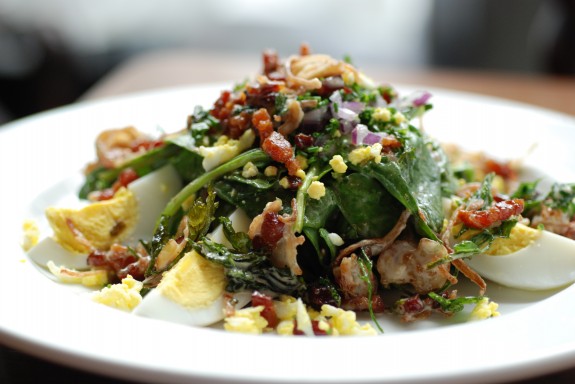
Photo by Polly Weidmaier
Carla Hall’s Hearty Greens Salad with Warm Balsamic Cherry Vinaigrette
Excerpted from “Diet Simple”
8 servings
6 c (1 pound) Mixed Hearty Greens (Kale, Rape, Collards, and/or Mustard), washed well, stems removed, rolled and cut thinly (chiffonade)
4 T Canola Oil
2 T Balsamic Vinegar
1 T Dijon Mustard
2 t Honey
Salt and Pepper to taste
½ c Cherries, pitted and halved
¼ Red Onion, sliced thinly
1. In a medium saucepan, heat the oil over medium heat.
2. While the oil is heating, combine the balsamic, mustard and honey in a small bowl. Just before the oil starts to smoke, add the balsamic vinegar and stir to combine. Let the mixture come to a boil, and continue to stir.
3. If it is too thick or too strong with vinegar, add a dash of water. Season with salt and pepper.
4. Add the cherries to the mixture. Toss the greens with just enough vinaigrette to wilt the greens, then drizzle additional vinaigrette around the plate. Garnish the salad with rings of red onion.
Deep Green Leafy Vegetables have the highest antioxidant content of all vegetables. High in fiber, they are rich in minerals, B-vitamins, beta-carotene, and lutein, a compound which may help reduce the risk of age-related macular degeneration (the leading cause of preventable blindness). Absorption of carotenoids, such as lutein, in your body is increased by cooking and by the presence of fat (so cook in a little healthy olive or canola oil!).
Carla Hall, Top Chef finalist, is the owner and chef of Alchemy Caterers, a catering and private chef company in Washington, D.C. She teaches cooking classes at Culinaerie, as well as team building classes at different venues in the metropolitan area.
Kale Recipe Quest: Making this “Superfood” Delicious!
- At March 16, 2012
- By Katherine
- In News, Recipes
- 0
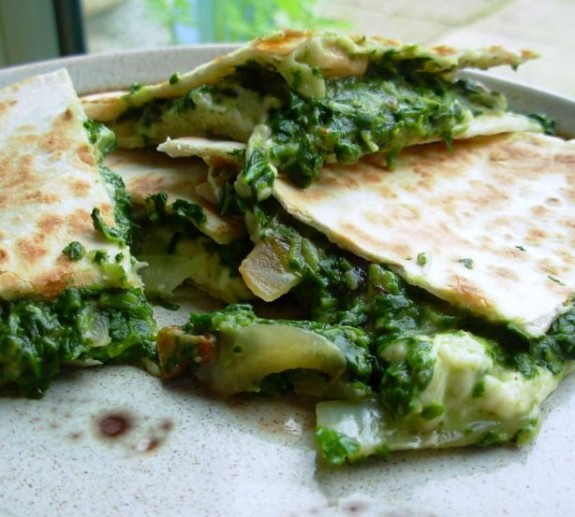
Janis McLean's Kale Quesadilla with Chipoltle Salsa
Kale: does it evoke rapture? Anticipation? I fear you may be scrunching your face at the mention of kale. I completely understand! I’m constantly looking for ways of making kale and other deep green leafy vegetables delicious, and regularly surprised at how easy it actually is. If you can let go of any skepticism and trust me on this, I think you will be very pleased, too…
Do you have kale recipes you’d like to share? In my “Kale Recipe Quest,” here are some of my favorites. I’d love to know what you think…
Carla Hall’s Hearty Greens Salad with Warm Balsamic Cherry Vinaigrette
Roberto Donna’s White Beans, Kale and Shrimp Salad with Basil Dressing
Janis McLean’s Kale Quesadillas with Chipoltle Salsa
Eggs Scrambled with Onions, Garlic, Kale and Sweet Cherry Tomatoes
Deep Green Leafy Vegetables have the highest antioxidant content of all vegetables. High in fiber, they are rich in minerals, B-vitamins, beta-carotene, and lutein, a compound which may help reduce the risk of age-related macular degeneration (the leading cause of preventable blindness). Absorption of carotenoids, such as lutein, in your body is increased by cooking and by the presence of fat (so cook in a little healthy olive or canola oil!)
My Day of Rest and Renewal
- At March 11, 2012
- By Katherine
- In News
- 0

Ahhhh, Sunday… the first day of rest in ages…
“Mindfulness and leisure are integral to a balanced life. It provides stability in the face of life’s complications. Recreation is necessary if we are to be effective stewards of our bodies, our heart, and our minds,” according to the ancient principles of Saint Benedict’s 5 Rules of Life…

I’ll get to watch CBS Sunday Morning, read my Washington Post and the New York Sunday Times, maybe even the whole thing… Or, maybe not… uh, Abby?
“As we play, we become as children. Play brings us openness and renewal which restores us and our capacity for being active in the world,” according to Saint Benedictine principles, studied by scholars through the ages, and practiced by those who desire a more balanced, successful, and happy life.
Perhaps I’ll take my favorite walk along the Potomac River…

Maybe walk with best friend and neighbor, Bob Arnold and his trusty companion Beau...

Perhaps visit Old Abe, and his Gettysburg Address, remind myself of nobler souls…

Robin ‘Poldark’ Ellis Charms Washington, D.C. and Me
- At March 09, 2012
- By Katherine
- In Articles, News
- 3

Photo: Acorn Media
It’s official. Now that I’ve met Robin Ellis in person during his recent Washington, D.C. visit, I have gone completely gaga over this talented and elegant actor, chef, and author, and his warm and lovely collaborator and wife, Meredith Wheeler. But I’m also charmed by his cookbook, website, and blog. I believe you will agree, and feel transported… inspired… to live a better, healthier life.
When I heard Robin Ellis was coming to D.C. to promote his new Mediterranean cookbook, I jumped into action, and so did a group of generous, community-minded people who came together to give Ellis and Wheeler a warm Washington, D.C. welcome. Washington Fine Properties’ Nancy Taylor Bubes opened her home and her heart to more than 80 guests, the American Institute of Wine and Food co-sponsored, Bistrot Le Zinc Executive Chef, Janis McLean, demonstrated one of Ellis’s signature recipes, and at least twenty guests and fans brought dishes from Ellis’s book.
Ellis is known worldwide as the swashbuckling Captain Ross Poldark, the lead character in the classic BBC Masterpiece Theater series, “Poldark,” originally aired in the 1970s, but recently hailed as “a cure for your ‘Downton Abbey’ blues,” by Los Angeles Times media critic, Robert Lloyd, after viewing the series for the first time. I agree with Mr. Lloyd: but expect a LOT more action, excitement, and ribaldry!
The Washington Post’s food writer, Bonnie Benwick (also an avid admirer) said “Over 29 episodes, social and political intrigue ensue, with heaving bosoms and rugged landscapes and a soaring musical score,” You can enjoy watching the original “Poldark,” on IMDB. It aired for the first time on Acorn TV, an excellent streaming website. It is run by a company where I, incidentally, conducted wellness programs (it’s a small world, isn’t it?). There is a new version, which Robin Ellis generously applauded, though I can’t bring myself to watch it, loving the original so much. Ellis has written a book about his experience, “Making Poldark: Memoir of a BBC/Masterpiece Theater Actor.”

Robin Ellis makes a few remarks to the gathering in Georgetown. Photo by Meredith Wheeler
For the past twenty years, Robin Ellis has lived in the south of France with his American wife, Meredith Wheeler, and their menagerie of animals, where he has collected and tested recipes while becoming an accomplished chef. I feel so fortunate he was willing to share his time, his talents, and his evocative stories and photos of his life in the south of France. His culinary experiences and travels, and even step-by-step recipe instructions, have been an inspiration.

Robin Ellis’ home base in the south of France. Photo by Meredith Wheeler
Ellis was diagnosed with Type 2 Diabetes twelve years ago and has managed to keep the disease controlled, stay healthy, fit, and even optimistic. “After a few weeks of shock, and ‘why me,’ the diagnosis became an opportunity to get into shape,” said Ellis. “It opened up a whole new culinary path.” His new book, “Delicious Dishes for Diabetics: Eating Well with Type 2 Diabetes” (Skyhorse Publishing, 2011) is for anyone who loves Mediterranean classics. The Mediterranean diet is one I heartily endorse for anyone for superior health, but also, satisfying dining. I’ve witnessed the surprise, relief, and joy when my clients stabilize, and even reverse their Type 2 Diabetes. Robin Ellis did it and you can too!
See a few recipes and a beautiful video montage of Robin Ellis cooking in the south of France
Read The Washington Post’s story about my March 7 Robin Ellis event in Georgetown which contains details about Robin Ellis’ life and new cookbook
Read Robin’s own account of the Georgetown Event on his blog
Read about the Robin ‘Poldark’ Ellis cookbook reception in The Georgetown Dish
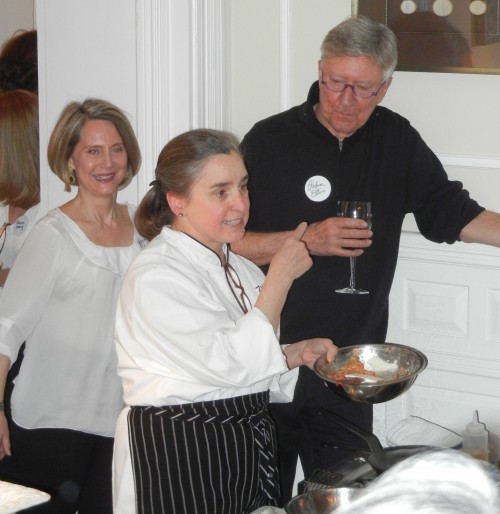
Janis McLean and Robin Ellis demonstrating “Salmon Fishcakes with a Sauce of Yogurt, Mustard and Dill”… Katherine “helping” in background. Photo by Robert Arnold
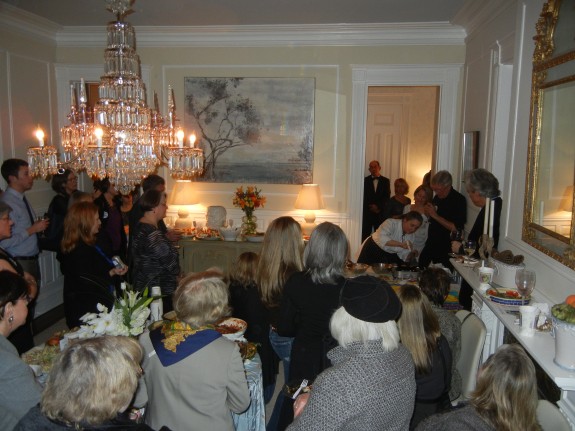
The crowd watching as Janis McLean and Robin Ellis entertain. Photo by Robert Arnold

Robin Ellis signing books in Nancy’s kitchen…before the event. Photo by Meredith Wheeler
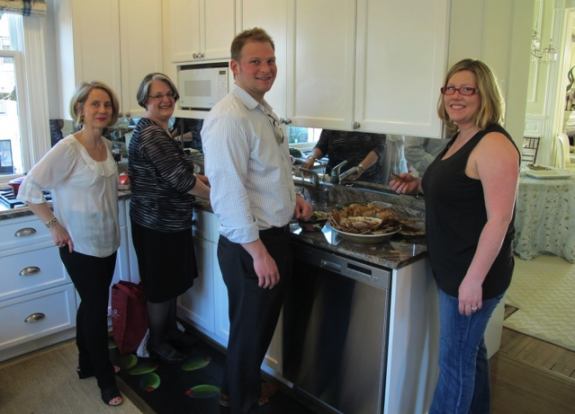
Friends/Volunteers Begin Preparations in the Kitchen. Katherine Tallmadge, Elizabeth Mautner, Zach Lipson, Johanna Medlin. Photo by Meredith Wheeler
Nancy Taylor Bubes’ dining table was brimming with simple yet sublime Mediterranean dishes “Roasted Eggplant Slices with a Walnut and Garlic Spread,” “Grilled Lamb Chops with Rosemary,” “Tzatziki,” “Fennel Salad with Parmesan Shavings,” “Minestrone,” “Grilled Strips of Duck Breast smothered in Walnut and Garlic Sauce,” “Rice and Spinach Torte,” “Tuna and White Bean Salad,” “Spinach Salad with Bacon and Avocado,” “Goat Cheeses served with Apple and Pear Slices,” and more…
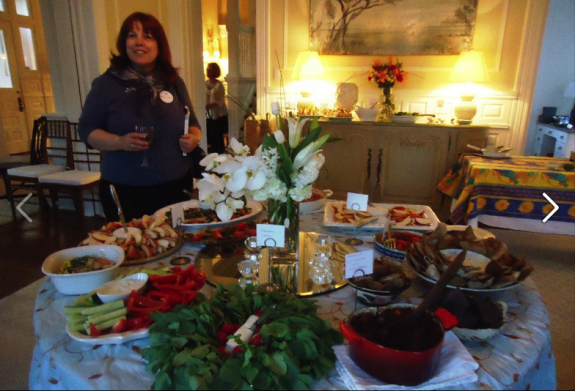
Liz McGuinness with a few dishes assembled before guests arrive. Photo by Helen Belletti

Debbie Weil, Lisa Lambert, Hostess Nancy Taylor Bubes, Roxanne Fleming. Photo by Johanna Medlin

Michelle Molotsky, Robin & Meredith, and Robert Arnold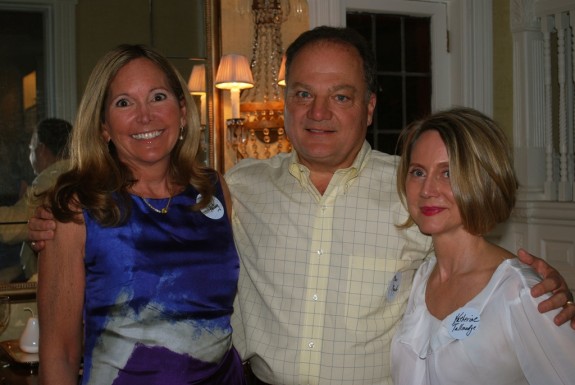
Katherine with Marcia Horting and Marc Marzullo
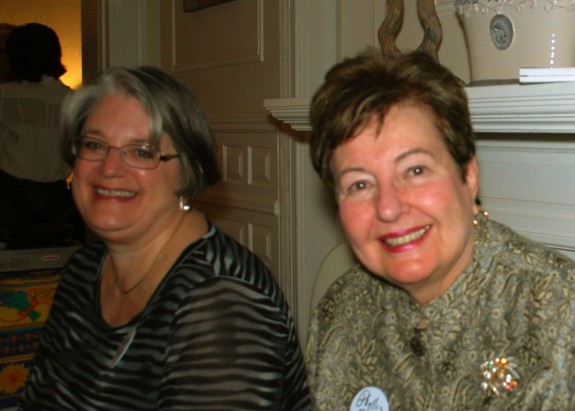
Elizabeth Mautner and Phyllis Frucht

Ben and Anne Vendegrift and Katherine Tallmadge with Robin Ellis. Photo by Robert Arnold

Helen Belletti and Robin Ellis
Robin Ellis with Hedvika Krone. Photo by Meredith Wheeler
Robin Ellis and Michele Reilly Hall. Photo by Helen Belletti

Robin Ellis and Bonnie Benwick relax before the event. Photo by Meredith Wheeler
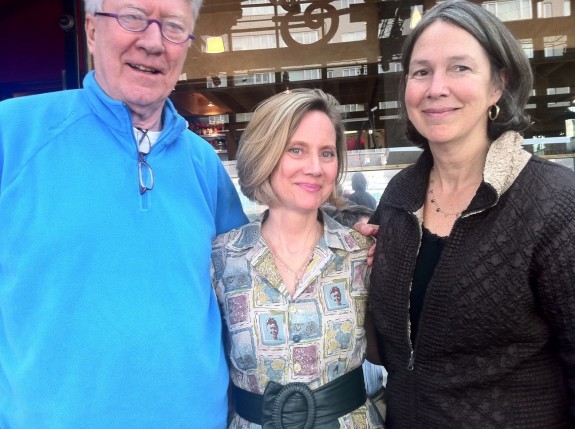
Robin & Meredith surprised me with a lunch invitation at D.C.’s iconic “Kramerbooks & Afterwards” the day after… I feel truly blessed!
Breakfast – The Most Important Meal of the Day: But WHY?
- At March 05, 2012
- By Katherine
- In News
- 0
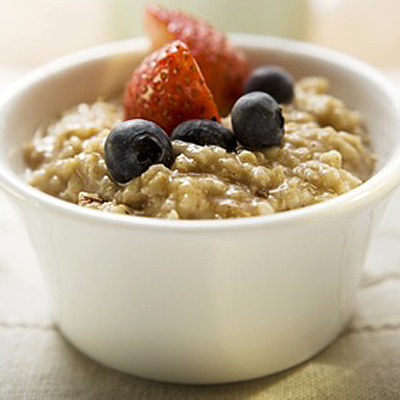
USDA Celebrates National School Breakfast Week
“Healthy, Hunger Free Kids Act” sets the table for a healthy start to school each day
WASHINGTON, March 5, 2012 – Agriculture Secretary Tom Vilsack today marked National School Breakfast Week (March 5-9) by emphasizing the administration’s commitment to provide schoolchildren with healthy, well-balanced meals to prepare them for a productive school day.
“Breakfast is the most important meal of the day because it helps keep kids alert and focused on learning,” said Vilsack. “Thanks to the Healthy, Hunger-Free Kids Act, we will be able to connect more eligible children with our school food programs and greatly improve the quality of meals served in schools.”
Breakfast is important for so many reasons…
Katherine’s Deliciously Simple Oatmeal with Fruits and Nuts
The administration’s commitment to increase participation in the School Breakfast Program has drawn national attention to the effort to continuously improve the health and nutrition of America’s schoolchildren. To start each school day, the program gives more than 12 million children of all economic backgrounds a well-balanced, healthy meal consistent with the latest science and dietary guidelines.
“Participation in the School Breakfast Program is an important vehicle to meet the nutrition needs of children,” said Kevin Concannon, USDA Under Secretary for Food, Nutrition and Consumer Services. “Since President Obama signed the Healthy Hunger-Free Kids Act into law, USDA has worked with schools on innovative delivery strategies to meet the requirements for promoting the School Breakfast Program.”
In January, USDA unveiled new standards for school meals that will result in healthier meals for nearly 32 million kids that participate in school meal programs every school day. USDA built the new rule around recommendations from a panel of experts convened by the Institute of Medicine —a gold standard for evidence-based health analysis. The standards were also updated with key changes from the 2010 Dietary Guidelines for Americans – the Federal government’s benchmark for nutrition – and aimed to foster the kind of healthy changes at school that many parents are already trying to encourage at home, such as making sure that kids are offered both fruits and vegetables each day, more whole grains, and portion sizes and calorie counts designed to maintain a healthy weight.
The new standards are just one of five major components of the Healthy Hunger Free Kids Act, now implemented or under development, that will work together to reform school nutrition. In addition to the updated meal standards, unprecedented improvements to come include:
The ability to take nutrition standards beyond the lunchline for the first time ever, foods and beverages sold in vending machines and other venues on school campuses will also contribute to a healthy diet;
Increased funding for schools – an additional 6 cents a meal is the first real increase in 30 years – tied to strong performance in serving improved meals; Common-sense pricing standards for schools to ensure that revenues from non-Federal sources keep pace with the Federal commitment to healthy school meals and properly align with costs; and
Training and technical assistance to help schools achieve and monitor compliance.
USDA’s Food and Nutrition Service administers 15 nutrition assistance programs that, in addition to the Supplemental Nutrition Assistance Program and National School Lunch Program, also include the Special Supplemental Nutrition Program for Women, Infants and Children, and the Summer Food Service Program. Taken together, these programs comprise America’s nutrition safety net.
5 So-Called Health Foods You Should Avoid
- At March 02, 2012
- By Katherine
- In Articles, News
- 5
Featured on CNN’s Health Minute
Read it to find out why this article went VIRAL!
Recently published in LiveScience.com, published in “The Washington Post,” and broadcast on WOR Radio New York City…
Eating healthy can be harder than you think, thanks to an enterprising food industry that wants us to consume more than we need. That’s because our country’s agricultural system produces twice what most people require – 3,900 calories per person per day, according to the U.S. Department of Agriculture’s Economic Research Service. This encourages creative marketing to unload the excess, much of it made with cheap ingredients, having long shelf-lives, and minimal nutritional value – the kinds of “food” with the highest profit margins.
As a nutrition consultant, I know that words such as “low fat,” “high fiber,” “multigrain,” gluten free,” and “natural” can confuse even the most sophisticated customers into believing what they’re buying is healthful. In fact, market research proves it.
What can you do? First, make a habit of reading the ingredients list, not just the Nutrition Facts panel. And remember the following products worth resisting…
Reduced-fat peanut butter
The oil is the healthiest part of a peanut* or a tree nut, containing most of the nutrients, so there’s no advantage to taking it out. In fact, it’s worse because it robs the peanut butter of its health benefits. “Reduced-fat peanut butter has as many calories and more sugar than the regular,” says Bonnie Liebman, nutrition director for the Center for Science in the Public Interest.
Instead: Buy regular peanut butter. Eating one or two ounces of nuts daily is associated with reductions in heart disease and cancer risk. A recent Harvard study showed that eating nuts is associated with lower body weights.
Enhanced water
Sports drinks, diluted soft drinks with salt, are only needed during intense exercise exceeding one hour or in extreme heat. Drinks such as Vitaminwater (c) are essentially sugary drinks with a vitamin pill. They are “unequivocally harmful to health,” says Walter Willett, professor of epidemiology and nutrition at Harvard’s School of Public Health. “Whether vitamins dissolved in water have any benefit will depend on who you are and whether you are already getting enough. . . . Some people may be getting too much of some vitamins and minerals if they add vitamin water on top of fortified foods and other supplements.” A recent Iowa Women’s Health Study found an association between certain commonly used vitamin and mineral supplements and increased death rates. But the worst offenders in this category are energy drinks such as Red Bull, Sobe Life Water, or Monster Drinks. They’re not only high in sugar, but most contain stimulants which may be harmful, especially with medical conditions like high blood pressure.
Instead: Drink water, ideally from the tap (“Eau du Potomac,” as it’s known locally). It’s the best drink for hydrating your body, is naturally calorie-free and contains fluoride to prevent tooth decay. No supplement matches the nutrients in whole foods such as fruits, vegetables, nuts and whole grains.
Energy bars
The reputation of these bars, also known as meal replacement bars, is that they are healthy, aid in weight loss or help build muscle. In fact, they are calorie bombs: candy bars with vitamins, protein or fiber added. For most of them, sugar is either the first (predominant) or second ingredient.
Instead: Snack on fruit or veggies for weight loss and yogurt for muscle gain. If you’re hiking a long distance and want a healthful, nonperishable calorie bomb, try nuts and dried fruit.
Multigrain foods
Multigrain breads, crackers and cereals are often the most confusing foods. People see “multigrain” and think “whole grain.” That’s not necessarily so. This is an important distinction because people who eat whole grains have a lower incidence of diabetes, heart disease and cancers, and are less likely to be overweight compared with those who eat refined grains. Note that when “enriched wheat flour” is listed in the ingredients, that’s refined flour.
Instead: Be sure a whole grain, such as whole wheat, whole rye, whole oats or brown rice, is the first and preferably the only grain in the ingredient list. A great example is a cereal listing whole rolled oats as the only grain or a bread listing whole wheat as the only wheat. Alternatively, consider an egg for breakfast. “The huge amounts of refined starch and sugar that many people eat for breakfast, often thinking that this is the healthy choice, does far more damage to their well-being than an egg,” says Harvard’s Willett.
Non-fried chips and crackers
It’s easy to believe these foods are healthful because of labels such as “baked,” “low fat” or “gluten free.” But most are made with refined grain or starch, which provide plenty of calories and few nutrients. Popchips, for example, are a new product marketed as healthful. But the ingredients are highly refined potato flakes, starch, oil, salt and about 14 additional things. Pita chips, made with white flour, oil, salt and several more ingredients, are no better. To boot, research shows that too much refined grains and starches increases the risk for heart disease, cancers, diabetes and weight gain.
Instead: Try Wasa or Finn Crisp Original Rye crackers. They’re 100 percent whole grain and have little sodium. If you’d like a chip, try Terra Chips, made with sliced vegetables, or even a 100 percent whole grain chip fried in a healthy oil, such as olive or canola. Tortilla chips and SunChips are two examples. “Now that trans fats have been removed from most cooking oils, the healthiest part of potato chips is the fat,” Willett says. “And chips made of whole grains rather than potatoes, like Frito-Lay’s SunChips, can legitimately be considered a health food,” so long as you keep to the one-ounce serving size.
*Peanuts are technically a legume, but we call them nuts nutritionally because their nutritional characteristics and health benefits closely match those of tree nuts.
Find this article originally printed in The Washington Post February 28, 2012
Listen to me discuss “Health Foods You Should Avoid” on WOR 710 Talk Radio NYC “The Joan Hamburg Show”
A Selection of Robin Ellis’s Mediterranean Recipes
- At February 28, 2012
- By Katherine
- In News, Recipes
- 0

Robin "Poldark" Ellis with his new cookbook, which highlights the flavors of the Mediterranean
I’m completely charmed and impressed by Robin Ellis’ enthusiasm for his new healthy lifestyle; the Mediterranean lifestyle and diet I have adopted and a way of life I encourage everyone I know and love to embrace as well.
Ellis, a British star of stage and screen, was diagnosed with Type 2 Diabetes, and since then has been dedicated to a life of good health, but without deprivation. Based on Mediterranean cuisine – one of the healthiest in the world – Robin Ellis, in his book and blog, shares his lifetime collection of healthy recipes. Inside, you’ll find:
* Simple yet sublime recipes that work,
* Dishes that all the family can enjoy,
* Not a quick-fix diet but a way of eating for everyday life.
Some samples…
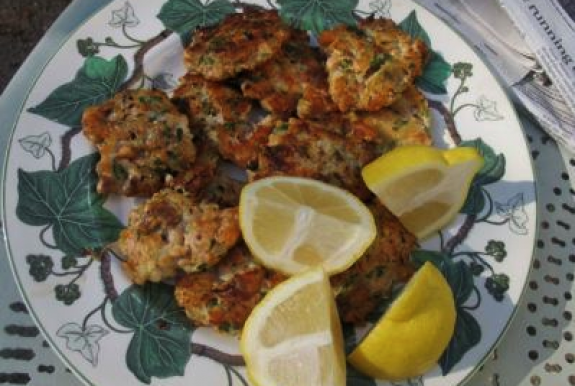
Salmon Fishcakes with a Sauce of Mustard and Dill
It’s like a crabcake – only with Salmon – delicious!
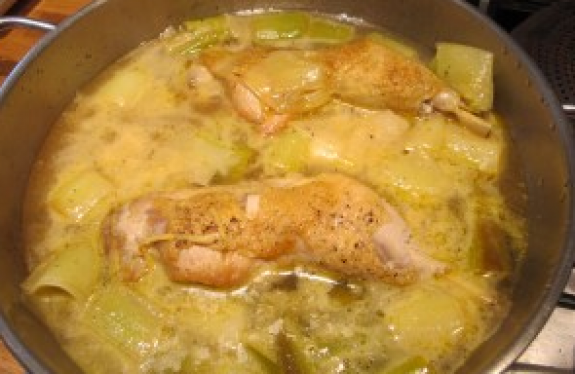
A Dish of Chicken and Leeks with Lemon
Spicy Chickpeas – Lightly Sauteed
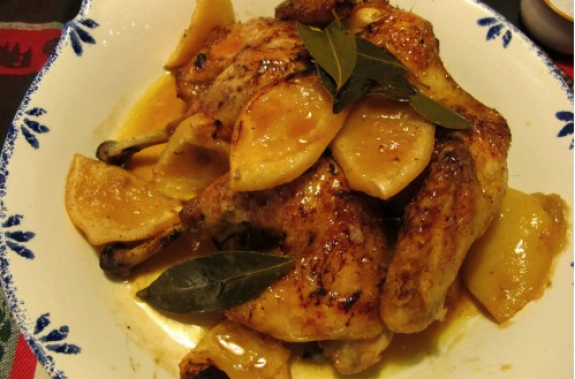
Spatchcocked Chicken with Lemon and Bay Leaf
You Are Invited to a Cookbook-Signing Reception with Robin “Poldark” Ellis on March 7
- At February 28, 2012
- By Katherine
- In News
- 3
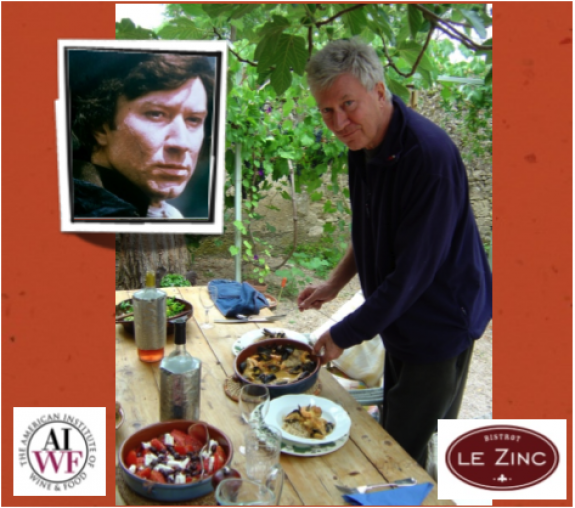
Please RSVP TODAY for the March 7 Robin Ellis book-signing and reception. Attendance is limited. See invitation and video montage below...
I have been completely charmed by actor, chef, and author Robin Ellis, his cookbook, website, and posts – and I believe you will be too. This is why I’m so pleased to ask you to join me, Nancy Taylor-Bubes, Robin Ellis, and his wife Meredith for a book-signing reception, celebrating the publishing of Ellis’s new Mediterranean cookbook. As you may know, the Mediterranean lifestyle and way of eating is one I heartily endorse!
Ellis is known worldwide as the swashbuckling Captain Ross Poldark, the lead character in the classic BBC series, “Poldark,” recently hailed as “a cure for your ‘Downton Abbey’ blues,” by Los Angeles Times media critic, Robert Lloyd, after viewing the series for the first time. I agree with Mr. Lloyd, only expect a LOT more action, excitement, and ribaldry! I’ve enjoyed watching the new DVD version of “Poldark,” available for the first time from Acorn Media, coincidentally a company close to my heart, as I have had the good fortune to conduct wellness programs with Acorn’s extraordinary staff (it’s a small world, isn’t it?).
For the past twenty years, Robin Ellis has lived in the south of France with his American wife, Meredith, and their menagerie of animals, where he has collected and tested recipes while becoming an accomplished chef. I feel so fortunate he is willing to share his time, his talents, and share a few stories about his life in the south of France with us. I hope you’ll join me, Nancy, the American Institute of Wine & Food, and Chef Janis McLean, in giving Robin and Meredith a warm American welcome!
YOU ARE INVITED
HOSTS: Nancy Taylor-Bubes and Katherine Tallmadge
CO-SPONSOR: The American Institute of Wine and Food
SPECIAL GUEST COOKING DEMONSTRATION BY: Executive Chef, Janis McLean, Bistrot Le Zinc
DATE & TIME: Wednesday, March 7, 2012; 6 – 8 pm
PLACE: Georgetown, Washington, D.C.
COST: $15.00 at the door, which provides you with a signed copy of Robin Ellis’s new cookbook
R.S.V.P. Katherine@KatherineTallmadge.com (and to receive more details)
DONATION: If you wish, you are invited to bring a dish from Robin Ellis’s cookbook or blog. When you send your RSVP, communicate your interest to bring a dish, and I will send you several recipes you could consider. You could also consider recipes on Robin’s website and the few examples on my website.
BOOKS: Provided by independently owned Bridge Street Books of Georgetown
SPACE IS LIMITED
Please RSVP no later than Tuesday, March 6
New York Times’ “Breakfast Sweets” Article Misleads Readers
- At February 23, 2012
- By Katherine
- In News
- 0