
Healing Nutrition
- At May 06, 2012
- By Katherine
- In Articles, News
 1
1
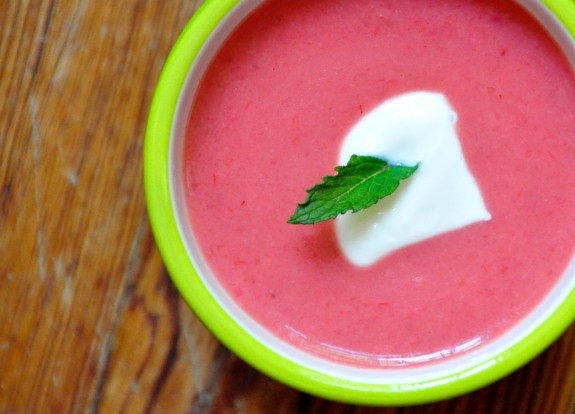
Soupe aux Fraises et Rhubarbe (Photo by Alison Eaves)
It’s scary thinking of my mother going through surgery. I’m especially concerned that she maintain her active life here in Westlake Village, California. Mom has tons of friends, she volunteers at the Thousand Oaks Civic Arts Center, and she and Dad even work as Crossing Guards at local elementary schools. They regularly attend concerts at Hollywood Bowl (she LOVES Pink Martini),visit wineries, well, you get the idea. They may be “retired,” but they’re definitely not retired from living life!
To get her back to fighting form as soon as possible, she’s following my special “Healing Diet.” My healing diet worked beautifully after her hip replacement surgery 5 years ago; she healed quickly, and without the weight gain she dreaded. So I’m back again repeating the performance!
What you eat profoundly affects your ability to recover from surgery or heal from any injury. Everyone’s nutritional needs are different, but there are general rules of thumb for maximizing your body’s ability to heal through foods.
Healing Nutrition Principles
Because you’re sick or recovering from an illness or surgery, you are inactive. That means your calorie need is usually quite low (there are exceptions), but to heal properly, your nutrient intake must be high. It’s challenging to keep calories low, yet nutrients high; but it is very do-able, and I have successfully helped many people (including my mother) recover from surgeries and illnesses without weight gain, and even some weight loss – while at the same time – healing quickly and effectively. To do this, concentrate on nutrient-dense, low calorie healing foods, eaten at regular time through the day.
Protein
Protein is one of the most important nutrients in the human body, second only to water. Protein is critical for healing. Immune function is impaired without enough. The antibodies essential to protecting your body against pathogens are made of protein. Protein builds muscle and tissue, broken down after injury or surgery.Without enough protein, your body has no chance to heal.
Certain vulnerable populations, such as the elderly, children, and those who already have compromised immune systems, should be particularly careful to eat enough protein – even more than the recommended dietary allowance – for maximized protection. Your protein needs should be individualized and, to maximize your body’s ability to absorb and use the protein, should be eaten in small amounts through the day. Stick with lean, low calorie protein sources since you’re not active (see examples below). Learn more about protein…
Fats and Oils
The type of fat you eat can improve healing and the effectiveness of your body’s immune response because fat ends up in all of your body’s cell walls. It acts as a cell lubricant, improves flexibility and communication between cells. If the fat you eat is saturated – solid at room temperature – as in butter or animal fat – this decreases cellular flexibility and functioning. Learn more about healthy, healing fats… Eat healthy fats at each meal, but keep your fat intake low, as fats are high in calories, and since you’re inactive, you must keep your calorie intake low.
Katherine’s Spicy Mexican Salsa with Strawberries
- At April 30, 2012
- By Katherine
- In Recipes
- 0
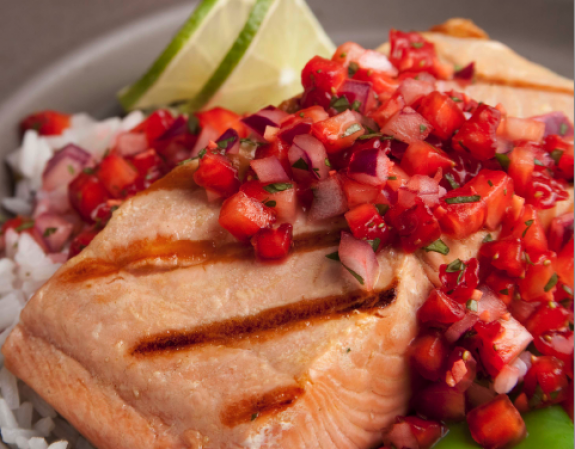
Photo by California Strawberry Commission
I usually use vine-ripe tomatoes for my fresh salsa, excerpted from my book, Diet Simple. But strawberries are a surprising and exotically delicious substitute. Serve this salsa with grilled salmon, chicken or beef… even tortilla chips… whatever you may traditionally use salsa with.
22 servings
Ingredients:
1 large onion, peeled and chopped (about ½ pound)
2 lbs fresh strawberries, hulled and coarsely chopped (start with about 3-1/2 lbs)
3 – 4 jalapeno peppers (1 – 2 ounces), to taste
¼ cup chopped fresh cilantro
½ tsp salt, or to taste
3 – 4 Tbsp fresh lime juice (1 – 2 limes)
Add the onion to the strawberries. Finely chop 2 of the jalapeno peppers to start with. Taste. If you desire more heat, add 1 – 2 more jalapenos. Mix in the cilantro. Add the salt depending on your taste. Mix in the lime juice.
Learn more about the nutritional benefits of strawberries and other berries…
Kjerstin’s Curried Chicken Salad with Strawberries and Roasted Almonds
- At April 30, 2012
- By Katherine
- In Recipes
- 0
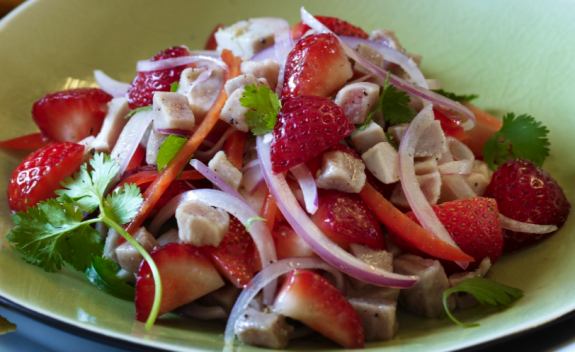
Photo by California Strawberry Commission
This recipe by my mother, excerpted from my book, Diet Simple, would make a very nice luncheon offering. Like any curry dish, its perfect companions are a spicy or sweet chutney and a cool nonfat or lowfat yogurt. You could also top on a bagette or stuff in a tomato or avocado half. Serve with pickles, carrot and celery sticks, or radishes. You can use any seasonal fruits such as peaches, grapes, oranges, or anything ripe and in season.
Serves 4
2 cups chicken breast meat, cooked, chopped (about 2 half breasts or 9 ounces)
1 pint Low sodium, nonfat chicken stock
1/3 cup small mild onion, chopped
1-1/2 cup celery, chopped
1 c grapes, halved and seeded (or other available fruit)
1 11-oz can mandarin oranges, drained OR ¾ pound Strawberries, hulled and quartered (or other available fruit)
3 Tbsp Fresh Dill, Chopped
3 Tbsp Chopped fresh parsley
1 tsp or more to taste curry powder
1 ounce almonds or walnuts, toasted and chopped
1/4 cup any low fat ranch-style or Cucumber dressing
Instructions:
Poach the chicken breasts in low sodium, nonfat chicken stock until breasts are cooked. Let cool and chop in bite-size pieces. Add the rest of the ingredients, toss, and chill. Serve chilled.
Per serving: 230 calories, 8 grams fat, 1 grams sat fat, 19 g carbohydrates, 3 grams fiber, 20 grams protein
Did you know that there are 200 seeds on each strawberry? Strawberries are members of the Rose family and there are over 600 different varieties. “Look for berries fully formed, bright red, without bruising or soft spots and with fresh-looking green caps. Beware of buying out-of-season strawberries, as sometimes they are picked when they are only 40% ripe. These berries may turn red, but they will never develop sweetness and can be hard as an apple,” according to Janie Hibler in “The Berry Bible.”
Learn about nutritional benefits of strawberries and other berries…
Susan Belsinger’s Strawberry Soy Milk Smoothie
- At April 30, 2012
- By Katherine
- In Recipes
- 0
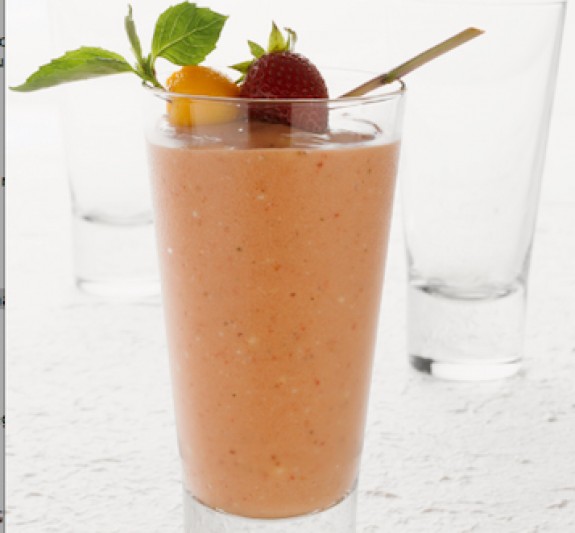
Photo by California Strawberry Commission
Susan Belsinger, a culinary herbalist and talented recipe developer, says you can use any berries in a smoothie, but her favorite is strawberry. Susan’s kids like this smoothie with ripe banana added; blueberries are also tasty. Mango and banana together gives a tropical twist. Another great combo is raspberries with peaches. Besides being quick and easy, the best thing about this recipe is that it tastes good and it is good for you! Sometimes she adds a handful of dry oatmeal—it makes it thicker and more filling, adds protein, and keeps her going longer.
Serves 2
About 1 to 1 1/2 cups fruit, cut into chunks
About 1 tablespoon maple syrup or honey
1 cup cold soymilk
3 to 5 ice cubes
2 drops pure vanilla extract
Put the fruit in the blender. Drizzle the syrup or honey over it. Add the ice cubes. Pour the soymilk over all and add the vanilla. Blend until pureed and frothy. Serve immediately in a tall glass with a straw.
Learn about the health benefits of strawberries and other berries…
Soupe aux Fraises et Rhubarbe (Strawberry Rhubarb Soup)
- At April 29, 2012
- By Katherine
- In Recipes
- 0
Soupe aux Fraises et Rhubarbe (Photo by Alison Eaves)
Serves 4
Ingredients
1 Tablespoons Canola Oil
3 stalks Rhubarb, pealed and cut into 1.4 inch chunks
2 cups hulled and sliced fresh Strawberries
4 ounces fresh Orange Juice
1/4 cup Sugar
3/4 cup Nonfat or Low Fat Vanilla Yogurt
4 fresh Mint Leaves
Procedure:
Heat the oil in a saucepan over medium-high heat. Use a pan large enough to hold all of the ingredients. Add the rhubarb and saute about a minute. Reduce heat to medium, cover and cook for about 7 minutes, or until the rhubarb is tender. Remove from the heat and let cool. Add the strawberries, orange juice, sugar and 1/2 cup of the yogurt and blend with an immersible hand blender (I like the Cuisinart Smart Stick). Cover and refrigerate for at least one hour or until it is well chilled.
Presentation:
Pour the soup into four small chilled bowls. Place a 1 Tablespoon dollop of yogurt and a fresh mint leaf on each bowl.
Learn about the health benefits of strawberries and all berries…
Soupe aux Fraises et Rhubarbe is adapted from “The French Culinary Institute’s Salute to Healthy Cooking” (Rodale Press, 1998), one of my favorite cookbooks, which I highly recommend!
Spinach and Strawberry Salad with Toasted Almonds and Balsamic Vinaigrette
- At April 29, 2012
- By Katherine
- In Recipes
- 0
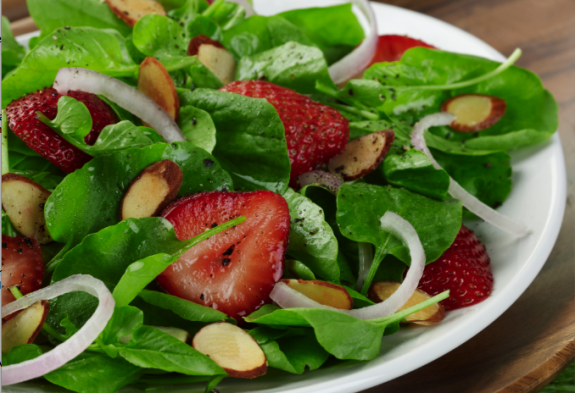
Photo: California Strawberry Commisssion
Spinach and Strawberry Salad with Toasted Almonds and Balsamic Vinaigrette
(recipe by Mike Gardner)
Balsamic vinegar is a perfect accompaniment to strawberries (try them on vanilla frozen yogurt). Add the spinach and you have a “salad” you will LOVE (and will love you back with health benefits)!
Serves 6
Vinaigrette:
3 Tablespoons Extra Virgin Olive Oil
1 Tablespoon Balsamic Vinegar
Salt and Pepper to taste
Salad Ingredients:
6 Handfuls of fresh spinach, washed and torn into bite-sized pieces
2 Cups Fresh Strawberries, hulled and halved or quartered, depending on size
2 Ounces toasted slivered Almonds
½ Sweet Onion, peeled and sliced
In a large bowl, add the olive oil, vinegar, salt and pepper. Whisk together. Add the spinach, onion, almonds, and strawberries and toss together. Serve immediately.
Berry Bonanza
- At April 29, 2012
- By Katherine
- In Articles, News
- 0
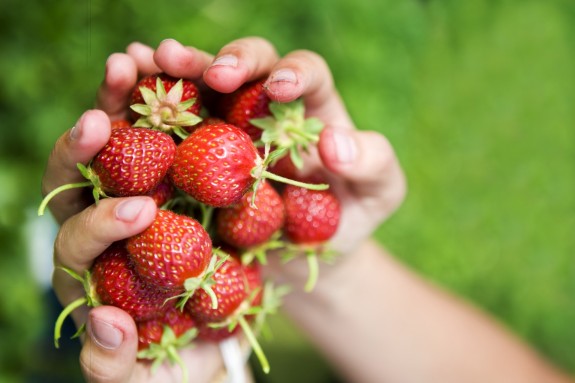
Strawberries (Photo: Swedish Embassy)
There are very few foods that match the beautiful color and intense flavor of berries. And, fortunately, these fruits are nutrition superstars.
For many years, most berries were regarded as nutritionally inferior because of their lack of traditional essential nutrients such as vitamins A and C. But that was before scientists recently discovered the presence of large amounts of beneficial phytochemicals (“phyto” is Greek for plant).
Apparently, each berry contains at least 100 nutrients and phytochemicals, the plant compounds with potent powers of healing. Some of the most important phytochemicals in berries are antioxidants, powerful substances believed to reduce inflammation, improve immune function and help prevent heart disease and cancers.
Antioxidants are compounds that absorb oxygen free radicals — molecules that cause oxidation in the body’s cells. Scientists believe that these molecules cause most of the diseases of aging, such as immune system decline, arthritis, heart disease, cancer and neurological impairments affecting cognition and balance. Think of oxidation as being similar to rusting. Or imagine an apple slice turning brown. By simply adding lemon juice, an antioxidant, the apple’s flesh stays fresh and prevents the browning or oxidation.
A similar thing happens in your body. Oxidation is constantly occurring in your cells because of environmental pollutants, smoking, exposure to the sun, heat generated through basic metabolic functioning, unhealthy diets and other factors. It takes a large supply of antioxidants to counter this. Berries have been found to have one of the highest antioxidant scores of all fruits and vegetables.
But there are other good reasons to eat berries. The berry family contains 300 to 400 beneficial, disease-fighting chemicals. The phytochemicals in berries, depending on the type, also stimulate the immune system, reduce inflammation, enhance cancer-fighting enzymes, positively influence hormone metabolism, have antibacterial and antiviral effects and may even reverse some aspects of brain aging.
The most potent berries are the more deeply colored varieties, especially blackberries, blueberries and cranberries, followed by raspberries, strawberries and cherries (not technically a berry, but similar nutritionally) but all more potent than most other fruits. Their color is provided by one of the most powerful phytochemicals, called anthocyanins, which berries synthesize to protect themselves from the elements.
“Anthocyanins play a role in . . . protecting against cancers of the gastrointestinal tract,” says Ronald Prior, nutritionist at the Arkansas Children’s Nutrition Center in Little Rock. “Blackberries have been shown in animals to protect against colon and esophageal cancer.” A preliminary human study found blueberries inhibited blood clotting, a risk factor in cardiovascular disease.
The anthocyanins in berries also may be responsible for improving some aspects of aging, such as memory, motor coordination, balance, vision and even symptoms of Alzheimer’s disease, according to many years of animal studies.
“Blueberries have interesting, surprising qualities,” said Prior. “We’re hoping foods such as blueberries can help prevent Alzheimer’s disease in humans as they do in rats.”
The scientists found similar effects in cranberries, which have additional phytochemicals called tannins. They may be responsible for helping to prevent urinary tract infections, stomach ulcers, gum disease and even ear infections in children. Cranberries are also effective against antibiotic-resistant bacteria — and 20 percent of urinary tract infections are resistant to antibiotics. The tannins work by blocking the disease-causing bacteria and preventing it from adhering to human cell walls.
Resveratrol
New research has found that raspberries, blueberries, cranberries and huckleberries contain a phytochemical called resveratrol, also present in wine, which is thought to help prevent cancer, cardiovascular disease, and is implicated as an important compound in the health benefits of the “French Paradox.”
Strawberries contain large amounts of phytochemicals called ellagitannins, which are also in raspberries and blackberries. Studies at the UCLA Center for Human Nutrition found those berries are capable of inhibiting a number of key steps in the development of cardiovascular disease and may have immense potential for the prevention and treatment of heart disease and stroke. Strawberries are also high in antioxidant Vitamin C and folic acid, important in preventing birth defects.
Most of what scientists know about berries has been determined in animal studies and in labs using cell cultures. But the few human clinical studies are showing promising results. Human studies on berries are limited because they’re very expensive, and as one scientist explained, “You can’t patent a berry!” This means that big pharmaceutical companies are unwilling to foot the research bill. Groups such as blueberry or strawberry growers fund some, but it’s up to Uncle Sam to find out if we can save millions on medications and hospitalizations by simply eating more berries.
Berries are an ideal food. Besides being absolutely delicious and colorful on a plate, they’re loaded with nutrients, vitamins, minerals, fiber, and they’re low in calories. They have maximum flavor and nutrient content when picked at ripeness. Freezing them when ripe or buying ripe frozen berries is a great alternative. But, simply ripening a berry on your kitchen counter will increase its phytochemical content, too.
Berries can be eaten morning, noon or night – whatever your preference. I eat berries every morning on my oatmeal. In the summer, I’ll use any fresh local berry but in the winter, I stick with frozen blueberries.
“Berries are extremely versatile; they fit perfectly with any meal or snack,” says Janie Hibler, author of “The Berry Bible” (William Morrow, 2004). In “The Berry Bible,” Hibler provides a berry encyclopedia and berry recipes ranging from smoothies, drinks, and breads to soups, salads, salsas, main courses, and desserts.
So, what are some ways we can eat berries every day?
“A no-brainer,” she says, “is a berry smoothie for breakfast.” For lunch, she says, throw a handful into your salad. For snacks, carry dried berries and nuts. At dinner, berries go beautifully with meats, grains and main courses.
You will eat more berries if you simply keep them on hand and ready to grab. Get them now when they’re fresh and freeze them yourself. Frozen blueberries are fun snacks for kids to pop in their mouths, like hard candy. You can also make berry popcicles, syrups for pancakes and spritzers.
Berry Coulis
Hibler recommends always having berry purees, or “coulis” on hand. “A sauce rivaled by none,” she says. But they also are great added to drinks, smoothies, yogurts, cereal, you name it. To make a coulis, rinse and drain the berries, process in a food processor. Add a little sugar or even liqueur, if desired. It will keep in your refrigerator for three to four days or be frozen for a month.
Some of my favorite berry recipes:
Spinach and Strawberry Salad with Toasted Almonds and Balsamic Vinaigrette
Katherine’s Spicy Mexican Salsa with Strawberries
Soupe aux Fraises et Rhubarbe (Strawberry Rhubarb Soup)
Kjerstin’s Curried Chicken Salad with Strawberries and Toasted Almonds
Strawberry – or any Berry – Granita
Dark Chocolate-Dipped Strawberries
Originally Published in The Washington Post
Earth Day: Because it is Right
- At April 22, 2012
- By Katherine
- In Articles, News
- 0

The World in Spring (Photo by NASA)
At times I feel overwhelmed by the obesity epidemic; the issues seem insurmountable. In that way, I have a lot in common with people trying to “fix” the environment. Which is why I felt empowered when I was told: “Do it just because it is right, even without a goal in mind,” by Wendell Berry, renowned conservationist, author, poet, and farmer, visiting the Washington National Cathedral today for an Earth Day lecture. Berry was referring to the importance of “Being critical of our society’s industrial and financial values… You must oppose these things whether or not you expect to be successful, because it is the right thing to do.” But he said he was heartened that today “at least there is a public conversation,” compared to the 1960s, when he started his advocacy work.
He gave me hope for continuing my obesity-epidemic-fighting efforts, even though financial interests seem to wield more influence than protecting the health and welfare of the world, and at times success seems beyond reach in my lifetime.
This year, Berry was awarded the 44th Jefferson Lecture by the National Endowment of the Humanities. “Wendell Berry is an American treasure whose prose and poetry have— with subtlety, intelligence, and conviction—helped open our eyes to the importance of respecting and living with nature,” said NEH Chairman Jim Leach. “Tilling the land of his Kentucky forebears, he is a 21st-century Henry David Thoreau.”
Earth Day marked the Washington National Cathedral’s kick-off for a year of talks by nationally acclaimed speakers, authors and theologians on the environment. In that spirit, the Cathedral’s Environmental Advocacy Group has compiled small steps we can each take which, collectively, can have a positive impact on our environment. So if you are feeling overwhelmed at the prospect of global warming, extinctions, and the like, perhaps it would help to focus on more do-able changes you can make in your life. Pick just one:
Today I will:
__Turn off the lights, TV, and computer when I leave the room,
__Pick up and throw away any trash I see on the ground,
__Take a shorter shower,
__Adjust my thermostat by three degrees.
This week I will:
__Bike, walk, carpool, or use public transportation,
__Take a day of rest,
__Change at least five light bulbs in my home to compact fluorescents or LEDs,
__Consciously combine trips and errands,
__Take the stairs instead of the elevator,
__Hang clothes on a drying rack or the line instead of using the dryer.
This month I will:
__Use cloth shopping bags,
__Clean out my closets and donate unused items,
__Check the tire pressure on my car,
__Buy more local and organic produce.
What you eat profoundly affects the environment, and the changes are easier than you think! Learn more…
Salad of New Potatoes and Asparagus with Lemony-Garlic-Herb Mayonnaise Topped with Poached Salmon
- At April 06, 2012
- By Katherine
- In Recipes
- 0
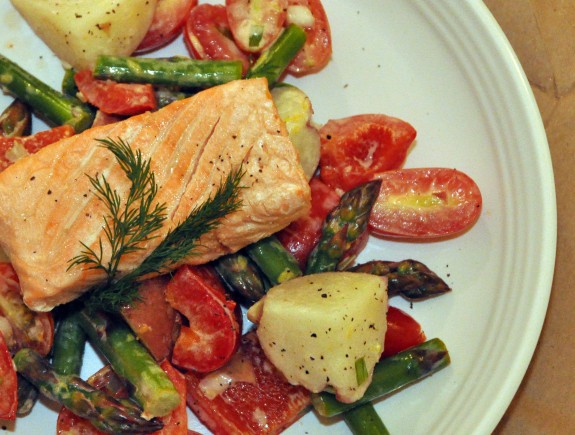
Photo by Ali Eaves
Salad of “New” Potatoes and Asparagus with Lemony-Garlic-Herb Mayonnaise Topped with Poached Salmon
This “salad” features the best of spring-time food: asparagus, thin-skinned tiny new potatoes and salmon. It can be served warm as a great holiday dish, or enjoyed cold, for two to three days. The mayonnaise dressing brings out the flavor of any vegetable, especially if allowed to soak into still-warm, just cooked asparagus, haricots verts (the tender French green bean), delicate, small, thin-skinned “new” potatoes, or broccoli. The salmon can be poached, grilled, smoked or cured: your choice! The Washingtonian recommends this recipe…
Serves 6 to 8
Mayonnaise Dressing:
1/4 Cup Mayonnaise, preferably made with Canola or Olive Oil
Grated Zest and Juice of 1 Lemon
2 Garlic cloves (or more, to taste), mashed
1 Tbsp (or more, to taste) Tarragon or other fresh herb such as Dill
Salt and Pepper, if desired (none needed)
Vegetables:
1 quart Asparagus, tough end removed, and cut into 2-inch pieces
1 pint small New Potatoes with skin, cleaned but not peeled (optional)
2 Red Bell Peppers, roasted (if desired) and chopped
1 pint cherry tomatoes, sliced in half
1 Bunch (about 4 – 5) Green Onions, chopped
Salmon:
2 pounds of salmon fillet
1 Bunch Fresh Dill
1/2 Lemon, sliced
1/2 teaspoon Salt
Place the salmon in a frying pan large enough to hold it laid out flat, skin side down. Pour cold water over salmon until it is covered. Add salt, dill and lemon slices to the pan. Place lid on the pan. Bring to a boil, then turn off the heat and let sit about ten minutes in the hot water. Remove the fish from the water when the flesh is opaque when checked with a fork. Let cool, if desired.
Prepare the dressing in a bowl large enough to fit the salad ingredients by mixing the mayonnaise, the lemon, garlic and fresh herb of your choice. Place in refrigerator to keep chilled.
In a frying pan large enough to fit the asparagus end to end, steam or boil the asparagus slightly (in a small amount of water) for about 3 minutes, until they are al dente (firm, but not hard, with resistance to the bite). Drain and immediately toss in ice water to stop the cooking process. Place in the bowl of cold mayonnaise dressing. Toss to coat with mayonnaise dressing. Put the bowl back into the refrigerator to halt the cooking process.
Slice the small potatoes in half or quarters, depending on their size. Boil the potatoes for about 5 or 10 minutes, until tender when pierced by a fork. Drain and place in the bowl with the mayonnaise and asparagus. Toss to coat with the mayonnaise dressing. Place in the refrigerator.
Roast the red bell peppers if desired, chop, and add to the mix. Chop the white part of the green onions, cut the cherry tomatoes in half, and place in bowl with the other vegetables; toss.
Serve the salad with about 4 ounces of salmon on top of each serving.
Salmon Says…
- At April 06, 2012
- By Katherine
- In Articles, News
- 0
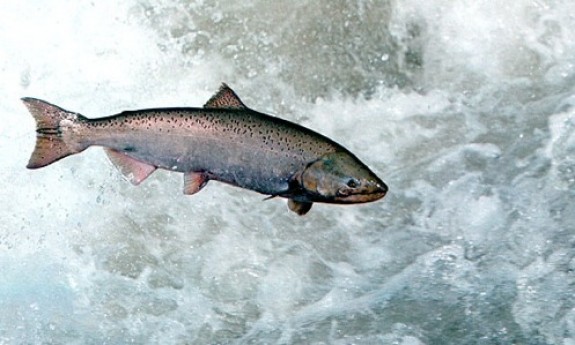
It’s Salmon Season!
“After years of fattening up in the ocean, adult salmon return to their ‘home’ river to spawn,” said M.J. Gimbar, Fishmonger for Black Restaurant Group, which runs Blacksalt Fish Market and Restaurant on MacArthur Blvd in Palisades. “This is extraordinary as the salmon find the exact same spot where they were born to lay their own eggs, and this process is repeated for generations to come.” “The wild Pacific King Salmon are the first to make it up the rivers and are just starting to arrive in Washington,” said Bob Moore, owner of Canon’s Seafood in Georgetown.
Nothing compares to the beautiful, naturally bright-pink wild Pacific salmon for flavor or for omega 3 fatty acid content. Before I share several delicious ways of preparing and enjoying salmon, I’ll explain why it’s so important nutritionally.
I first became interested in the power of omega-3 fatty acids when psychiatrists I work with began prescribing them for their depressed patients. Then I started hearing about their benefits for arthritis and a host of other diseases. And I couldn’t help but wonder, could it be possible that one simple change in the diet could provide so many benefits?
The connection between omega-3 fatty acids and health was first observed in the 1970s. Scientists noted that compared with their counterparts in Scandinavia, Greenland Eskimos had a reduced rate of heart disease, rheumatoid arthritis and other conditions even though they were eating a high-fat diet. The scientists hypothesized that the type of fat — marine derived — might play a role.
Since then, study after study has confirmed that omega-3 fatty acids, a type of polyunsaturated fat found primarily in fish, have a potent and positive effect on heart disease patients. Omega-3s prevent irregular heart beat, reduce plaque inside artery walls and decrease blood clotting, triglycerides (blood fat), blood pressure and inflammation.
“Omega-3s favorably affect a number of risk factors for cardiovascular disease and at the top of the list is reducing the risk of sudden death from heart attack,” says Penny Kris-Etherton, a nutrition professor at Pennsylvania State University.
But the healing powers of omega-3s don’t stop there. Research suggests they may reduce the risk of diabetes, reduce insulin resistance in people with diabetes, enhance bone density and inhibit proliferation of cancer cells in the breast, prostate and colon and improve skin condition by curbing psoriasis. Inflammatory diseases such as rheumatoid arthritis, ulcerative colitis and Crohn’s disease seem to improve with more omega-3s. In infants, it improves cognition and visual acuity. And emerging research indicates omega-3s may boost levels of the brain chemicals serotonin and dopamine, decreasing depression and violent behavior.
While not an answer to every ailment, omega-3 fatty acids possess considerable healing powers. As an indication of their importance, the Food and Nutrition Board of the National Academy of Sciences recently established a minimum daily requirement: 1.1 grams for adult women, 1.6 grams for adult men.
But in nutrition, balance is everything. Learn more about omega 3 fatty acids…
Enjoy some of Katherine’s favorite salmon recipes…
Salad of New Potatoes and Asparagus in a Lemony-Garlic-Herb Mayonnaise
Topped with Poached Salmon (see photo below)
Broiled Salmon in a Mustard Seed Crust
Aquavit and Marcus Samuelsson’s Gravlax Club Sandwich
Traditional Swedish Gravlax and Mustard Sauce
Photo by Ali Eaves