
Harvard Study Finds Certain Foods – NOT Calories – Have a Strong Impact on Weight Gains and Losses
- At June 29, 2011
- By Katherine
- In Articles, News
 7
7
Individual foods are more important than calories when it comes to long term weight gains or losses, according to the study. Specifically, potatoes are associated with weight gain, along with sugar-sweetened beverages and meats, while foods like fruits, vegetables, whole grains, nuts and yogurt, are associated with weight loss, according to the study.
“Modest changes in specific foods and beverages, physical activity,TV-watching, and sleep duration were strongly linked with long-term weight gain. Changes in diet, in particular, had the strongest associations with differences in weight gain… The idea that there are no ‘good’ or ‘bad’ foods is a myth that needs to be debunked,” said a researcher in a press release. The study appears in the June 23, 2011, issue of the New England Journal of Medicine.
When I was contacted by USA Today reporter, Oliver St. John, to comment on the Harvard Study, this gave me an opportunity to look over the study so that I could offer an analysis which would help not only “USA Today” readers, but me and my clients better understand it.
I found some of the claims made regarding the study incomplete.
While this is an interesting study and confirms much of what we know about healthy and unhealthy foods, I’m concerned about the sweeping conclusions for the following reasons:
The Harvard study is epidemiological, the kind of study which analyzes large populations and their health outcomes. Because the facts cannot be precisely measured, as it would be in a clinical study -nobody is weighing and measuring the foods people are eating, their body weights, or their lifestyle patterns – the conclusions which can be made are limited. This is true for many reasons. First, there are no “controls” in the study; making it difficult to tease out confounding variables having an effect beyond the particular foods being studied. What I mean is: eating certain foods is associated with specific behavior patterns, so it’s impossible to determine if the effect (weight loss/gain) is due to the food or the behavior pattern. For instance, studies of whole-grain eating find it is a “marker” for engaging in many healthy behaviors. People who eat whole grains are more likely to exercise and eat more vegetables. SO when epidemiological studies find whole grain- eaters are healthier, one must ask: is the effect due to eating whole grains or the lifestyle associated with eating whole grains? The only way to answer this question is, once the epidemiological data is observed, to take the observations into a lab and do a controlled clinical study. The clinical study would need to control for everything – exercise, diet, body weight, etc – and change only whether people are eating refined or whole grains, to determine if the health effect is due to the whole grain eating or the lifestyle.
POTATOES
The Harvard study found potato-eating associated with weight gain. The researchers warned against eating potatoes, attributing the weight gain to the rise in blood sugar caused by potatoes.
I am not quite convinced. Why?
First, many foods cause rises in blood sugar – including whole wheat bread and whole grain cold cereals. But they aren’t associated with weight gain, in fact, quite the opposite.
Second, in America, most potatoes are eaten as french fries or potato chips, and these are very fattening versions of potatoes. So, the way potatoes are cooked – not the potato itself – may be why Harvard’s epidemiological study found potato-eating is associated with weight gain. This argument points to excess calories as a factor.
Also, and this may be an important factor explaining why potatoes are associated with weight gain. When people eat french fries, they are usually eating hamburgers and hot dogs alongside. Not only that, the beverage they’re drinking is SODA (a known contributor to obesity in adults and children). Therefore, instead of the potatoes causing the problem, could it be the meal pattern or high calorie lifestyle associated with people who eat french fried potatoes? In the United States, french fries are eaten together with fattening, unhealthy foods, known to be correlated with increased weight, diabetes, heart disease, you name it. Same with potato chips. People who regularly eat french fries, potato chips, and sodas also eat other fattening and unhealthy foods. In fact, studies show soda-drinking, for instance, is another “marker” but this time, for engaging in unhealthy behaviors like smoking and being sedentary. These confounding variables could influence the study’s results.
This brings me to the last piece of evidence – and what convinces me the most – that potatoes do not a cause weight gain: SWEDEN
In Sweden, people are no fatter than Americans, in fact, they’re slimmer. But, they eat potatoes every day, and often more than once a day. But when Swedes eat potatoes (and I’m sure of this as I am a Swede and visit often), they eat them in small portions, they’re boiled, topped with a little butter (oops), alongside FISH. Not burgers, not fried fish, just grilled, steamed, cured, smoked, or sauteed FISH.
So, if eating potatoes in Sweden is not associated with weight gain, could it be because the potatoes are cooked in a healthier way than in the United States and the meal pattern is a healthier one? 1) the potatoes are boiled, not fried, 2) the potatoes are eaten in smaller, more reasonable portions, and 3) the potatoes are more often eaten together with other healthy foods, such as fish – not burgers and sodas.
And, how do you explain all those poor, skinny Irish and Russians – heck, anyone living in the northern parts of the world – people who subsisted on and depended on potatoes as their only vegetable for centuries. Why didn’t the potatoes make them fat?
Do I believe potatoes are a wonder food? No. But I also do not believe potatoes are “POISON,” as some commentators have stated.
Should you be eating larger portions of watery vegetables and smaller portions of starchy vegetables, such as potatoes? Yes.
Do I occasionally enjoy French Fries and Potato Chips, known to be fattening, unhealthy foods? Yes I do.
Do I eat French Fries and Potato Chips on a regular basis? No, I do not. Do I wish I could?
Yes I do, but I’d rather be healthy and slim.
NUTS
 People eating nuts were more likely to have lower body weights, according to the Harvard Study. Their explanation is that nuts are satiating; they make us feel full, inferring that they lead to eating fewer calories overall. Clinical studies have found years ago that adding nuts to meals, especially breakfast, decreased overall calorie intake, making weight loss easier. This is one reason why I have been encouraging nut-eating for many years. Also, we’ve known for quite a while that nut-eaters around the world have fewer heart attacks and are healthier in other ways.
Does this mean you cannot gain weight eating too many nuts? No. Plenty of people eat too many nuts and can become overweight because of it. Nuts are healthy, but fattening little morsels. One ounce, or a small handful, contains about 180 calories. This is why I recommend most people eat one ounce per day. But if weight is not an issue, two ounces a day – or more, if you can afford the calories, is fine – and is even heart healthy. When I work with people wanting to gain weight healthfully, I advise snacking on nuts!
Are certain nuts better than others? I’m not convinced of this. Every time a new study comes out about a nut – any nut – it’s positive news. Certain nuts, though, are more commonly eaten, have a bigger consumer base, and more money to fund scientific studies. This may be why you hear about some nuts over others. It is also a very expensive and time-consuming process for a food to be approved for a health claim on a food label. So, only certain nut growers can afford to put health claims on their labels, and educate you about their health benefits.
While you already know each nut has a different look and flavor, each nut also has its own unique nutritional characteristics. For instance, almonds are the highest in protein and Vitamin E, and the lowest in artery-clogging saturated fat. Walnuts are the only nut with omega-3-fatty acids. Pecans have the highest antioxidant content. Pistachios contain lutein, a compound which may significantly improve eye health.
Bottom Line: Eat nuts every day.
They’re good for you and may help you eat fewer overall calories because they’re so satiating!
Yes, calories matter: So, stick with just one or two ounces, if weight is an issue. If not, eat more.
YOGURT
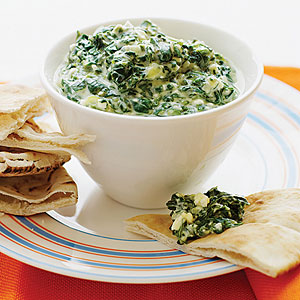
“Yogurt Spinach Dip” from “Diet Simple”
The study found yogurt-eating associated with lower body weights. Whole civilizations have known about yogurt’s health benefits for thousands of years.
When my mother was recovering from hip replacement surgery I advised her to live on yogurt, fruits and vegetables for healing AND to prevent weight gain from being immobile. It worked. She healed very quickly and lost a little weight at the same time. She was thrilled. I’ve repeated the same advice to my clients, when appropriate, and they’ve been thrilled with the results, too.
Yogurt has many positive qualities. I’m convinced: Yogurt is a Superfood; it may be one of the best overall foods you can eat. Yogurt creates a natural way to boost your immune system by providing probiotics which increase the healthy bacteria in your gastrointestinal tract, according to my friend and colleague, Jo Ann Hattner, MPH, RD, in her book, “Gut Insight.”
Probiotics are live bacteria that promote digestive health. As we age, it is thought that bacterial populations in our gut change – resulting in increased harmful, disease-causing bacteria and fewer protective bacteria. When you add probiotics you repopulate the gut with beneficial bacteria that protect against infection-causing toxins.
You also improve colon health by lowering pH of the colon, so it’s receptive to the beneficial bacteria and detrimental to the disease-causing bacteria, you protect the intestinal lining, and strengthen immunity. Exciting research is evolving on the health benefits of probiotics.
But correlating yogurt with lower body weights is complicated. Do you believe people who regularly eat french fries, potato chips, burgers and sodas eat much yogurt? I don’t think so. This is another case where lifestyle probably plays a huge role and why Harvard’s epidemiological study found yogurt was associated with lower body weights.
While it may be true that yogurt has health benefits causing leanness, this hasn’t been proven conclusively in clinical studies yet. There have been studies showing dairy foods are very satiating… That is, when you eat yogurt, you feel full in relation to the calories. And when you feel extra satiated by something, such as yogurt or nuts, it helps you eat fewer overall calories for the day. There is some evidence that the protein in yogurt may be especially high quality, spare lean muscle (and bone), and increase metabolism, thereby making weight loss a little easier. Diary products may also contain other bioactive compounds contributing to leanness. The Harvard researchers speculated the probiotics in yogurt may be responsible for the weight benefit. All of these reasons could be significant. But, the most significant factor probably is: Yogurt-eaters are more likely to live a healthy lifestyle, exercise, and eat other healthy foods.
My clients, family and friends have known this for years. Why? I love keeping up with the science and keep myself and them informed.
Potato Salad with Haricots Verts Smothered in a Lemony Garlic-Herb Mayonnaise
- At June 29, 2011
- By Katherine
- In Recipes
- 2
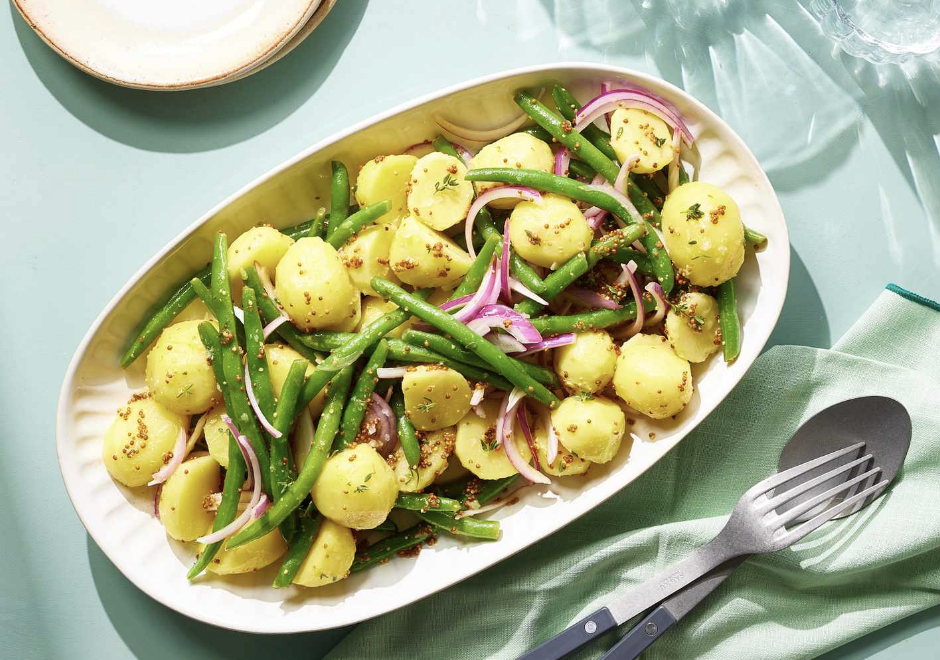
This “salad” can be served warm, for instance, as a side dish for the holidays – with or without the potatoes – or enjoyed cold in the hot summertime weather. The mayonnaise dressing brings out the flavor of any vegetable, especially if allowed to soak into still-warm, just cooked haricots verts (the tender French green bean), delicate, small, thin-skinned “new” potatoes, or broccoli. Try buying your potatoes, peppers, and onions at your local Farmers Market so they’re as fresh and tasty as possible.
Serves 6 to 8
Mayonnaise Dressing:
1/4 Cup Mayonnaise, preferably made with Canola or Olive Oil
Grated Zest and Juice of 1 Lemon
2 Garlic cloves (or more, to taste), mashed
1 Tbsp (or more, to taste) Tarragon or other fresh herb, such as Dill
Salt and Pepper, if desired (no salt needed)
Vegetables:
1 quart Haricots Verts, tough end removed
1 pint small New Potatoes (or any potato), cleaned but not peeled, cut into 1″ pieces
2 Red Bell Peppers, roasted (if desired) and chopped
1 pint cherry tomatoes, sliced in half (and/or any other seasonal vegetables)
1 thinly sliced red onion Bunch
Prepare the dressing in a bowl large enough to fit the salad ingredients by mixing the mayonnaise, the lemon, garlic and fresh herb of your choice. Place in refrigerator to keep chilled.
Steam or boil the haricots verts slightly (in a small amount of water) until they are al dente (firm, but not hard, with resistance to the bite). Drain and immediately place in the bowl of mayonnaise. Toss to coat with mayonnaise dressing. Put the bowl back into the refrigerator to halt the cooking process.
Cut the small potatoes in half or quarters, depending on their size. Boil the potatoes for about 5 or 10 minutes, until tender when pierced by a fork. Drain and place in the bowl with the mayonnaise and haricots vert. Toss to coat with the mayonnaise dressing. Place in the refrigerator.
Roast the red bell peppers if desired, chop, and add to the mix. Slice the red onion, cut the cherry tomatoes in half, and place in bowl with the other vegetables; toss.
Swedish Gravlax & Mustard Sauce
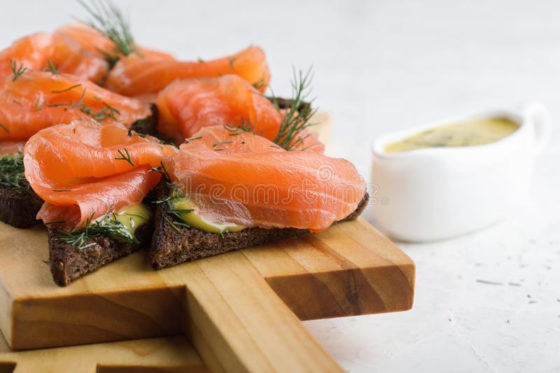
Swedish Gravlax
Gravlax is salmon which is cured, smothered in a dry preparation of salt, pepper, sugar and dill, and refrigerated for a few days. A Scandinavian staple since the middle ages, when it was salted and slightly fermented before refrigeration was invented. It is served with Swedish hard or soft 100% coarse rye bread, on salads, with boiled potatoes, and almost always with plenty of dill and mustard sauce.
2-1/2 pounds fresh salmon (about 1 side of a salmon), cut in half
4 Tbsp Sugar
5 Tbsp Coarse Salt
1 Tbsp White Peppercorns, coarsely ground
1 Bunch Fresh Dill
Lemon and additional dill for garnish
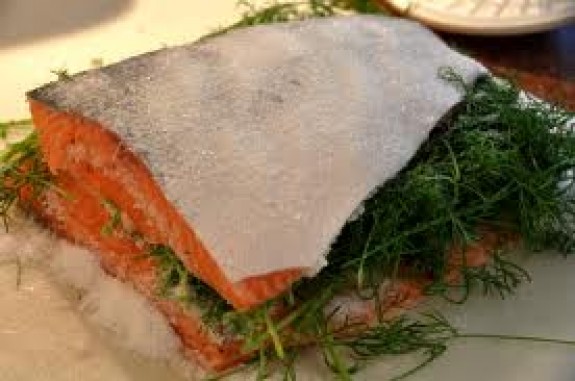
Salmon Filets sandwiched together to create Gravlax
Mix sugar, salt and pepper in a bowl. Set aside.
Place the salmon halves, skin side down, flesh side up, into a shallow baking pan or cutting board. Evenly distribute the sugar, salt, and pepper mixture over both pieces. Place all of the dill on the flesh side of one fish half. Place the other half on top of the first half so that the flesh sides are together, and the thick part of the top half lies on top of the thin part of the bottom half (see photo). Place in the shallow baking pan, and cover with plastic wrap, or into a large plastic bag. Keep in refrigerator for two to three days (at least 24 hours),while flipping every 12 or 24 hours.
To serve, scrape off the marinade, slice fish thinly and roll. Garnish with lemon pieces and dill. Serve with mustard sauce on the side. Serves 8 to 12.
Salmon, high in omega-3-fatty acids, is good for you!
Swedish Mustard Sauce
1-1/2 Tbsp Chopped Fresh Dill
3 Tbsp Gulden’s Mustard
1 Tbsp Sugar
3 to 4 Tbsp Vegetable Oil
All ingredients should be at room temperature. Place mustard in a small bowl, add sugar. Blend in the oil slowly. Add the dill and mix thoroughly.
Salmon, high in omega-3-fatty acids, is good for you!
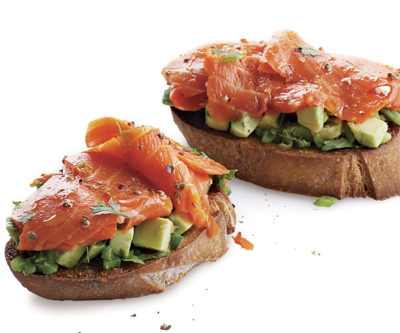
Marcus Samuelsson’s Gravlax Club Sandwich
Two Michelin Star – Aquavit Restaurant
excerpted from “Diet Simple: 195 Mental Tricks, Substitution, Habits & Inspirations”
(LifeLine Press)
This modern version of a gravlax presentation was invented by Chef Marcus Samuelsson, who arguably, made Manhattan’s Two Michelin Star Aquavit first soar the heights of popularity in the 1990’s. The Gravlax Club Sandwich combines the velvety textures of guacamole and gravlax, cured salmon (purchase or see recipe above), with crispy iceberg lettuce (or other greens) and chewy whole grain bread, preferably whole rye. If you want to make this sandwich and don’t happen to have gravlax, substitute smoked salmon for similar success.
I’ve used this recipe at parties. Just cut the sandwiches into smaller appetizer size sandwiches, into quarters, and place a tooth pick through all layers for easy grabbing. It’s always a hit.
Makes 5 sandwiches.
2 avocados
Juice from 2 limes
1/2 medium size red onion, finely chopped
1 medium-size ripe tomato, finely chopped
1 jalapeño pepper, cored, seeded and finely chopped
8 sprigs cilantro, finely chopped
Salt and freshly ground black pepper
10 thin slices of 100% whole grain rye bread, or whole wheat if rye is not available
5 thin slices of Gravlax
1 cup shredded iceberg lettuce (or other greens)
1. Mash the avocado with a fork and add the lime juice. Mix the chopped onion, tomato, jalapeño pepper, and cilantro and toss. Season with salt and freshly ground black pepper to taste.
2. Toast the bread slices lightly and let them cool.
3. Place a slice of gravlax on a slice of bread. Spread 1 to 2 tablespoons of the avocado mixture over the gravlax and sprinkle with shredded iceberg lettuce. Cover with a second slice of bread – or leave open-faced as the Swedes would do. Repeat with the remaining bread slices and gravlax.
1 Gravlax Club Sandwich: Calories 300, Total Fat 15g, Saturated Fat 2g, Cholesterol 5mg, Sodium 740mg, Total Carbohydrate 38g, Dietary Fiber 15g, Omega 3 Fatty Acids 0.82 g, Protein 11g
Omega-3-Fatty Acids: Superstars of the Nutrition World
- At June 21, 2011
- By Katherine
- In Articles
- 0
On CNN: Katherine Discusses 5 Good-For-You Foods to Include in Your Diet This Year!
I first became interested in the power of Omega 3 when psychiatrists I work with began prescribing it for their depressed patients, finding it made positive improvements. Then I started hearing about its potential benefits for arthritis and other inflammatory diseases. Could it be possible that one nutrient could provide so many benefits?
The connection between Omega 3s and health was first observed in the 1970’s. Scientists observed that Greenland Eskimos had a reduced rate of heart disease, rheumatoid, arthritis and other ailments even though they ate a high fat and cholesterol diet. They hypothesized that the type of fat – marine derived – might play a role. Since then, study after study has confirmed that omega 3s in fish have a potent effect on reduction of heart disease.
Omega 3s work several ways in the heart. They prevent irregular heart beat, reduce fatty placques inside artery walls, decrease blood clotting, decrease triglycerides (blood fat), increase HDL (good cholesterol), and decrease inflammation.
“Omega 3 favorably effects a number of risk factors for cardiovascular disease and at the top of the list is reducing the risk of sudden death from heart attack,” says Penny Kris Etherton, distinguished professor of nutrition, Pennsylvania State University
But when it comes to the benefits of Omega 3’s that may be just the tip of the iceberg!
The two most potent omega 3 fatty acids are known as DHA and EPA. They’re usually found in a 50/50 or 60/40 ratio in fish. These fatty acids end up in every single cell membrane in the human body. They act as a cell lubricant, improve flexibility and communication between cells, and are important for cell metabolism and gene expression.
It’s been well-established that omega-3 fatty acids, a type of polyunsaturated fat found primarily in seafood, can improve your chances of living longer if you have heart disease. But its healing powers don’t stop there. Other organs may benefit. They have a positive impact from the womb to old age.
Omega 3’s reach is vast and the health benefits are intriguing the scientific community. While not an answer to every ailment, omega 3s are essential nutrients in the human body. Studies show that omega 3s may have significant physiological and psychological benefits.
In fact, Omega-3s are so important to human health, the National Academy of Sciences Food and Nutrition Board recently set a minimum daily requirement for the first time. For years we thought there was only one essential fatty acid, Omega 6 fatty acid (found in vegetable and soybean oils), but now scientists have added omega 3 to the list of essential nutrients humans must get from the diet.
But as we’ve discovered in nutrition, balance is everything. The two essential fatty acids, omega 6 and omega 3 must be in harmony with each other for proper functioning. If one or the other is too high or low, negative consequences result.
“If you eat too much omega 6, as is the case with today’s American diet, this promotes inflammation, blood clotting and constricts blood vessels,” says Artemis Simopoulos, president of the Center for Genetics, Nutrition and Health and the author of The Omega Diet (Harper Collins, 1999) “When your cells contain equal amounts of Omega 6 and Omega 3, as was the case with early humans, this promotes less inflammation, less constrictive blood vessels and prevents clot formation, all important functions in preventing many diseases.”
The ideal ratio of omega6 to omega3 is the hottest debate among omega3 researchers. Some say a ratio of 1:1 or even 2:1 is acceptable. If you followed the fatty acid recommendations of The National Academy of Sciences, and had an intake of 12 or 17 grams of omega 6 for women and men, respectively, and an omega 3 fatty acid intake of 1.1 and 1.6 for women and men, your ratio would be 10:1. But many omega 3 researchers say a ratio of 1:1 or even 2:1 or 5:1 is ideal. If you’re a typical American, your ratio could be as high as 12:1 or 15:1. Still others believe a specific ratio doesn’t matter. But they all agree on the need to get more omega3s.
Omega 3 concentrations are highest in the brain and nervous system. They are necessary for optimal functioning of the neurons, protect cells, decrease cell death and improve nerve transmission. Emerging research indicates Omega 3s may boost levels of the brain chemicals serotonin and dopamine, decreasing depression and violence.
“In 5 out of 6 of the clinical trials where people were given either a placebo or omega-3 fatty acids, on average, the symptoms of depression have been reduced by about 50%,” says Joseph Hibbeln, a psychiatrist at the National Institutes for Alcohol Abuse and Alcoholism. “This is true even when the subjects were already on anti-depressants and failing to respond to them.”
Hibbeln’s studies found an increase in depression, violence and homicides in countries who eat less fish as compared to countries who eat more fish. It may even improve conditions such as bipolar disorder and schizophrenia.
Bone density may be enhanced by omega 3 intake.
“Osteoporosis is lower in populations who eat more fish, such as Asians, when compared to Europeans who eat more calcium-containing foods” says Bruce A. Watkins, Ph.D., nutrition professor at Purdue University. The mechanisms aren’t completely understood, but omega 3’s may help support bone formation.
Omega 3 may also benefit the skin. The Greenland Eskimo studies found they don’t suffer much from psoriasis, a skin disease causing painful inflammation, redness and scales in its sufferers.
Laboratory studies have found that omega 3s suppress the hyperproliferation of the skin cells, which causes the disease to spread. When tested in humans, after 10 weeks, 60% of the subjects experienced a decrease in the area of psoriasis and a decrease in proliferation and inflammation.
“The dose is very essential,” says the researcher, Vincent Ziboh,Ph.D., professor, dept of dermatology, Univ of Ca at Davis. “The work is promising, but more research is needed to understand the mechanism and doses, and why it works for some but not others.”
Just as omega 3s inhibit proliferation of skin cells which causes psoriasis, new research is finding it inhibits proliferation of cancer cells in the breast, prostate and colon. This is a new area of research which hasn’t been tested widely. But, a new study found breast cancer patients responded better to chemotherapy and the cancer was less likely to spread when patients were given omega 3 fatty acids. There is epidemiological evidence that men who eat more fish have lower risk for prostate cancer.
There is evidence that omega3s may help prevent type 2 diabetes and improve diabetes by reducing insulin resistance.
The FDA recently approved Omega 3s for infant formulas because of the overwhelming evidence that it improves cognition and visual functioning in children. (mother’s breast milk provides it naturally, especially when she regularly eats fish)
Inflammatory diseases such as rheumatoid arthritis, ulcerative colitis, and Crohn’s disease may improve with omega 3 supplementation.
The studies are just beginning. More research needs to be done to understand who will benefit most from higher levels of omega 3 in their diets. Your genetics and environment play large roles in responsiveness to omega 3s. And while studies are very promising for a wide range of illnesses, the optimal amount of omega 3 and the ideal ratio of Omega 3 to Omega 6 are still hotly debated in the scientific community.
But what isn’t debated is that adult women need at least 1.1 grams and adult men need 1.6 grams daily, according to the Food and Nutrition Board of the National Academy of Sciences. Unfortunately, Americans don’t come even close to getting their omega 3 requirement. But we used to. Apparently, in our earlier evolutional stages, we ate plenty of wild greens, lean animals which grazed on high omega3 grasses, and fish high in Omega 3s, and our bodies evolved a need for it.
But today, omega 3s have largely been replaced with omega 6s, vegetables oils, especially soybean oil, which is used in large doses in processed foods and fast foods. And no longer do our animals graze on high omega 3 grasses, but on grains instead. This changes the fatty acid composition of the meat, to our detriment.
Most of the studies found a positive benefit with 500 to 1,000 mg of omega3s per day. The American Heart Association recommends all adults eat a variety of fish, particularly oily fish, at least twice weekly, which would provide an average of 500 mg daily. For patients with coronary artery disease, they recommend 1,000 mg daily, or double the seafood requirement (but never above 3,000 mg without a doctor’s supervision). Supplements are effective and may be used instead of eating the fish. Due to environmental pollutants found in fish, women of child-bearing age are recommended to keep their fish intake to no more than 12 ounces per week. But omega3 researchers believe the risk of not getting enough omega3 in your diet outweighs the potential risk of pollutants.
There are possible dangers to taking too much omega3 supplement. The inflammatory response is your immune system working, or overworking. This means that omega 3s are actually reducing your immune response when they reduce inflammation. So, large doses should be taken only with a doctor’s advice by people with compromised immune systems. There is also a slight increase in risk for hemorrhagic stroke or excessive bleeding.
As usual, I have to underscore balance. It may be safer to stick with food sources so you don’t go overboard and are more likely to stay in balance.
There is a vegetable source of omega 3, known as ALA. It’s found in flax seed oil, walnuts, and canola oil. The omega-3 fatty acid, ALA, is one which has to be converted to DHA and EPA, which means vegetable sources are less potent than fish oil. But it’s still a great idea to include them in your diet.
Some values of Omega-3’s in 3-1/2 ounces of Fish
Fish Omega-3’s (g)
Sardines in Sardine Oil 3.3
Atlantic Mackerel 2.5
Atlantic herring 1.6
Chinook Salmon 1.4
Anchovy 1.4
Atlantic Salmon 1.2
Tuna 0.5
Brook Trout 0.4
Catfish 0.3
Shrimp 0.3
Flounder 0.2
Found in: S.L. Conner and W.E. Conner, “Are Fish Oils Beneficial in the Prevention and Treatment of Coronary Artery Disease?” American Journal of Clinical Nutrition 66 (1997); 1020S – 1031S.
“Understanding Omega-3s” by Katherine Tallmadge, originally appeared in The Washington Post.
“MyPlate” Menus Made Easy – and Tasty!
- At June 21, 2011
- By Katherine
- In News, Recipes
- 2
 From pyramids to plates! Are you confused about what should be on your plate? The Washington Post asked me to design menus based on MyPlate to help clear up some of the confusion. It was so fun for me – and easy, because I had everything I needed already in my book, Diet Simple, where there are tons of menu and recipe ideas which fit perfectly into MyPlate.gov’s scheme. What do you think of MyPlate, The United States Department of Agriculture’s new food plate designed to help Americans make better food choices? Will it help you improve your eating habits? When Bonnie Benwick, reporter for The Washington Post’s “Food” section contacted me and asked me to put together menus based on the My Plate icon and the Dietary Guidelines, I was delighted and up for the challenge.
When I create meals and menus I like to keep certain things in mind: number one is TASTE. Your meals must taste good, you have to really enjoy your meals, every bite. They must be interesting, full of flavor, texture, several different food groups and nutrient-dense. I also must keep them SIMPLE. My recipes are simple and quick, and are usually batches which can be eaten for several meals.
BREAKFAST
My breakfast philosophy is that it should contain 1/3 of the daily calories and protein, and contain all four food groups: protein/dairy (in this case, the protein is in the dairy), whole grain (oats, which also lower bad cholesterol), Heart healthy fat (nuts – which lower bad cholesterol and raise good cholesterol), and fruit or vegetable must be at least half of the volume (the dried cranberries, the blueberries and the OJ). I’ve picked very high nutrient and anti-oxidant fruits for this meal. All of the foods are important for the immune system, and building muscle and bone. It’s full of different flavors, textures, a full complement of important nutrients, including fiber. My friends, family, and clients LOVE Katherine’s oatmeal and begin feeling it is their favorite meal of the day. It holds them and prevents that ravenous feeling all day long:
Katherine’s Fabulous Oatmeal (excerpted from “Diet Simple” [June 2011, LifeLine Press])
½ Cup Rolled, Old Fashioned Oats
1 Cup Skim Milk or Soy Milk
1 ounce chopped (one cupped handful), roasted, unsalted almonds, or other nuts
¼ cup Dried Cranberries** or other dried fruit
Place all ingredients in a large glass bowl (need a large bowl as the mixture bubbles up) and into the microwave for 4 – 5 minutes. When finished, let sit in the microwave another minute to let the oats soak up the liquid.
Add:
1 tsp honey/maplesyrup/brown sugar or Splenda for sweetness (optional, to taste)
1 Cup Blueberries or other fruit
Beverages:
½ cup Orange Juice
Green Jasmine Tea (or coffee)
LUNCH
I created a three-course, “sit-down” elegant lunch with a fun-to-eat appetizer which takes time to eat, as you pop the edamame peas into your mouth with your fingers. The main course is a vegan recipe which has been very popular, and takes minutes to make. Then I included more protein/dairy as the dessert, which I think is more creative and fun than drinking a glass of milk. Also, I find when something sweet – even fruit – is part of the meal, people are less likely to crave sweets. We naturally crave all the different flavors and if our meals are too one-dimensional, we start craving the other flavors and are less likely to stick with healthy eating. As MyPlate requires, this meal definitely contains at least half the volume as vegetable/fruit, and vegetarian protein sources: edamame, chick peas, and yogurt, as well as heart healthy fat in the edamame and in the lemon/olive oil vinaigrette for the Chick Pea Salad.
Appetizer: 1 Cup Edamame in pod (boil frozen edamame – soy beans – in their shells for about 10 minutes and pop into your mouth like peanuts)
Main course:Chick Pea Salad with Cumin and Mint
Dessert: Fat Free or Low Fat Fruited yogurt, 1/4 ounce Dark Chocolate Chips mixed in
I recommend iced tea or herbal tea to drink
DINNER
Again, I wanted an enjoyable three course meal starting with an appetizer and ending with a dessert. Very elegant. My dairy/protein is hidden in the delicious dip. At least half the meal is veggies and fruits (the crudités in the appetizer, the spinach placed under the salmon, and the strawberries in the Granita dessert). This is a very nutrient-dense, but low calorie meal, one high in omega-3-fatty acids as well as vitamins, minerals and anti-oxidants. Filled with flavor, texture and colors…
Appetizer: Crudites with Yogurt and Spinach Dip
Main Course: 1 serving Grilled Salmon in a Mustard Crust
Served atop 1 Cup Sauteed Fresh Spinach/Greens, in 1 tsp Extra-Virgin Olive Oil
4 ounces wine, optional (OR a whole grain roll)
Dessert: Strawberry Granita
I love to eat and expect my meals to be delicious. That is true for everyone. What many people don’t realize is that healthy food can also be delicious. I love helping people discover this and seeing the joy in their faces when they realize they don’t have to feel deprived to eat healthy!
Strawberry Granita
- At June 21, 2011
- By Katherine
- In News, Recipes
- 0

Carole Cutler’s Strawberry Granita
From “Diet Simple: 195 Mental Tricks, Substitutions, Habits & Inspirations”
(June 2011, LifeLine Press)
The best ice cream in the world can be found in Italy, hands down. But much more typical of Italian fare is granita, the wonderfully fresh, flavored ice that is so refreshing after a meal. Here is a granita you can whip up in a flash, and at any time of the year. If using frozen strawberries, the taste says “fresh” thanks to the helpful addition of orange flavoring.
8 servings
Grated peel and Juice of 1 Orange
2 teaspoons orange liqueur (optional)
20 ounces frozen sweetened or fresh strawberries, (and/or raspberries and/or blueberries, if desired and in season)
1 Tablespoon sugar (optional, if using fresh berries)
Optional: 8 mint sprigs
Put eight small sherbet dishes (or martini glasses) in the refrigerator to chill. If using fresh berries, place them (along with the sugar, if desired) in the freezer until frozen. Cut the frozen sweetened or unsweetened berries into large-sized chunks and put into a food processor. Add the orange juice, peel, and liqueur. Pulse for about 30 seconds to break up the chunks, then process on high until the mixture is smooth. When the mixture has been pureed, spoon immediately into the chilled dishes and place in the freezer. If the granita has been frozen for more than six hours, remove it from the freezer 10 minutes before serving time. If desired, decorate with the mint sprigs.
(Muffin cup liners can also be used. Fit each one into a cup in the muffin pan and fill to the 3/4 level, the frozen ice will expand. Place immediately into the freezer.)
For children or the child in YOU, MAKE POPSICLES! Pour the Granita into 8 popsicle molds. Who knew eating healthy could be so delicious and FUN!
Per serving: 80 calories, 0 grams fat, 20 grams carbohydrate, 2 grams fiber, 0 mg sodium, 0 grams protein
Carol Cutler is the award-winning author of eight cookbooks, a syndicated columnist, and restaurant critic. She has often appeared on television cooking shows. She and her journalist husband have traveled extensively, savoring authentic cuisine at its source.
Did you know that there are 200 seeds on each strawberry?
Strawberries are members of the Rose family and there are over 600 different varieties. Choose freshly picked, ripe berries, as they will be the tastiest and will have the most nutrients. “Look for berries fully formed, bright red, without bruising or soft spots and with fresh-looking green caps. Beware of buying out-of-season strawberries, as sometimes they are picked when they are only 40% ripe. These berries may turn red, but they will never develop sweetness,” according to Janie Hibler in “The Berry Bible.”
Strawberries (and other berries) are considered a “superfood.”
They have one of the highest antioxidant and nutrient contents of all foods, yet they are low in calories, so you can eat them in unlimited quantities. In fact, for your health, the more the better! “A serving of eight strawberries contains more vitamin C than an orange. Strawberries are also rich in folate, potassium, and fiber. They’re especially high in cancer- and heart-disease-fighting phytonutrients (beneficial plant compounds) called flavonoids, anthocyanins, ellagic acid, quercetin, catechin, and kaempferol,” according to David Grotto in “101 Foods That Could Save Your Life.”
Broiled Salmon in a Mustard Seed Crust
- At June 21, 2011
- By Katherine
- In News, Recipes
- 0
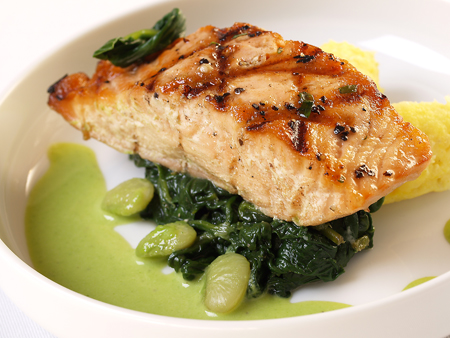 Broiled or Grilled Salmon in a Mustard Seed Crust
From: “Diet Simple: 195 Mental Tricks, Substitutions, Habits & Inspirations” (June 2011, LifeLine Press)
8 3-ounce servings
One Salmon Fillet, about 1.5 pounds
1/2 cup dried mustard seeds
1/2 bunch fresh dill, lightly chopped
1/2 medium sweet onion, thinly sliced
2 Tablespoons extra virgin olive oil
salt and freshly ground pepper to taste
For broiling
Lay the side of salmon flesh side up, salt and pepper liberally, and coat with the mustard seeds, then cover with the chopped dill, followed by thinly sliced raw onions. Finish with a sprinkling of olive oil. Preheat the broiler. Place the rack about 4 inches from the heat source. Broil the salmon under the broiler for about 10 minutes until the onions are brown and crispy, then turn the temperature down, keeping the salmon in the oven until the salmon is opaque all the way through. Use a thin knife to check the doneness of the flesh near the bone. Remove the fillet just before it is finished cooking, so that it does not overcook. I serve it right out of the oven or as chilled leftovers on subsequent days. This is a stunner for a party or a perfect “batch” meal for you and your family. The salmon may be served whole or individually portioned by cutting into vertical strips approximately two inches wide. 240 calories per serving.
“Grilled Salmon in a Mustard Seed Crust” is adapted from Patrick O’Connell’s The Inn at Little Washington, A Consuming Passion (Random House, 1996)
Alternative Grilling Instructions from Chef Patrick O’Connell:
Remove the rack from your charcoal grill and ignite the charcoal. Sprinkle the wood chips on top of the fire, letting the flames subside to glowing embers. Lay your rack on the top of the flesh side of the fish. Pressing the onions, dill and seasonings in place with the rack, quickly flip the rack over the fire with the skin side facing up. Lower the lid if your grill has one and cook for 10 minutes. The fish will continue to cook somewhat after it is removed from the fire. To remove the fish from the fire use tongs or oven mitts to lift off the grill rack with the fish in place and set on a large metal tray or cookie sheet to cool. Gently remove the skin.
Salmon is high in Omega-3-Fatty Acids.
Omega 3s are superstars. They are to the world of fatty acids what Tiger Woods is to golf, Lance Armstrong is to cycling, or Placido Domingo is to opera. Everyone’s heard about the importance of Omega-3s. While the full scope of their powers are still the subject of fierce debate among researchers, nobody challenges their importance or that Americans simply don’t get enough.
It’s been well-established that omega-3 fatty acids, a type of polyunsaturated fat found primarily in seafood, can improve your chances of living longer if you have heart disease. But its healing powers don’t stop there. Other organs may benefit. They have a positive impact from the womb to old age.
Omega 3’s reach is vast and the health benefits are intriguing the scientific community. While not an answer to every ailment, omega 3s are essential nutrients in the human body. Studies show that omega 3s may have significant physiological and psychological benefits.
In fact, Omega-3s are so important to human health, the National Academy of Sciences Food and Nutrition Board recently set a minimum daily requirement for the first time. For years we thought there was only one essential fatty acid, Omega 6 fatty acid (found in vegetable and soybean oils), but now scientists have added omega 3 to the list of essential nutrients humans must get from the diet.
I first became interested in the power of Omega 3 when psychiatrists I work with began prescribing it for their depressed patients, finding it made positive improvements. Then I started hearing about its potential benefits for arthritis and other inflammatory diseases. Could it be possible that one nutrient could provide so many benefits?
Najmieh’s Yogurt and Spinach Dip
- At June 21, 2011
- By Katherine
- In News, Recipes
- 0
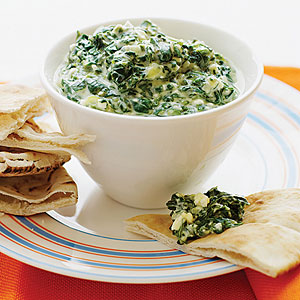 Najmieh Batmanglij’s Yogurt and Spinach Dip
From “Diet Simple: 195 Mental Tricks, Substitutions, Habits & Inspirations” (June 2011, LifeLine Press)
8 Servings
4 Cups (10 Ounces) fresh Spinach, washed and chopped, or 1 cup frozen Spinach, thawed
2 Onions, peeled and thinly sliced
2 cloves garlic, peeled and crushed
2 Tbsp Olive Oil
1-1/2 Cups Low-Fat Drained Yogurt * or Greek Yogurt
1/2 tsp salt
1 tsp freshly ground Black Pepper
Garnish (optional):
1/4 tsp saffron dissolved in 1 Tbsp Hot Water
1 Tbsp Rose Petals
In a non-stick skillet, lightly brown the onions and garlic in 2 tablespoons oil for 20 minutes over medium heat. Add the spinach, cover and steam for about 5 to 10 minutes, until the spinach leaves are wilted. Remove from heat and let cool. In a serving bowl, mix yogurt and spinach and season to taste with salt and pepper. Refrigerate for several hours before serving. Garnish with saffron water and rose petals. Serve as a appetizer with crudites, whole grain crackers, or lavash bread. 130 Calories Per Serving.
“Yogurt and Spinach Dip” is from Persian Cooking for a Healthy Kitchen by Najmieh Batmanglij (Mage Publishers)
Yogurt is a Superfood, I am beginning to believe, based on current research, yogurt may be one of the best overall foods you can eat! Yogurt creates a natural way to boost your immune system by increasing the healthy bacteria in your gastrointestinal tract, according to my friend and colleague, Jo Ann Hattner, MPH, RD, in her book, “Gut Insight.”
Of course, many of the oldest civilizations in the world have known about yogurt for thousands of years.
For aging intestinal tracts, and as a bonus, increase your intake of calcium, protein, potassium, magnesium and other essential nutrients, eat fermented dairy or soy products, such as yogurts and kefir with live, active cultures, often labeled as “probiotics.”
Probiotics are live bacteria that promote digestive health. As we age, it is thought that bacterial populations in our gut change – resulting in increased harmful, disease-causing bacteria and fewer protective bacteria. When you add probiotics you repopulate the gut with beneficial bacteria that protect against infection-causing toxins.
You also improve colon health by lowering pH of the colon, so it’s receptive to the beneficial bacteria and detrimental to the disease-causing bacteria, you protect the intestinal lining, and strengthen immunity. Exciting research is evolving on the health benefits of probiotics.
(Reference: Mitsuoka T. Intestinal flora and aging. Nutr Rev. 1992 Dec;50(12):438-46)
More information on boosting your immune system…
Chickpea Salad with Cumin and Mint
- At June 21, 2011
- By Katherine
- In News, Recipes
- 0
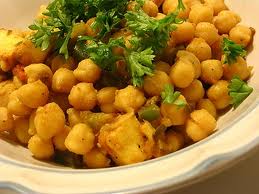 East Coast Grill and Raw Bar’s Chickpea Salad with Cumin and Mint
From “Diet Simple: 195 Mental Tricks, Substitutions, Habits & Inspirations” (June 2011, LifeLine Press)
Serves 4
1 cup dried chickpeas or 1 15-ounce can chickpeas
1/2 teaspoon Salt (if using dried chickpeas)
1/3 Cup Olive Oil
1/4 Cup Fresh Lemon Juice (about 1 lemon)
1 Tbsp Minced Garlic
1 Red Bell Pepper, halved, seeded, and diced medium
1/2 Cup Roughly Chopped Scallions (white and green parts)
1/4 Cup Roughly Chopped Fresh Mint
2 Tbsp Cumin Seeds, toasted if you want, or 1 Tbsp Ground Cumin
1 Tbsp Minced Jalapeno or other fresh chile pepper of your choice (optional)
2 Bunches Watercress, trimmed, washed, and dried
If you are using dried chickpeas place them in a large pot, cover with water, and let soak overnight, or for at least 5 hours. Drain and rinse two or three times. Return the chickpeas to the pot, cover with water again, add salt, and bring to a boil over high heat. Immediately reduce the heat to medium and simmer for one hour to one hour and 15 minutes, or until the chickpeas are tender but not mushy. Drain and rinse thoroughly with cold water. If you are using canned chickpeas, simply drain and rinse them. Place the chickpeas in a medium bowl, add all the remaining ingredients except the watercress, and toss well. Cover and refrigerate until well chilled, at least 30 minutes. When chilled, place the watercress on a platter or individual serving plates, top with the chickpea salad, and serve. 370 calories per serving.
“Chickpea Salad with Cumin and Mint” is from: License to Grill, copyright by Chris Schlesinger and John Willoughby (William Morrow and Company, Inc. 1997)
Chickpeas and other legumes, are not only delicious and versatile foods, they are loaded with nutrients which improve your body’s immune response, allowing you to resist diseases more effectively. They are high in protein (6 grams per 1/2 cup), 7 grams of fiber (the kind which lowers bad – LDL – cholesterol), high in iron, folate, vitamin E, only about 2 grams of healthy fat, and virtually zero sodium.
Scandinavian Midsummer: Feast the Night Away
- At June 13, 2011
- By Katherine
- In News, Recipes
- 4
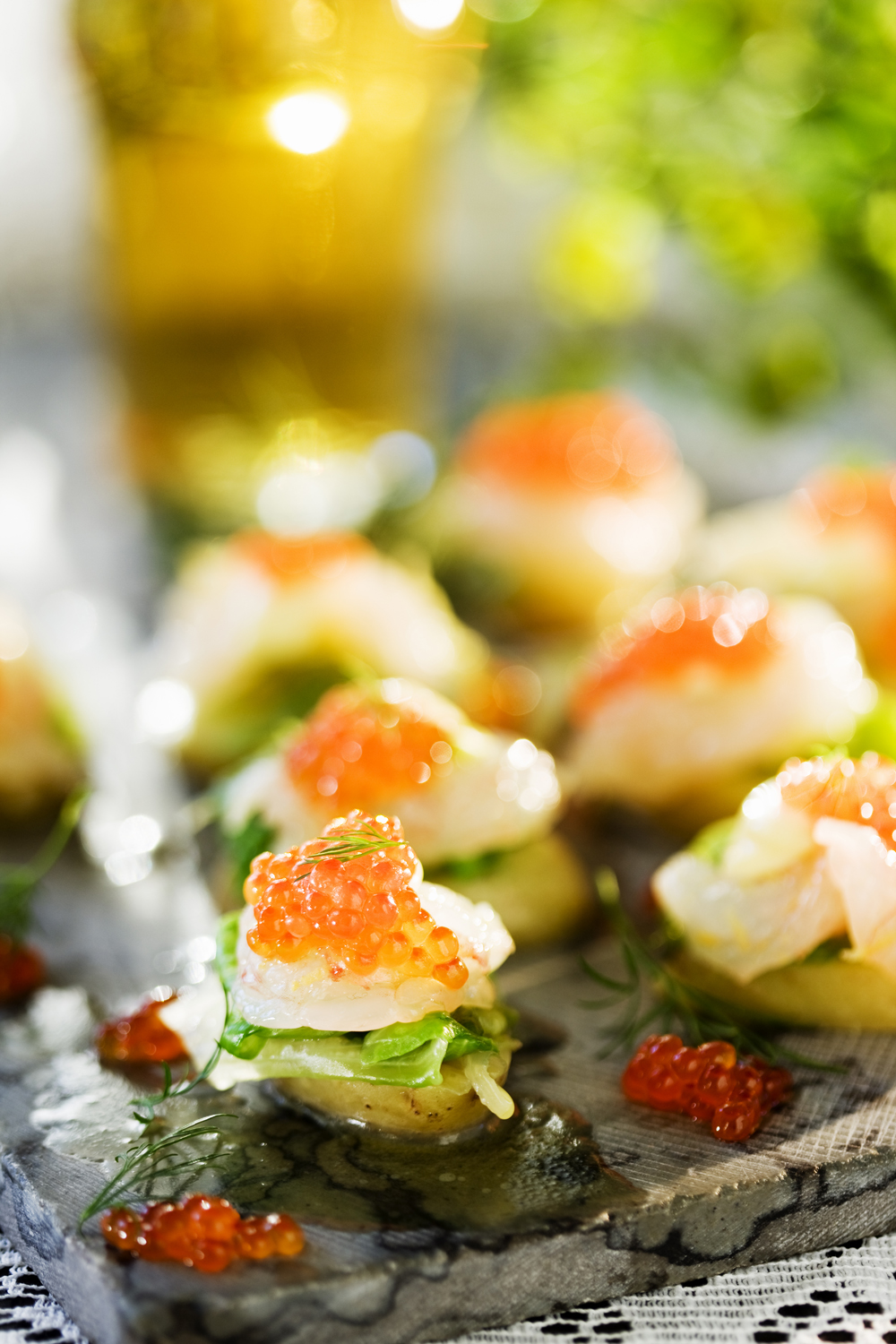
Photo: Swedish Embassy
I’ve had a life-long love affair with Sweden, its culture, cuisine, and people. I’m so grateful that finally the world has caught on that my beloved Sweden is a recognized culinary destination.
Swedish cuisine is the ultimate “nouvelle” cuisine. It is simple, fresh, and is naturally local and seasonal. It’s elegant, yet down-to-earth, which is also a perfect description of the Swedish people, and even Swedish design.
The daughter of a Swedish mother and an American father, I’ve been visiting Sweden since a little girl. During my regular visits, I soaked in every possible aspect of Swedish food and cooking. I took many fishing trips in the Baltic Sea on my Uncle Olle’s small motor boat. I received early lessons on cleaning, smoking, grilling, pickling – and any method one could name – of preparing fresh fish.
I was raised in the Swedish culinary tradition. I’ve picked wild blueberries, strawberries and mushrooms in the Swedish archipelago, then watched as my grandmother (mormor) and Aunt Ingrid prepared treats with the bounty. Growing up, I and my mother dined regularly on crepes with lingonberries and cream – one of my favorite dinners (though now I use yogurt instead of cream! Naturligtvis!). I’ve delighted in all the unique foods my family introduced me to: the grainy rye breads, the special cheeses and yogurts, the smoked reindeer meat, the delicate, sweet, and tiny Swedish shrimps, caviar, crayfish, and of course, meatballs and lingonberry sauce!
If you are not a Swede or Scandinavian, you may not know that summer is the most special time of year. For weeks on end the sun never sets in Sweden’s summertime. It’s daylight round-the-clock.
Every year, during one of those “white nights” – the Friday nearest the 24th of June – the nation turns out to feast until morning. After long winter months of what seems like never-ending darkness, sun-starved Swedes join the rest of Scandinavia in celebrating the summer solstice – the year’s longest day.
Swedes call the celebration Midsummer Eve.
 It is more than just a holiday, however. Midsummer Eve, often lasting through Saturday – and sometimes the whole weekend – is the national excuse for the biggest parties of the year. The revelry is non-stop.
Beginning Friday morning, families gather to set the scene. Every spare piece of furniture is moved outdoors, setting up a festival atmosphere. Large wooden crosses are turned into maypoles decorated with flowers, ribbons and leafy branches.
The maypoles are raised, and hours of dancing, singing and community wide camaraderie get under way. By late afternoon the revelry has served its purpose. Gnawing hunger has prepared the celebrants for the main event: the feast, Sweden’s famed smorgasbord.
Smorgasbord is a Swedish invention and is literally a table of open-faced sandwiches. Though its origin was a simple array of hors d’oeuvres, smorgasbords today are exhaustive buffet-style spreads, the Swedish version being the best known.
There are appetizers, salads, main courses and desserts. The dishes signal summer’s first harvests: freshly clipped dill, tender root vegetables, fish and other seafoods, and strawberries grown in the country.
There are cured ingredients, as well. Pink rolls of cured salmon are wrapped around dill sprigs, with yellow mustard sauces and peppercorns alongside. There is marinated herring and coarse salt, as well as dill and other pickles. Dairy products also are important, including eggs, cheese and cream.
The traditional drink is aquavit, Swedish vodka spiced with anise and caraway. It is served in tiny schnapps glasses. The Midsummer toast, which loses something in translation, usually amounts to a unanimous gulp followed by a chant of “rah, rah, rah, rah.”
Actually, preparation of Midsummer food usually begins a couple of days before. Local fishermen stack their just-caught salmon in rickety wheelbarrows, roll them into town and go door to door displaying their wares for inspection by anxious cooks.
The fish are carefully examined in solemn transaction, the cook – usually my Grandmother – signaling the final selection with an abrupt, “This will do!” The fisherman nods, satisfied, and carries the fish to the kitchen where it lands on the table with a thud. The smell of the sea enters the house with the day’s catch. The best knife has been sharpened for this moment: the start of Midsummer Eve cooking.
Aquavit and Marcus Samuelsson’s Gravlax Club Sandwich
Gravlax and Mustard Sauce