Swedish Gravlax & Mustard Sauce

Swedish Gravlax
Gravlax is salmon which is cured, smothered in a dry preparation of salt, pepper, sugar and dill, and refrigerated for a few days. A Scandinavian staple since the middle ages, when it was salted and slightly fermented before refrigeration was invented. It is served with Swedish hard or soft 100% coarse rye bread, on salads, with boiled potatoes, and almost always with plenty of dill and mustard sauce.
2-1/2 pounds fresh salmon (about 1 side of a salmon), cut in half
4 Tbsp Sugar
5 Tbsp Coarse Salt
1 Tbsp White Peppercorns, coarsely ground
1 Bunch Fresh Dill
Lemon and additional dill for garnish
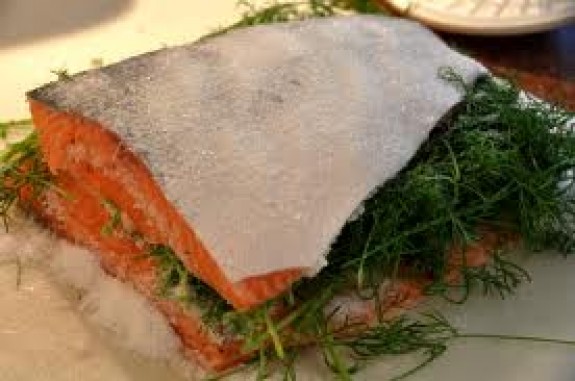
Salmon Filets sandwiched together to create Gravlax
Mix sugar, salt and pepper in a bowl. Set aside.
Place the salmon halves, skin side down, flesh side up, into a shallow baking pan or cutting board. Evenly distribute the sugar, salt, and pepper mixture over both pieces. Place all of the dill on the flesh side of one fish half. Place the other half on top of the first half so that the flesh sides are together, and the thick part of the top half lies on top of the thin part of the bottom half (see photo). Place in the shallow baking pan, and cover with plastic wrap, or into a large plastic bag. Keep in refrigerator for two to three days (at least 24 hours),while flipping every 12 or 24 hours.
To serve, scrape off the marinade, slice fish thinly and roll. Garnish with lemon pieces and dill. Serve with mustard sauce on the side. Serves 8 to 12.
Salmon, high in omega-3-fatty acids, is good for you!
Swedish Mustard Sauce
1-1/2 Tbsp Chopped Fresh Dill
3 Tbsp Gulden’s Mustard
1 Tbsp Sugar
3 to 4 Tbsp Vegetable Oil
All ingredients should be at room temperature. Place mustard in a small bowl, add sugar. Blend in the oil slowly. Add the dill and mix thoroughly.
Salmon, high in omega-3-fatty acids, is good for you!
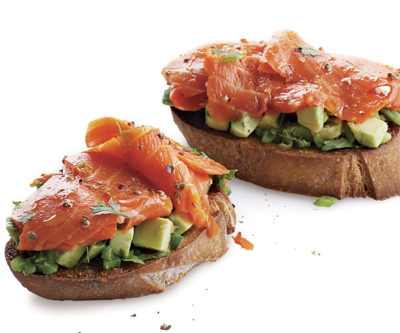
Marcus Samuelsson’s Gravlax Club Sandwich
Two Michelin Star – Aquavit Restaurant
excerpted from “Diet Simple: 195 Mental Tricks, Substitution, Habits & Inspirations”
(LifeLine Press)
This modern version of a gravlax presentation was invented by Chef Marcus Samuelsson, who arguably, made Manhattan’s Two Michelin Star Aquavit first soar the heights of popularity in the 1990’s. The Gravlax Club Sandwich combines the velvety textures of guacamole and gravlax, cured salmon (purchase or see recipe above), with crispy iceberg lettuce (or other greens) and chewy whole grain bread, preferably whole rye. If you want to make this sandwich and don’t happen to have gravlax, substitute smoked salmon for similar success.
I’ve used this recipe at parties. Just cut the sandwiches into smaller appetizer size sandwiches, into quarters, and place a tooth pick through all layers for easy grabbing. It’s always a hit.
Makes 5 sandwiches.
2 avocados
Juice from 2 limes
1/2 medium size red onion, finely chopped
1 medium-size ripe tomato, finely chopped
1 jalapeño pepper, cored, seeded and finely chopped
8 sprigs cilantro, finely chopped
Salt and freshly ground black pepper
10 thin slices of 100% whole grain rye bread, or whole wheat if rye is not available
5 thin slices of Gravlax
1 cup shredded iceberg lettuce (or other greens)
1. Mash the avocado with a fork and add the lime juice. Mix the chopped onion, tomato, jalapeño pepper, and cilantro and toss. Season with salt and freshly ground black pepper to taste.
2. Toast the bread slices lightly and let them cool.
3. Place a slice of gravlax on a slice of bread. Spread 1 to 2 tablespoons of the avocado mixture over the gravlax and sprinkle with shredded iceberg lettuce. Cover with a second slice of bread – or leave open-faced as the Swedes would do. Repeat with the remaining bread slices and gravlax.
1 Gravlax Club Sandwich: Calories 300, Total Fat 15g, Saturated Fat 2g, Cholesterol 5mg, Sodium 740mg, Total Carbohydrate 38g, Dietary Fiber 15g, Omega 3 Fatty Acids 0.82 g, Protein 11g
Omega-3-Fatty Acids: Superstars of the Nutrition World
- At June 21, 2011
- By Katherine
- In Articles
 0
0
On CNN: Katherine Discusses 5 Good-For-You Foods to Include in Your Diet This Year!
I first became interested in the power of Omega 3 when psychiatrists I work with began prescribing it for their depressed patients, finding it made positive improvements. Then I started hearing about its potential benefits for arthritis and other inflammatory diseases. Could it be possible that one nutrient could provide so many benefits?
The connection between Omega 3s and health was first observed in the 1970’s. Scientists observed that Greenland Eskimos had a reduced rate of heart disease, rheumatoid, arthritis and other ailments even though they ate a high fat and cholesterol diet. They hypothesized that the type of fat – marine derived – might play a role. Since then, study after study has confirmed that omega 3s in fish have a potent effect on reduction of heart disease.
Omega 3s work several ways in the heart. They prevent irregular heart beat, reduce fatty placques inside artery walls, decrease blood clotting, decrease triglycerides (blood fat), increase HDL (good cholesterol), and decrease inflammation.
“Omega 3 favorably effects a number of risk factors for cardiovascular disease and at the top of the list is reducing the risk of sudden death from heart attack,” says Penny Kris Etherton, distinguished professor of nutrition, Pennsylvania State University
But when it comes to the benefits of Omega 3’s that may be just the tip of the iceberg!
The two most potent omega 3 fatty acids are known as DHA and EPA. They’re usually found in a 50/50 or 60/40 ratio in fish. These fatty acids end up in every single cell membrane in the human body. They act as a cell lubricant, improve flexibility and communication between cells, and are important for cell metabolism and gene expression.
It’s been well-established that omega-3 fatty acids, a type of polyunsaturated fat found primarily in seafood, can improve your chances of living longer if you have heart disease. But its healing powers don’t stop there. Other organs may benefit. They have a positive impact from the womb to old age.
Omega 3’s reach is vast and the health benefits are intriguing the scientific community. While not an answer to every ailment, omega 3s are essential nutrients in the human body. Studies show that omega 3s may have significant physiological and psychological benefits.
In fact, Omega-3s are so important to human health, the National Academy of Sciences Food and Nutrition Board recently set a minimum daily requirement for the first time. For years we thought there was only one essential fatty acid, Omega 6 fatty acid (found in vegetable and soybean oils), but now scientists have added omega 3 to the list of essential nutrients humans must get from the diet.
But as we’ve discovered in nutrition, balance is everything. The two essential fatty acids, omega 6 and omega 3 must be in harmony with each other for proper functioning. If one or the other is too high or low, negative consequences result.
“If you eat too much omega 6, as is the case with today’s American diet, this promotes inflammation, blood clotting and constricts blood vessels,” says Artemis Simopoulos, president of the Center for Genetics, Nutrition and Health and the author of The Omega Diet (Harper Collins, 1999) “When your cells contain equal amounts of Omega 6 and Omega 3, as was the case with early humans, this promotes less inflammation, less constrictive blood vessels and prevents clot formation, all important functions in preventing many diseases.”
The ideal ratio of omega6 to omega3 is the hottest debate among omega3 researchers. Some say a ratio of 1:1 or even 2:1 is acceptable. If you followed the fatty acid recommendations of The National Academy of Sciences, and had an intake of 12 or 17 grams of omega 6 for women and men, respectively, and an omega 3 fatty acid intake of 1.1 and 1.6 for women and men, your ratio would be 10:1. But many omega 3 researchers say a ratio of 1:1 or even 2:1 or 5:1 is ideal. If you’re a typical American, your ratio could be as high as 12:1 or 15:1. Still others believe a specific ratio doesn’t matter. But they all agree on the need to get more omega3s.
Omega 3 concentrations are highest in the brain and nervous system. They are necessary for optimal functioning of the neurons, protect cells, decrease cell death and improve nerve transmission. Emerging research indicates Omega 3s may boost levels of the brain chemicals serotonin and dopamine, decreasing depression and violence.
“In 5 out of 6 of the clinical trials where people were given either a placebo or omega-3 fatty acids, on average, the symptoms of depression have been reduced by about 50%,” says Joseph Hibbeln, a psychiatrist at the National Institutes for Alcohol Abuse and Alcoholism. “This is true even when the subjects were already on anti-depressants and failing to respond to them.”
Hibbeln’s studies found an increase in depression, violence and homicides in countries who eat less fish as compared to countries who eat more fish. It may even improve conditions such as bipolar disorder and schizophrenia.
Bone density may be enhanced by omega 3 intake.
“Osteoporosis is lower in populations who eat more fish, such as Asians, when compared to Europeans who eat more calcium-containing foods” says Bruce A. Watkins, Ph.D., nutrition professor at Purdue University. The mechanisms aren’t completely understood, but omega 3’s may help support bone formation.
Omega 3 may also benefit the skin. The Greenland Eskimo studies found they don’t suffer much from psoriasis, a skin disease causing painful inflammation, redness and scales in its sufferers.
Laboratory studies have found that omega 3s suppress the hyperproliferation of the skin cells, which causes the disease to spread. When tested in humans, after 10 weeks, 60% of the subjects experienced a decrease in the area of psoriasis and a decrease in proliferation and inflammation.
“The dose is very essential,” says the researcher, Vincent Ziboh,Ph.D., professor, dept of dermatology, Univ of Ca at Davis. “The work is promising, but more research is needed to understand the mechanism and doses, and why it works for some but not others.”
Just as omega 3s inhibit proliferation of skin cells which causes psoriasis, new research is finding it inhibits proliferation of cancer cells in the breast, prostate and colon. This is a new area of research which hasn’t been tested widely. But, a new study found breast cancer patients responded better to chemotherapy and the cancer was less likely to spread when patients were given omega 3 fatty acids. There is epidemiological evidence that men who eat more fish have lower risk for prostate cancer.
There is evidence that omega3s may help prevent type 2 diabetes and improve diabetes by reducing insulin resistance.
The FDA recently approved Omega 3s for infant formulas because of the overwhelming evidence that it improves cognition and visual functioning in children. (mother’s breast milk provides it naturally, especially when she regularly eats fish)
Inflammatory diseases such as rheumatoid arthritis, ulcerative colitis, and Crohn’s disease may improve with omega 3 supplementation.
The studies are just beginning. More research needs to be done to understand who will benefit most from higher levels of omega 3 in their diets. Your genetics and environment play large roles in responsiveness to omega 3s. And while studies are very promising for a wide range of illnesses, the optimal amount of omega 3 and the ideal ratio of Omega 3 to Omega 6 are still hotly debated in the scientific community.
But what isn’t debated is that adult women need at least 1.1 grams and adult men need 1.6 grams daily, according to the Food and Nutrition Board of the National Academy of Sciences. Unfortunately, Americans don’t come even close to getting their omega 3 requirement. But we used to. Apparently, in our earlier evolutional stages, we ate plenty of wild greens, lean animals which grazed on high omega3 grasses, and fish high in Omega 3s, and our bodies evolved a need for it.
But today, omega 3s have largely been replaced with omega 6s, vegetables oils, especially soybean oil, which is used in large doses in processed foods and fast foods. And no longer do our animals graze on high omega 3 grasses, but on grains instead. This changes the fatty acid composition of the meat, to our detriment.
Most of the studies found a positive benefit with 500 to 1,000 mg of omega3s per day. The American Heart Association recommends all adults eat a variety of fish, particularly oily fish, at least twice weekly, which would provide an average of 500 mg daily. For patients with coronary artery disease, they recommend 1,000 mg daily, or double the seafood requirement (but never above 3,000 mg without a doctor’s supervision). Supplements are effective and may be used instead of eating the fish. Due to environmental pollutants found in fish, women of child-bearing age are recommended to keep their fish intake to no more than 12 ounces per week. But omega3 researchers believe the risk of not getting enough omega3 in your diet outweighs the potential risk of pollutants.
There are possible dangers to taking too much omega3 supplement. The inflammatory response is your immune system working, or overworking. This means that omega 3s are actually reducing your immune response when they reduce inflammation. So, large doses should be taken only with a doctor’s advice by people with compromised immune systems. There is also a slight increase in risk for hemorrhagic stroke or excessive bleeding.
As usual, I have to underscore balance. It may be safer to stick with food sources so you don’t go overboard and are more likely to stay in balance.
There is a vegetable source of omega 3, known as ALA. It’s found in flax seed oil, walnuts, and canola oil. The omega-3 fatty acid, ALA, is one which has to be converted to DHA and EPA, which means vegetable sources are less potent than fish oil. But it’s still a great idea to include them in your diet.
Some values of Omega-3’s in 3-1/2 ounces of Fish
Fish Omega-3’s (g)
Sardines in Sardine Oil 3.3
Atlantic Mackerel 2.5
Atlantic herring 1.6
Chinook Salmon 1.4
Anchovy 1.4
Atlantic Salmon 1.2
Tuna 0.5
Brook Trout 0.4
Catfish 0.3
Shrimp 0.3
Flounder 0.2
Found in: S.L. Conner and W.E. Conner, “Are Fish Oils Beneficial in the Prevention and Treatment of Coronary Artery Disease?” American Journal of Clinical Nutrition 66 (1997); 1020S – 1031S.
“Understanding Omega-3s” by Katherine Tallmadge, originally appeared in The Washington Post.
Cold- and Flu-Fighting Foods
- At January 22, 2011
- By Katherine
- In Articles, News
- 0
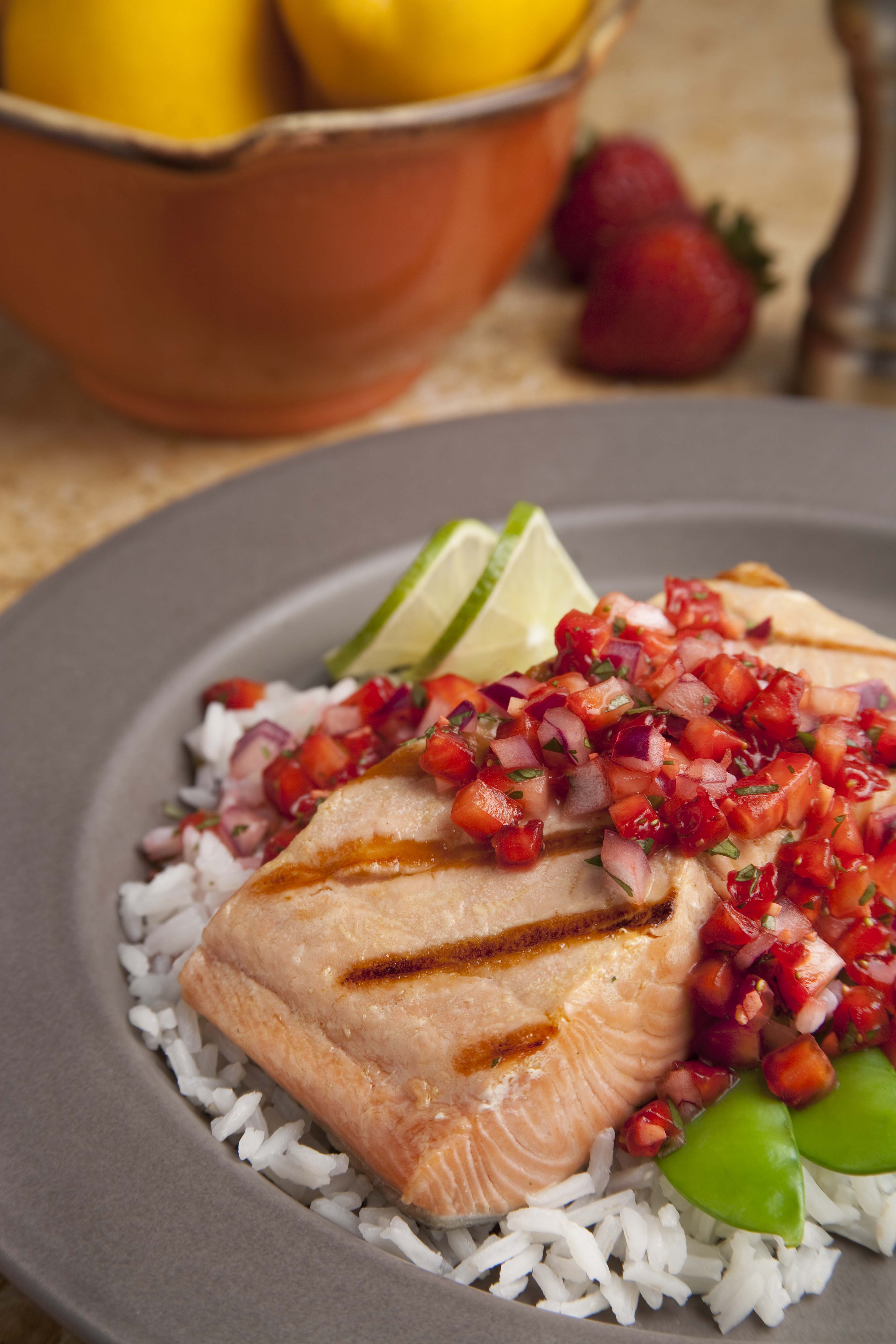
CA Strawberry Commission
What you eat profoundly affects your ability to fight disease. With all the nasty bugs going around this cold and flu season, it’s especially important to pay attention to boosting your immune system through nutrition. While every nutrient is important in your body’s ability to prevent and fight disease – from colds to cancer – certain nutrients play key roles. Eat foods high in these nutrients every day:
Protein
Protein is one of the most important nutrients in the human body, second only to water. The antibodies which protect your body against pathogens are made of protein, so without enough protein, your body has no chance. Eat protein at every meal. It is in a wide range of foods. Animal protein is in seafood, dairy, meat, poultry and eggs. Vegetarian protein can be found in legumes, soy, vegetables and grains.
Probiotics
The beneficial bacteria in live, active yogurt cultures may protect against infection-causing toxins, improve colon health, protect the intestinal lining, and strengthen immunity.
Fats and Oils
The type of fat you eat can improve the effectiveness of your body’s immune response because fat ends up in all of your body’s cell walls. To maximize your immune response, use oils in your cooking, instead of solid fat such as butter, stick with foods high in heart-healthy oils, such as nuts, avocados and seafood, which is high in omega-3-fatty acids.
Beta Carotene
Orange and deep green veggies and fruits, particularly…Carrot juice, carrots, butternut squash, pumpkin (or any orange-colored winter squash), sweet potato, greens such as spinach, collards, kale, turnip greens, beet greens, orange melons such as cantaloupe, red peppers, apricots, broccoli, plums, mangos papayas, plantains, Brussels sprouts, watermelon, asparagus
Vitamin C
Citrus fruits such as orange, lemons and grapefruit, peaches, sweet and hot peppers, papayas, pineapple, strawberries, broccoli,kiwi fruit, sweet potatoes, Brussels sprouts, kohlrabi,
Zinc
Oysters, lobster, crab, clams, fortified whole grain cereals, beans (legumes such as lentils, chick peas, black-eyed peas, soy beans, kidney beans, limas, pintos), turkey, lean beef and pork, whole grains such as buckwheat, whole wheat, cracked wheat (bulgur), oats, whole grain cornmeal, wild rice, yogurt, pine nuts, sunflower seeds, mixed nuts, peanuts
Magnesium
Whole grains such as buckwheat, wheat, oats, cornmeal, barley, brown rice, Also soybeans, pumpkin seeds, brazil nuts, cashews, greens such as spinach, beet greens, fish such as halibut, haddock and flounder and sole species, beans (legumes such as black beans, white beans, soy beans, navy beans, limas, black-eyed, great northern, kidney, chick peas,. lentils)
Vitamin E
Sunflower seeds, almonds, sunflower oil, safflower oil, canola oil, hazelnuts, pine nuts, spinach, turnip greens, beet greens, dandelion greens, canned pumpkin, carrot juice, broccoli, sweet potato, sweet red peppers, mangos, papayas
Vitamin D
New research indicates Vitamin D may augments the body’s ability to eliminate disease-infecting microbes. We get it from the sun and a few foods: fatty fish, egg yolks, fortified milk, orange juice, and cereals.
Cranberries
Have antibacterial qualities. Eat them dried for the highest levels of nutritious compounds.
White Mushrooms
Research at Tufts University shows white button mushrooms boost the immune system
Immune-Boosting Eating Strategies
* Eat a lean protein source at every meal – including breakfast, lunch and dinner. 20 grams for women and 30 grams for men is the amount most bio-available per sitting.
* Eat 5 cups of fruits and veggies per day – especially colorful varieties, eat at every meal and snack
* Eat a vegetarian meal every day using beans or soy beans for protein,
* Eat fish high in omega-3-fatty acids, such as salmon, herring, anchovies and sardines, at least two to four times per week, and vegetarian sources such as walnuts, ground flax seeds and canola oil,
* Use canola oil in your cooking and a fresh, newly harvested olive oil for drizzling,
* Eat whole grains at breakfast (such as cereal with skim milk or soy milk) and with sandwiches or wraps at lunch,
* Snacks: Try fat-free yogurt and fruit, fat-free yogurt dip or hummus with veggies,
* Toss nuts/seeds/dried cranberries in your whole grain cereal, your salad or your afternoon yogurt snack
* Skim milk or Soy lattes or teas are great snacks, too…
* Take a multivitamin-mineral supplement daily.
* Take a Vitamin D Supplement so that you are getting 1,000 to 2,000 IU/day
* If you are over 50, but particularly 65, look into supplementing your diet with Vitamin E, Vitamin B12, Zinc and probiotics such as lactobacillus in yogurt.
Of course, don’t forget to keep your blood moving by being moderately physically active with plenty of walking, yoga, etc. Get plenty of rest, wash your hands frequently, drink fluids (especially warm fluids which will send light steam into your nasal passages) and spend time with friends and loved ones. Studies have shown these habits increase your ability to conquer diseases – from colds to cancer.
Mindfulness in Eating and Living
- At January 09, 2011
- By Katherine
- In Articles, News
- 1

Mindfulness Through Yoga – Katherine doing a side plank
“There are many health benefits to being more mindful,” says Jack Killen, MD, Deputy Director of the National Institutes of Health’s National Center for Complementary and Alternative Medicine.
Meditation – and similarly centering prayer – for the religious among you, establishes pathways in the brain which improve impulse control, helping you work through problems and decisions more effectively. This simple, yet powerful, tool can transform your health and your life as it helps you make the decisions you need to make your life more satisfying, for instance, decisions about eating and exercise can be done more thoughtfully and purposefully..
In the Diet Simple chapter, “How to Beat Emotional Eating,” I give you a step-by-step guide to understanding how your feelings influence your eating.
The following are excerpts from a recent interview with Jack Killen explaining how meditation works to help you regulate your emotions, so you can reign them in to make healthier decisions for your long-term benefit:
Katherine: What is mindfulness?
Dr. Killen: Mindfulness is the ability to be present, more focused, and clear; for concentration to be more sustained, and for attention to be on what’s happening, instead of on thoughts, memories, and associations.
Katherine: Why is it important to be mindful? What are some scientifically proven benefits?
Dr. Killen: There is neurobiological research demonstrating that mindfulness engages pathways in the brain associated with emotion and impulse control, attention, and focusing. It allows your brain to be focused on what is here and now so you are better able to respond to situations appropriately. People who are more mindful are better able to handle emotional situations in more appropriate ways, are more able to think through a problem, are less likely to be distracted by issues that won’t help… There is evidence that you improve at mental tests, that emotion regulation is better and more appropriate, blood pressure is lower, stress hormones are lower, thereby reducing stress.
Katherine: How can one become more mindful? I understand prayer or meditation may be helpful?
Dr. Killen: There is a lot of evidence accumulating that meditation in all of its forms has beneficial physiological effects. Meditation is a way of exercising neurological pathways in the brain which help us become more mindful. But it is a bit like going to the gym and working out your muscles. It takes time and practice for the beneficial brain pathways to become established, similar to building muscular strength and flexibility.
Katherine: What are some examples of meditation which may have these kinds of emotional and behavioral benefits?
Dr. Killen: There are many ways you can train your mind to be more mindful. The jury is still out as to whether one is better than another. More likely, certain types of meditation will work well for certain people, and other kinds for other people. We are still working on how to measure and study meditation.
There are several types of meditation. “Mantra” meditation is repeating a phrase, or something with deep meaning over and over, or focusing on a candle, for instance. “Mindfulness” meditation is focusing on what is happening now instead of on thoughts, memories, and associations.
Katherine: Are yoga, tai chi, and other forms of exercise considered good ways to achieve mindfulness?
Dr. Killen: While mind/body interventions are difficult to research, there are some encouraging data. Yoga and meditation are intertwined in many ways. Studies suggest yoga is useful in increasing lung capacity, improving mood, well-being, posture, and there are similar benefits with Tai Chi. But there is a larger body of research on meditation and its benefits.
Katherine: Is there scientific evidence that these mind/body interventions such as meditation or yoga will promote healthier lifestyles?
Dr. Killen: This is what we are studying at the Center for Complementary and Alternative Medicine. Getting definitive answers to those questions through rigorous scientific research could make these kinds of health interventions more widely available. Important work going on right now is defining research methods. We need to understand, for instance, which yoga postures (“asana”) benefit your health and in what specific ways? If we want to make health interventions more widely available and accepted, we need to be able to describe their effects better, thus magnifying their benefits. We are currently studying if these mind-body interventions are a means to help people with metabolic syndrome, if they’d be useful in weight-control programs, helping people eat less, or more healthfully.
The Science of Slimming, Satisfying, Sumptuous Soups
- At January 09, 2011
- By Katherine
- In Articles, News
- 0

Katherine’s “Butternut Squash Soup with Curry and Ginger”
Lose twenty pounds…
I love soups… Warm… Filling… Comforting… Psychologically Satisfying. What could be better right now than curling up with a hearty, delicious bowl of, say, Butternut Squash Soup with Curry and Ginger, Michel Richard’s Chicken Mushroom and Barley Soup*, A Classic Seafood and Tomato Soup*, Spiced Red Lentil Soup with Mint-Cilantro Raita*, Bordergrill Meatball Soup with Garlic and Cilantro*? (*all recipes found in “Diet Simple” and Diet Simple Farm to Table Recipes: 50 New Reasons to Cook in Season)… And it doesn’t hurt that studies show soups make it very easy to lose weight.
How? Classic studies have found that as long as the volume of a food is high, people can feel full with fewer calories. In one study, researchers varied the water content in three different first courses to see how it would affect peoples’ intake at the main course. The study subjects were fed either 1) chicken rice casserole, 2) chicken rice casserole served with a glass of water, or 3) chicken rice soup – basically the casserole with water/broth added. The researchers found the subjects who ate the soup consumed 26 percent less, about 100 calories fewer, at the main course, compared to the other conditions.
Researchers surmise that a large food volume caused by water, even without added calories, helps us feel more satisfied for several reasons. It causes stomach stretching and slows stomach emptying, stimulating the nerves and hormones that signal feelings of fullness. Also, visually seeing a large volume of food can increase your ability to feel satisfied by it, even though the calories are relatively low. Finally, the larger a meal and the longer a meal goes on, studies show, your satisfaction declines and you lose interest in completing it. Water is the component in food which has the largest influence on how much you eat. This study, and many others like it, find eating a high-water-content, low-calorie first course, such as soup, enhances satisfaction and reduces overall calorie intake.
Bottom Line: Lose 20 pounds
Start lunch or dinner with a bowl of broth-based vegetable soup OR turn main courses into soups by adding water or broth. Save 200 calories a day! Do this every day and lose twenty pounds in one year… Wasn’t that SIMPLE? And oh…. so painless!
NOW THIS IS SOMETHING I CAN LIVE WITH… FOREVER!
HOW ABOUT YOU?
Photo: Almond Board of California
ABC Primetime News Special: Celebrity Weight Loss
- At January 01, 2011
- By Katherine
- In Articles, News
- 0

Katherine explains on ABC’s Primetime News Special, “Celebrity Weight Loss: What Really Happens” Why… For Your 2011 New Year’s Resolution, do yourself a HUGE favor… Just Say NO…. NO MORE DIETS!
Don’t be a sucker for the endless, unrealistic promises of these SMUT purveyors! Yes, you heard the usually mild-mannered Katherine Tallmadge correctly….
I hate fanatical diet programs! They take the joy out of eating. Heck, they take the joy out of living! And the research is pretty clear by now that too-tough diets simply don’t work for most people. Even if you lose weight initially, you’re going to get bored or frustrated with all the restrictions and gain your weight back. Or maybe the diet is just too darn unhealthy to stay on.
So if you ever see a diet which emphasizes eating a very low carbohydrate diet or even an extremely low fat diet, or if it recommends packaged foods, liquid supplements or diet pills, I recommend you run – quickly! – in the other direction. Because it’s not something which can – or should – be maintained.
- A good diet is one you can follow for life. One which you enjoy. It’s a strategy which makes you feel energetic and comfortable.
- It’s a way of living which science has shown will enhance your health, the quality of your life, and possibly even extend your life.
- A good diet is one which works with your lifestyle, whether you’re a full-time mom, a high powered professional – or a combination thereof!
- Studies verify weight loss maintainers follow diets with flexibility and choice, ones which can fit into their lives.
I’m passionate about helping people solve their weight problems which saps them of health, energy and happiness. Let alone all of the horrible and preventable life-threatening and chronic diseases which inevitably occur, like heart disease, stroke, cancer and diabetes.
Though the problem of overweight and obesity is a large one and seems to be growing (two thirds of all adults and one out of three children), it’s a manageable and solvable problem. One of the reasons people struggle so much with their weight is they make the mistake of believing they need to do something radical to lose weight – like restricting your eating to cabbage soup for every meal, fasting, cutting out all carbohydrates, cutting out all fats, constantly figuring out percentages of this or that nutrient, going on a liquid diet, or taking unsafe diet pills and supplements.
The studies which analyze successful weight loss maintainers versus weight relapsers confirm the radical diets actually backfire. So don’t get seduced by their empty promises. Stop being a sucker! If the diet is too strict, punishing or depriving, it can’t last, and the weight is gained back. If those diets produce anything, it’s eating disorders, feelings of deprivation and depression, and demoralizing yo-yo’ing weight.
Instead, make your 2011 Resolution to start…
- A way of eating you’ll love, and will always satisfy your hunger and cravings,
- A joyful lifestyle you’ll want to keep forever.
Look for a way of eating and living which will give you…
- A greater sense of well-being, less anxiety and depression,
- Increased metabolism, so your body burns fat more quickly and efficiently,
- A heart working more efficiently, decreasing your risk of a heart attack,
- Lower blood pressure, lower cholesterol, lower blood glucose levels,
- A boosted immune system that cuts your risk of cancer, colds, flu and disease, Stronger bones and stronger muscles,
- Improved techniques for coping with daily stresses and strains of your busy life.
As a weight loss counselor, one of the most valuable lessons I’ve learned is that weight loss doesn’t have to be – and can’t be – a depressing, depriving, angst-ridden chore. I’ve witnessed the joy, surprise and relief of clients as they learned that losing weight the “Diet Simple” way is an easy and positive experience.
This Looks Healthy, But Is It?
- At December 27, 2010
- By Katherine
- In Articles, News
- 0
A restaurant meal may look like it’s good for you, but we had a lab count the actual calories. Here are the surprising numbers.
By Todd Kliman , Sara Levine , Ann Limpert

We set out to find out. We dispatched staff to pick up three-course meals from five restaurants, each with a different cuisine. Then we packed the food up in containers filled with dry ice and shipped it to a lab in Des Moines, Iowa, for burning—yes, burning—to measure its caloric content. We also had it tested for proteins, fats, and carbohydrates.
The results: Who knew that a three-course sushi dinner has more carbs than a three-course French dinner? Going out for Thai sounds like an excursion into light, bright cooking, but a meal at a Thai restaurant can be nearly as caloric as a certain New Orleans – Style restaurant. Note to all the lobbyists who chow down on the latter’s shrimp and grits and beignets several times a week: In one dinner you may be taking in more than a day’s worth of calories.
Lab results in hand, we invited two experts to help us make sense of the numbers. Walter Scheib, who as White House chef under Bill Clinton and George W. Bush was tasked with finding out the nutritional content for every meal he served to the First Family—and who went on diets with First Ladies—commented on each dish. Katherine Tallmadge, a DC nutritionist who has been a guest expert on TV shows from Food Network programs to Good Morning America, offered commentary and alternative recommendations for each meal.
Our hope is not that you’ll come away from this vowing to steer clear of these restaurants. Rather, we hope you’ll come away a wiser, healthier diner.
Menu
Vegetable Spring Rolls With Sweet-and-Sour Sauce
Roasted Duck With Red Curry Sauce, Side of White Rice
Thai Coconut Custard With Sweet Rice
Calories: 2,226
Carbs: 307 grams
Fat: 82 grams
Protein: 65 grams
Walter Scheib says: “[Spring rolls] are little grease sponges. But there are wonderful things called summer rolls, which are basically spring rolls that are fresher and lighter—and without the deep-fried part.”
“Thai desserts are based on rice and coconut. Go for sorbets or fruit ices—just not coconut ice cream, which is basically frozen butter. Ask if they’ve got a fresh mango with a squeeze of lime.”
“Most people think of Oriental cuisines as ‘light.’ When I worked at the White House, this is what Mrs. Clinton used to call gratuitous fat—fat in your food that you don’t necessarily see. You’ve got coconut milk, which is straight fat, and then the duck skin.”
What to get instead: Coconut milk is the biggest source of calories and fat on this diet-busting menu. Often you don’t even know it’s there. Instead look for dishes that get their flavor from citrus juices, spices, vinegars, and herbs.
Katherine Tallmadge, a Thai Restaurant regular, orders lemongrass soup, beef salad, and steamed whole fish: “If your main dish is a lot of food, you probably don’t want the extra rice. A cup is 200 calories.” If you’re going to have noodles, get cellophane noodles, made with mung beans instead of flour. And keep in mind that at many Asian restaurants, portions are served family-style and meant for sharing.
Photo: Washingtonian Magazine
New Study Finds Certain Foods Lead to Living Longer
- At December 22, 2010
- By Katherine
- In Articles, News
- 0
 Eating Healthier Means Living Longer
According to New Study in the Journal of the American Dietetic Association
Researchers found that diets favoring certain foods were associated with reduced mortality.
The leading causes of death have shifted from infectious diseases to chronic diseases such as cardiovascular disease and cancer. These illnesses may be affected by diet. In a study published in the January 2011 issue of the Journal of the American Dietetic Association, researchers found that diets favoring certain foods were associated with reduced mortality. Scientists investigated empirical data regarding the associations of dietary patterns with mortality through analysis of the eating patterns of over 2500 adults between the ages of 70 and 79 over a ten-year period.
By 2030, an estimated 973 million adults will be aged 65 or older worldwide. The objective of this study was to determine the dietary patterns of a large and diverse group of older adults, and to explore associations of these dietary patterns with survival over a 10-year period. A secondary goal was to evaluate participants’ quality of life and nutritional status according to their dietary patterns.
By determining the consumption frequency of 108 different food items, researchers were able to group the participants into six different clusters according to predominant food choices:
- “Healthy foods” (374 participants)
- “High-fat dairy products” (332)
- “Meat, fried foods, and alcohol” (693)
- “Breakfast cereal” (386)
- “Refined grains” (458)
- “Sweets and desserts” (339).
The “Healthy foods” cluster was characterized by relatively higher intake of low-fat dairy products, fruit, whole grains, poultry, fish, and vegetables, and lower consumption of meat, fried foods, sweets, high-calorie drinks, and added fat. The “High fat dairy products” cluster had higher intake of foods such as ice cream, cheese, and 2% and whole milk and yogurt, and lower intake of poultry, low-fat dairy products, rice, and pasta.
The study was unique in that it evaluated participants’ quality of life and nutritional status, through detailed biochemical measures, according to their dietary patterns. After controlling for gender, age, race, clinical site, education, physical activity, smoking, and total calorie intake, the “High-fat dairy products” cluster had a 40% higher risk of mortality than the “Healthy foods” cluster. The “Sweets and desserts” cluster had a 37% higher risk. No significant differences in risk of mortality were seen between the “Healthy foods” cluster and the “Breakfast cereal” or “Refined grains” clusters.
Photo by Polly Wiedmaier
# 1 THE SUNDAE SOLUTION
- At December 19, 2010
- By Katherine
- In Articles, News
- 0

Photo: CA Strawberry Commission
NOW it’s official: You can eat a chocolate sundae every day and still lose weight…
One of my clients, Jennie, almost always snacks in the afternoon. She view these snacks as ‘rewards” for getting through another day of drudgery. Of course, these same snacks contribute to her weight problem.
My advice to her (and I’m pretty proud of it ): Have a chocolate sundae every day.
I know this sounds strange, but here’s why it helps. The chocolate syrup that you pour over ice cream isn’t exactly lean, but that’s okay because underneath the chocolate – the sundae part – is fresh fruit instead of ice cream. Fruit is a lot better for you than ice cream, and the chocolate provides a slightly sinful incentive to make the switch seem worthwhile.
Almost any fruit works with chocolate syrup – strawberries, bananas, peaches, take your pick. Apart from the fact that a fruit sundae is deliciously fresh tasting, filling, satisfying, and low in saturated fat and calories, it makes a great substitute for other snacks that really load on the calories.
THE SUNDAE SOLUTION has been responsible for hundreds of people eating – and LOVING – more fruit. If you try it, you will too!
BOTTOM LINE: Lose 9 to 35 pounds
A tablespoon of regular chocolate syrup has about 50 calories. Pour it over fruit, and your total is about 110 to 160 calories. Compare that to the usual snacks – a candy bar or protein bar, for example, has about 250 calories, and an ice cream cone has about 500 – and you can see why substituting the fruit sundae can lead to impressive amounts of weight loss. Make the switch every day, and you can count on losing 9 to 35 pounds in a year.
Get more wonderful tips like this that will make your diet simple!
Click here to buy “Diet Simple,” the book
Diet Simple for Dogs?
- At December 18, 2010
- By Katherine
- In Articles, News
- 0
I found “Diet Simple” through a friend. I could have used the “Diet Simple” principles so long ago!
I never had a weight issue until college. I suppose it is a classic story. My metabolism changed and I was dealing with a whole different eating agenda, and – oh, the stress! I gained the freshman 15 and spent years trying to get rid of it.
Ever since then it has been a struggle. I’ve been on a constant weight roller-coaster; I’ve never felt in control but didn’t quite understand why. I read diet books and tried diets and they just sent the same old message: if I stop eating I’ll lose weight. It was so frustrating!
And then I found “Diet Simple” through a friend. I could have used the “Diet Simple” principles so long ago! I wish I had known about them sooner. I know I wouldn’t have struggled all those years. I was an athlete but I wasn’t eating right, This caused many injuries which I don’t think I would have had if I had been following this plan.
What’s wonderful about “Diet Simple” is that you can still enjoy eating good food. I have even used some of “Diet Simple’s” principles for my dog! He suddenly has a waistline and the vet is very pleased with his improved vigor and health. He no longer limps the way he used to.
Now I feel great, terrific. Better than I ever have!
I’ve given the book to all of my friends, definitely! I’ve given away at least 20 Diet Simples! Katherine is very inspiring and obviously committed to the concept of health and wanting to help people.
-Grace S., Washington, D.C.