Five-Year-Old Figure Skating Champion: My Niece, Madeleine
- At October 12, 2012
- By Katherine
- In Articles, News
 0
0

Champion Figure Skater, Madeleine Frey
My niece, Madeleine, is a phenomenon – brains, beauty, and brawn. Just watch her figure skating at age 5 in 2004/5… The costumes were designed and executed by her mother, my sister-in-law, Suzanne, a huge talent herself. Madeleine is now very active in 4-H.

Champion Figure Skater, Madeleine Frey
Most Olive Oil is Not as Healthful as You Think
- At September 12, 2012
- By Katherine
- In Articles, News
- 2
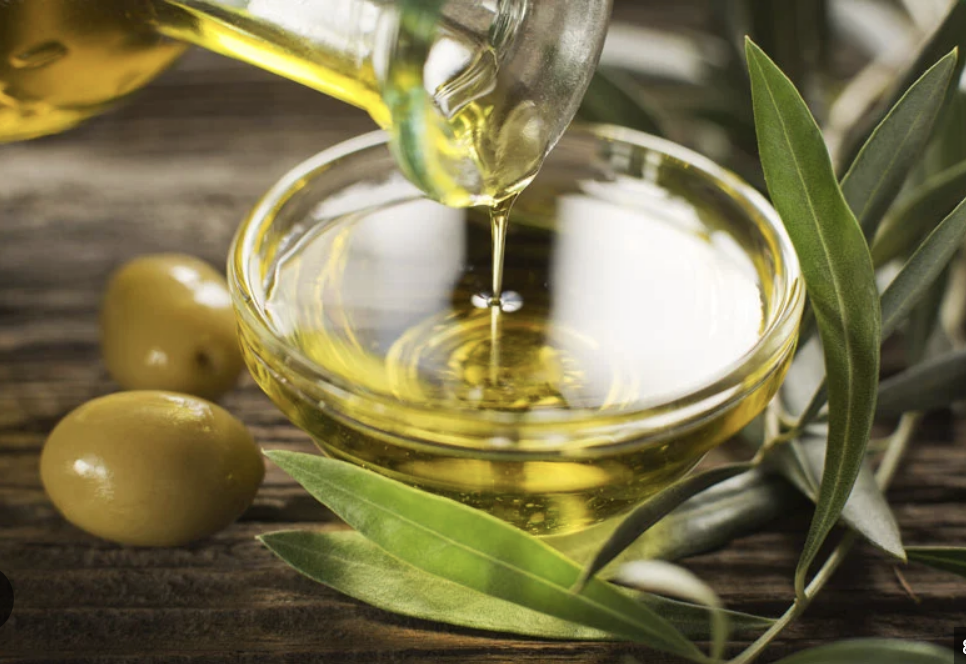
The expensive olive oil in your kitchen cabinet is likely not as fresh, nutritious, or high in quality as you assume.
Does that mean you won’t receive the expected health benefits when using olive oil bought on America’s grocery shelves? Probably not.
This issue first came to my attention at a Mediterranean Diet Conference I attended in Florence, Italy, co-sponsored by New York University’s Department of Dietetics and the James Beard Foundation. The following story was originally published on September 13 in The Washington Post… Read the article in Livescience.com
Olive Oil Gets Worse with Age
You feel good about using olive oil, right? You know it’s good for you, tasty and easy to use. Still, to get the most benefits — and the best bang for your buck – there’s more you should know.
“The health benefits of olive oil are 99 percent related to the presence of the phenolic compounds, not the oil itself,” says Nasir Malik, research plant physiologist at the U.S. Agriculture Department’s Agricultural Research Service.
Malik is referring to the polyphenols in olive oil, nutrients also found in wine, tea, cocoa and many fruits and vegetables that have been discovered over the past decade to be the substances responsible for the bulk of olive oil’s health benefits, without which “you might as well use canola oil,” Malik says.
And when tested, polyphenols were surprisingly low in most commercially available olive oils, according to a recently published study conducted by the Agricultural Research Service, co-authored by Malik.
They also don’t live up to international or U.S. Agriculture Department quality standards, according to studies conducted by the University of California at Davis Olive Center.
The good stuff
Polyphenols decrease heart disease risk factors by lowering blood pressure and cholesterol, reducing blood clotting and improving the health of artery linings.
Researchers have discovered genes that, when activated, reduce your chances for metabolic syndrome, the name for a group of risk factors (high blood pressure, cholesterol, and glucose) that together increase the risk for heart disease, America’s No. 1 killer. Fresh, high-polyphenol olive oil affects these genes in a positive way, reducing your risk for metabolic syndrome and heart disease. But low-polyphenol olive oil does not have the same effects, according to a recent study.
Polyphenols also reduce cancer risk by lowering inflammation and cellular proliferation. They act as antioxidants, reducing oxidation and cell damage, which leads to many degenerative diseases. They even reduce microbial activity and infections.
These biological benefits explain, in part, why the Mediterranean diet, high in olive oil, has been linked with superior health. But there is an advantage even the poorest of the poor in Mediterranean countries have enjoyed since at least 4,000 B.C.: freshly harvested olive oil. That’s because olives were growing on trees in their own back yards; it was plentiful and cheap. But its freshness had been taken for granted.
Waning quality
Studies show that as days, weeks and months go by after harvest, the polyphenol content and health benefits of the oil diminish.
“Think of olive oil as olive juice with a maximum two-year shelf life,” says Selina Wang, research director at the U.C.-Davis Olive Center.
Several factors are responsible for the polyphenol content of olive oil, according to the experts:
●Harvesting method: Rougher treatment and exposure to the elements reduces polyphenols.
●The age of the trees: Older trees contain significantly more.
●Olive maturation: Green olives contain more polyphenols than ripe olives, though it’s easier to extract more oil from riper olives.
●Processing: The less processing the better. “Extra virgin” olive oil, which is cold-pressed only once, has the highest polyphenol levels. Two presses (“virgin” olive oil), reduces polyphenol content further, and oil with three extractions contains only about half the value of “virgin” olive oil. Highly refined or “light” olive oils, which use heat or chemicals in the refining process, have significantly lower polyphenol levels.
●Storage: Any exposure of the harvested olives or the oil to heat, light or air will reduce polyphenol content. (If you’re using extreme heat in cooking, you’ll most likely lose the polyphenols anyway, so you might as well use canola oil, which contains more heart-healthy omega-3 fatty acids.)
The Quest
Marcia Horting and her husband, Marc Marzullo, who visit Italy regularly, are on a constant quest for great olive oil. “We look for oils produced by single vineyards, co-ops in small towns like Volpaia, or high-quality Tuscan producers that are grassy and spicy,” says Horting, a consultant in Gaithersburg. She has noticed that in the bigger stores in Paris and Rome serving tourists, “older olive oils are sold at the same prices as the more recent harvest.”
Luckily, you no longer have to travel to Italy for high-quality extra virgin olive oil, as they are now being produced in the United States. They’re more likely to be fresh — and with a price you can afford. California is the leader of the olive oil-producing states, but Texas, Oregon, Arizona and Georgia are producing a small amount.
It’s tricky knowing the olive oil you’re buying is high-quality, fresh extra virgin olive oil. In most U.S. stores, I have found olive oil with harvest dates on perhaps one out of 20 bottles. Some have “sell-by” dates, which are usually two years after harvest (already too old!), though there are no standards for a sell-by date, so there is no guarantee how old your olive oil is unless there is a harvest date. Olives are harvested once annually, usually in the fall/winter, depending on the region. Look for a harvest date within the past year.
Even if it has a harvest date, you still won’t know whether it has been harvested and handled to maximize polyphenol content.
The way I handle this is by going to a specialty shop where the owners are familiar with the olive farm from which the olives were harvested and the oil processed, or somewhere that I know sells California or Texas olive oil. I make sure the container is opaque. It has to have a harvest date within the past year. I keep it in a cool, dark cabinet at home, and use it up quickly. I save expensive olive oil for drizzling on salads and use canola oil for cooking, especially with high heat.
The more consumers demand harvest dates and proper handling, the more these products will become available.
What to look for
Advice from Dan Flynn, executive director of the UC-Davis Olive Center:
●Look for a harvest date on the label (it should be no more than one year old). Freshness is important for quality and nutrition. Some retailers are becoming more savvy about this.
●Color is not an indicator of freshness. Some people think a strong green tint means better quality, but some olive varieties are just greener than others. Some high-quality olive oils are a golden color.
●Buy olive oil in a container that protects the oil from light. That could be dark glass or a tin.
●People need to taste truly fresh oil. I believe most people are used to an oil that is not fresh, and that’s what they think it should taste like. There’s a high-quality product available at the same price. Extra virgin olive oil has a special flavor and freshness. Once people taste fresh extra virgin olive oil, they’ll want to continue choosing it.
●Olive oil should smell fruity and taste and smell like olives. Some describe high-quality olive oil as “grassy” or “peppery.”
For maximum nutrition, quality and flavor, ideally, the olive oil you buy should not be more than one year old. It should say “extra virgin.” It should be harvested carefully, processed quickly and minimally, stored in a cool dark environment, and opened and used without too much exposure to air.
Recently, I’ve been approached by local Washington, D.C. shops who say they specialize in selling fresh olive oils and have been advising their customers all along of the importance of these factors. These are Secolari and Ah Love Oil and Vinegar.
Shedding the Freshman Fifteen: Back to School in Skinny Jeans!
- At September 12, 2012
- By Katherine
- In Articles, News
- 0
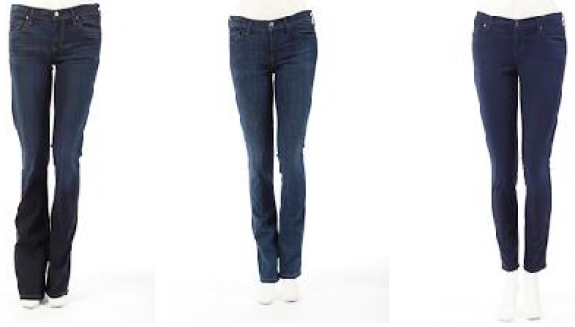
Skinny Jeans at Betsy Fisher Boutique
Melissa is thrilled with her new body. She feels more confident, more energetic, she’s happier – and can finally wear skinny jeans! Melissa is 19-years-old and spent her first year at college gaining about fifteen pounds. She was pretty miserable when I first met her in June. But, thankfully, we spent the summer working together to lose those fifteen pounds and she’s exactly where she wants to be before returning. At a slight five feet, one inches, she is a very reasonable 115 pounds. I’m so happy for her because every young person deserves to feel and look their best. It’s such a burden to be young and overweight.
But Melissa’s weight gain is not unusual. A Cornell University study found college freshmen gain an average of 4 pounds in just the first twelve weeks. Some factors adding to this weight gain are…
- Being faced with all-you-can-eat buffets at breakfast, lunch and dinner,
- Late-night studying – and the snacking and eating late which inevitably goes along with it… fattening take-out dinners of pizza or Chinese food,
- Alcohol- and lots of it,
- Pressure to take too many classes so precluding physical activity in the regular routine,
- Skipping breakfast or lunch time, then overeating between meals and later in the day and into the night.
I remember the first year I left home for college, I’d eat all my favorite foods any time I wanted (ice cream, pastrami sandwiches, chocolate chip bars, chips). My physical activity level also plummeted. I went from being very physically active in high school – in cheerleading, dancing, and more – to nothing in college. I was getting flabby- and fast – and I distinctly remember complaining to my grandmother how tired I felt. My Grandmother’s unsympathetic admonition, “You’re too young to feel this tired!” shocked me into action and I immediately started changing my ways.
For Melissa and all children and young adults going back to school this fall, there is a risk of falling into unhealthy habits and re-gaining hard-fought results over the summer. This is how Melissa and many of my young clients are handling the challenge:
- Lay out your daily schedule of classes ahead of time, since each day is different depending on required classes and activities,
- Figure out when to fit in a healthy breakfast, lunch and dinner,
- Determine when you can be physically active. For instance, will you be able to get your physical activity by walking to and from classes on certain days? Will you need to hit the gym on others?
- Wear a pedometer (The “Omron HJ 303” is the one I currently recommend, or if you have money to burn, try the fitbit) to make sure you’re getting at least the daily 10,000 steps it takes to maintain your weight… More if you want to lose weight,
- Sign up for a Physical Education class for credit (YEAH!). When I was in college, I took scuba diving, rescue diving, deep diving, tennis, fencing – whatever I could to get credit for being physically active and to learn new and interesting sports. This is also a way to meet other people with similar interests (I found the cutest, most interesting guys were into scuba diving… And fencing gave me a great butt – which I still have today!),
- Schedule your routine so that you are not hungry at night. If you must study late into the night, drink diet sodas, green tea (my favorite is Jasmine scented), and munch on fruits and veggies.
- Dump your unhealthy friends (subtly, of course) who push you to overindulge,
- Cultivate new friendships with healthier folks who share your commitment to staying in shape.
I’ve found that many of my teenaged and college-aged clients end up eating healthier than their parents- and they love every moment. Every child deserves to be healthy, fit, and happy – and to wear skinny jeans, if they wish!
Katherine’s Weekly Market Recipe: Kjerstin’s Chicken Salad with Summer Grapes, Peaches and Toasted Walnuts
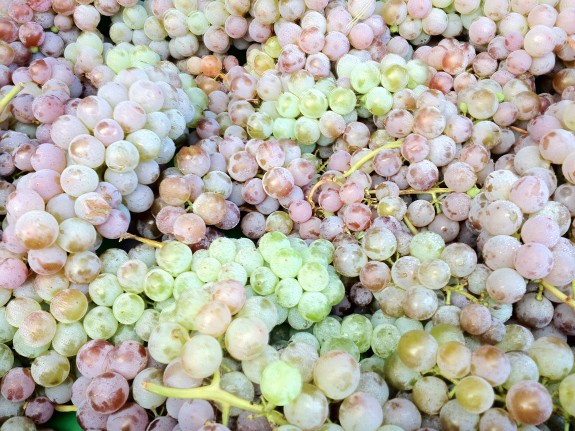
“I didn’t know grapes tasted this sweet!” says client after client, after I offer them a taste of locally-grown grapes from Quaker Valley Orchards. They are sweet as can be, and so delicate, they could never be found in a store – they’re not the hard, sour, traveling variety which passes for grapes these days.
Today is the 5th of “Katherine’s Weekly Market Recipes,” all of which are designed to be delicious, easy, quick, family-friendly, nutritious (heart-healthy & diabetes-friendly), and to highlight produce found at our local Farmers Markets this week. At your Farmers Market, you’ll find produce picked at peak ripeness, which means maximum flavor, texture and nutrition. You’re also helping save the environment when you buy at your Farmers Market. Here’s how…
This recipe, developed by my Swedish mother, would make a very nice luncheon offering. Top on a bagette or stuff in a tomato or half an avacado. Serve with pickles, carrot and celery sticks, radishes. Instead of the grapes or mandarine orances, you can use other seasonal fruits such as strawberries, peaches, or anything ripe and in season.
Serves 4
2 cups chicken breast meat, cooked, chopped (about 2 half breasts or 9 ounces)
1 pint Low sodium, nonfat chicken stock
1/3 cup small mild onion, chopped
1-1/2 cup celery, chopped
1 c seedless grapes, halved
2 ripe peaches, chopped
3 Tbsp Fresh Dill, Chopped
3 Tbsp Chopped fresh parsley
1 tsp or more to taste curry powder
1 ounce almonds or walnuts, toasted and chopped
1/4 cup any low fat ranch-style dressing
Poach the chicken breasts in low sodium, nonfat chicken stock until breasts are covered. Let cool and chop in bite-size pieces. Add the rest of the ingredients and chill. Serve chilled.
Per serving: 230 calories, 8 g fat, 1 g sat fat, 19 g carbohydrates, 3 g fiber, 20 g protein
Vacationing Without the Bulge
- At August 08, 2012
- By Katherine
- In Articles, News
- 0

Time for Beer Floats! (Photo by Robert Arnold)
In summer, especially August, the pace slows down so much it’s as if the entire country breathes a huge sigh of relief (I know I do). Who cares if business is down a bit? It’s expected this time of year—and besides, it gives you a chance to take a well-deserved break and, if you feel like it, hop on a plane to the islands or drive to a nearby resort.
But vacations offer many opportunities for indulgences that can add up to extra pounds if you’re not careful. I have two philosophies regarding vacation indulgences:
Option A: Enjoy yourself with abandon the whole time, just be prepared to gain a few pounds. If you do choose to go this route, be sure to resume your healthy routine as soon as you get home; if you don’t, you risk those pounds staying with you long after your trip ends.
Option B: Avoid gaining vacation pounds altogether. And it’s not as hard as you think. In fact, many of my clients enjoy themselves even more on vacation when they stay active and eat less heavily.
“My husband and I had a better time when we weren’t just sitting around eating during our annual visit to Greece,” says Vicky, a 40-year-old lawyer. “We made a point of taking walks together and doing more sightseeing than in the past. This gave us more energy and we were surprised at how good it felt!”
I hear this from clients like Vicky regularly. You can actually enjoy your vacation more if you just plan and prioritize a little. Here are some strategies to think about:
• Ask yourself what’s most important to you about the vacation. Is it looking and feeling your best? Feeling energetic? Wearing your most beautiful, form-fitting outfits and bathing suits? Visiting with loved ones? Or is it eating every tempting food in sight?
• Always eat at regularly scheduled intervals. Have a large breakfast and stop for a healthy lunch. Don’t starve yourself during the day so that you irrationally overeat everything in sight whenever you’re around food.
• Set dining priorities. Suppose, for example, you’ve booked four dinners out. You will gain weight if you eat with abandon each time (plan on 1 pound per day). Decide in advance that one of those nights is going to be your “splurge night.” Order anything you want. Enjoy every bite. Savor each and every one of those calories. On the other three nights, order more carefully. You’ll still enjoy the experience of dining out, but you won’t take in more calories than your body can handle.
• Do your homework. Before you go to a restaurant, check out its website and menu. Take note of the courses that look tasty yet healthy. That way, you won’t be as tempted by the sights and smells of fattening options once you get there. Of course, as in any restaurant, the no-brainer healthy selection is a salad-like appetizer, a simple seafood preparation, such as grilled fish, fruit for dessert, and by all means…a glass of wine.
• Stay active. Don’t waste time in a gym: Sightsee! Many of my clients get unbelievable amounts of walking during sightseeing vacations: 20,000 to 25,000 steps per day isn’t unusual (roughly 2,000 steps make up a mile, and the standard steps-per-day goal is 10,000). That’s why you often don’t gain weight on trips to Paris or Rome even when you eat in fabulous restaurants every night. (Without the walking you would, though!) Bring a pedometer to track your steps. If you’re at the beach, swim—or walk along the ocean between chapters of your trashy romance novel.
• Bring a picnic. This is a no-brainer when staying with friends—it’s simply a polite and generous thing to do—or in a rental with a kitchen.
When I stayed at my friend Bob’s place in St. Michaels, Md., recently, I brought one canvas bag of groceries and an insulated bag for perishable items. Knowing most people don’t eat the kind of healthy breakfast I like, I brought two kinds of whole-grain cereals, a bag of roasted slivered almonds, 2 pounds of berries, some fresh-squeezed orange juice, and a gallon of 1 percent milk. Guess what? Everyone enjoyed eating my big breakfast each morning and even carried over the habit once they got home. They felt better for it, and began losing weight to boot.
I also brought vine-ripe tomatoes and a huge pasta salad filled with farm-fresh vegetables, mozzarella, and my delicious basil vinaigrette. It ended up serving four people for lunch one day. Everyone was happy and all this healthy eating gave me room for my weekend splurge: beer floats!
The goal of traveling is to take a vacation from stress and boredom, not from the hard-won healthy practices that you’ve begun to employ—and that make you look and feel so great.
Cruise Control: Lose Weight on a Cruise Without Trying
- At July 30, 2012
- By Katherine
- In Articles, News
- 0

Two of my clients recently reported shock at losing weight on their Mediterranean cruise vacations. Lorraine, a 53-year-old public health specialist in Washington, D.C., came home from a cruise and was surprised to find she had lost two pounds. Rick, a professor of psychiatry and behavioral sciences in D.C., lost six pounds during his 10-day cruise.
Both remarked that they had indulged in ice cream, desserts, pasta, bread, and other foods that they didn’t usually eat. Yet, they dropped weight on vacation, despite struggling to lose pounds at home. As soon as they returned, the pounds began piling on, and they came to me desperate to return to the seemingly magical weight-loss mode they had fallen into during vacation.
I agreed that it was confusing. Both claimed they weren’t trying to diet and had eaten without restriction. Lorraine didn’t exercise any more than usual and had proof: Her pedometer, which measures her daily steps, showed the same readings she recorded at home. Rick may have walked more than usual—he didn’t wear his pedometer—but that alone doesn’t explain a six-pound loss, especially given his decadent eating.
Most of us are accustomed to accidentally gaining weight on cruises, not losing it. Tasty, fattening food is available all day long. During every meal, you’ll have a few hors d’oeuvres, then an entree, and who can resist dessert? Even midnight buffets. It’s not uncommon to gain even a pound a day while on a cruise or vacation.
So, how did these cruises turn into weight-loss adventures? And how can you replicate the conditions that worked for my clients—without getting seasick in the process?
As Lorraine and Rick described their experiences, some patterns quickly emerged:
- They ate whatever they wanted, from desserts to bread to pasta.
- They didn’t exercise, though they walked a lot during stops in ports (about 12,000 steps a day).
- Every meal featured buffets, stocked with a wide array of fruits and vegetables.
My analysis? The variety and volume of fresh, healthy food helped to properly nourish my clients.
Variety
Studies indicate that variety, more than any other factor, influences how much we eat. The more diverse food options we encounter, the more we eat without even realizing it. The desire for dietary variety is important for health and helped humans to evolve. People who ate lots of different types of food each day were—and still are—more likely to obtain all the essential nutrients. Based on this theory, a buffet would lead to a higher calorie intake and weight gain. But Rick and Lorraine’s cruise buffets had an unusually large and varied number of beautifully prepared fruits and vegetable dishes, from fresh chopped fruit to salads and cold vegetable soups. While exposure to a variety of fattening foods causes weight gain, access to a variety of fruits and veggies promotes weight loss. Though they didn’t consciously realize it at the time, both Rick and Lorraine ate more fruits and veggies before, during, and between meals.
Volume
Some foods are less energy dense than others—that is, they have fewer calories per gram—so filling your plate with more of those means you’ll be eating fewer calories without actually eating less food. Low density foods, which are low in calories but high-volume, help you feel full and satisfied while dropping pounds. Fruits and veggies are ideal, since they’ll fill you up without breaking your calorie bank; they’re correlated with a lower body weight. Eating high-volume, low-calorie foods affects how satisfied we feel in a number of ways. It causes stomach stretching and slows stomach emptying, stimulating the nerves and hormones that signal feelings of fullness. There’s also a visual component—seeing a large volume of food increases our ability to feel satisfied by it. Studies also suggest that when we eat large meals that last a long time, our satisfaction declines and we lose interest in finishing them.
They Ate Whatever They Wanted – And Lost Weight
Still wondering how Rick and Lorraine ate whatever they wanted, including desserts, and managed to lose weight? My analysis is that the fruits and veggies were so plentiful and took up so much room in their stomachs, they both ate less of everything else. Plus, they felt that they had eaten to their hearts’ content.
You too can get on “cruise control” at home and enjoy eating the right number of calories, feeling satisfied and even losing weight without trying. Rick and Lorraine’s cruise experiences are perfect examples of how this can happen. To replicate their results, consider having a buffet of fruit and veggie dishes in your home and office—morning, noon, and night. Pre-prepare a large variety of these, so they’re easily accessible and grabable. And since exercise counts too, put on a pedometer and aim for the recommended 10,000 steps a day. (About 2,000 steps is one mile. The average office worker gets about 4,000 steps daily.)
Seafood Risks and Benefits
- At June 04, 2012
- By Katherine
- In Articles, News
- 0
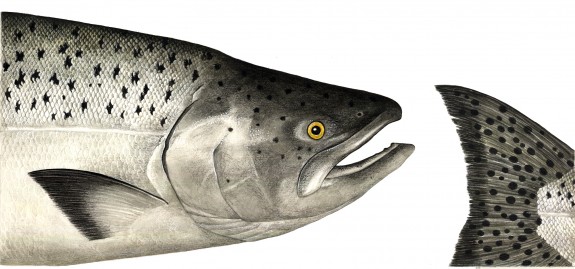
Chinook Salmon (Illustration by Charlotte Knox)
Seafood is a source of potent omega-3-fatty acids, a type of polyunsaturated fat important for your health, particularly your heart and brain. To get these benefits, experts recommend you get at least 4 to 11 grams of omega-3-fatty acids weekly (1.1 grams/day for women, 1.6 grams/day for men). Cold water fish contain the highest levels.
It’s ideal to eat fish high in omega-3-fatty acids, yet low in mercury.
Mercury is an environmental pollutant which seeps into the earth’s waters and into our seafood. Nearly all fish and shellfish contain traces of mercury, with some containing more than others, according to the Food and Drug Administration. And with the fear of mercury poisoning from fish, many are confused about what and how much to eat.
Ironically, the most vulnerable to mercury’s hazards – children and pregnant or nursing women – have the highest need for the nutrients in seafood.
Some guidelines:
1) DON’T eat shark, swordfish, king mackerel or tilefish,
2) DO eat up to 12 ounces of a variety of seafood low in mercury:
- Five of the most commonly eaten fish which are low in mercury are shrimp, canned light tuna, salmon, pollock, and catfish
- Albacore tuna has more mercury than light tuna, so limit it to 6 ounces per week
3) CHECK local advisories about fish caught in local lakes, rivers and coastal areas
4) Low Mercury, High Omega-3-Fatty Acid Seafood: Salmon, Herring, Sardines, Anchovies
7 So Called “Bad” Foods That Are Actually Good For You
- At May 23, 2012
- By Katherine
- In Articles, News
- 5
Are you shying away from bad foods that are actually good for you? With all the hoopla about healthful eating, it’s hard to separate fact from fiction.
As a nutrition consultant, I’ve come to realize there is no shortage of surprises and superstitions in the world of nutrition. As a follow-up to my recent Washington Post article, “5 So-Called Health Foods You Should Avoid,” I thought it would be fun to give you reasons to enjoy some of your favorite so-called “bad” foods that could actually be good for you, originally published in The Washington Post…
Gluten and Wheat
They are “the most demonized ingredients beyond high fructose corn syrup and hydrogenated oil,” said Melissa Abbott, culinary director at the Hartman Group, a company specializing in consumer research.
Yet decades of studies have found that gluten-containing foods, such as whole wheat, rye and barley, are vital for good health, and are associated with a reduced risk of diabetes, heart disease, cancer and excess weight.
“Wheat is a good source of fiber, vitamins and minerals,” said Joanne Slavin, nutrition professor at the University of Minnesota. She added that the confusion about gluten, a protein, has caused some people to avoid eating wheat and other grains.
Only about 1 percent of the population – those with celiac disease or wheat allergy – cannot tolerate gluten and must eradicate it from their diet to ease abdominal pain and other symptoms, including the ability to fully absorb vitamins.
One reason wheat-free or gluten-free diets are popular is that people who don’t eat wheat often end up bypassing excess calories in sweets and snack foods. Then they start feeling better, lose weight, and mistakenly attribute their success to gluten or wheat avoidance. Learn more about a gluten free diet and who may benefit from it…
Eggs
Eggs also don’t deserve their bad reputation. In recent decades, their high cholesterol content has been thought to play a role in increasing LDL (“bad”) cholesterol and heart disease risk. But cholesterol in food is a minor factor contributing to high blood cholesterol for most people, and studies have not confirmed a correlation between eggs and increased heart disease risk. The major determinant of LDL (bad) cholesterol is saturated fat, and while eggs are high in cholesterol – 184 milligrams in the yolk – they’re relatively low in saturated fat – about 1.6 grams in the yolk.
Interestingly, some of the biggest egg eaters in the world, the Japanese, have low cholesterol and heart disease rates, in part because they eat a diet low in saturated fat. In contrast, Americans eat eggs alongside sausage, bacon, and buttered toast.
“The amount that one egg a day raises cholesterol in the blood is extremely small,” says Walter Willett, professor of epidemiology and nutrition at Harvard’s School of Public Health. “Elevations in LDL (bad) cholesterol of this small magnitude could easily be countered by other healthy aspects of eggs.” Learn more about eggs…
Potatoes
Potatoes have been blamed for increasing blood glucose levels, insulin resistance, excess weight and Type 2 diabetes. A recent Harvard study that followed large populations and their disease rates linked potato eating with being overweight, blaming it on the blood glucose rise.
But many foods, including whole-wheat bread and whole-grain cereals, cause similar spikes in blood glucose, and are correlated with superior health and lower body weights. How could the higher body weight in the Harvard study be explained? The study lumped all potato products together, including potato chips and french fries, very fattening versions of potatoes usually eaten in large portions alongside hamburgers, hot dogs, and sodas.
“It’s an easy food to attack; but the meal pattern may be the culprit,” said David Baer, a research leader at the Agricultural Research Service of the Department of Agriculture. “Other epidemiological studies have not verified a connection between potatoes and weight gain or any diseases, and no clinical studies have shown a connection.” Learn more about the Harvard study…
Potatoes are a great source of potassium, Vitamin C and fiber that many cultures – Scandinavians, Russians, Irish, and Peruvians – relied on as a nutritious staple for centuries. And they were not fat.
Fruits
People often ask me if fruit is too high in sugar, especially for diabetics. This fear of fruit, I believe, is left over from the Atkins craze, which discouraged eating some fruits on the grounds that they are high in carbohydrates.
Avoiding fruit could actually damage your health. Study after study over many decades shows that eating fruit can reduce the risk of some cancers, heart disease, blood pressure and fruit. Lean how fruit reduces diabetes risk…
Fruit is high in water and fiber, which help you feel full with fewer calories, one reason why eating it is correlated with lower body weight. Even though they contain simple sugars, most fruits have a relatively low glycemic index. That is, when you eat fruit, your blood sugar raises only moderately, especially when compared with refined sugar or flour products.
Several health organizations, including the U.S. Dietary Guidelines, the National Cancer Institute, and the American Heart Association, recommend Americans eat at least five cups of fruits and vegetables a day because of their superior health benefits.
Soy
Though popular for centuries in many Asian cuisines, soy is sometimes seen as dangerous after studies found elevated rates of breast cancer among rats when they were fed a concentrated soy derivative. But studies looking at whole soy foods in humans have not found a connection. In fact, the reverse may be true.
Soy, “when consumed in childhood or adolescence may make breast tissue less vulnerable to cancer development later in life and probably has no effect on breast cancer risk when consumption begins in adulthood,” said Karen Collins, registered dietitian and nutrition adviser with the American Institute for Cancer Research.
Actually, Collins said, the evidence is so strong for protection against heart disease that the FDA allowed a health claim for labels on soy food products.
Alcohol
Alcohol is feared because of the potential for abuse and alcoholism and complications such as liver disease, which are valid concerns.
But decades’ worth of research shows that moderate alcohol consumption “can reduce deaths from most causes, particularly heart disease, and it raises HDL (good) cholesterol,” the USDA’s David Baer said.
Wine may have additional benefits because its grapes are filled with nutrients called polyphenols, which reduce blood-clotting, inflammation and oxidation.
The key is to drink alcohol moderately and with meals. What’s moderation? One serving daily for women and two servings for men, with a serving being 5 ounces of wine, 12 ounces of beer or 1.5 ounces of spirits. Learn more about wine…
Fried Foods
While it’s true that frying food usually increases its caloric content, that doesn’t necessarily make it unhealthful.
As long as food is fried in healthful oil instead of butter, shortening, or trans fat, and it’s eaten in moderation, it isn’t less healthy. In fact, fat-soluble vitamins A, D, E, and K, and heart-healthy, cancer-preventive carotenoids such as beta-carotene (e.g., carrots, sweet potatoes), lycopene (e.g., tomatoes) and lutein/zeaxanthin (deep-green leafy vegetables such as spinach and kale), need fat in order to be absorbed by the body.
“The consumption of certain fats, such as saturated fatty acids and trans fatty acids [fats that are solid at room temperature],is associated with an . . . increased risk of cardiovascular disease. On the other hand, the unsaturated fats, monounsaturated fatty acids and polyunsaturated fatty acids [canola, safflower and olive oils] have significant metabolic benefits and are health promoting,” said the 2010 U.S. Dietary Guidelines Advisory Committee. Learn more about healthy fats…
Read my Washington Post “Local Living” cover story 24 May 2012
and
Size Matters: A Delightful Discovery at la Madeleine
- At May 20, 2012
- By Katherine
- In Articles, News
- 0

la Madeleine Fruit Tarts (Photo by Katherine Tallmadge)
What a surprising respite! I was delighted Saturday morning, after my 3 mile walk to Memorial Bridge and back, to find la Madeleine open at 7 am. I was delighted to find a delicious cafe latte – and muffins and pastries even a nutritionist could love. And they weren’t “diet” pastries.
Yes, you heard right! How could I enjoy la Madeleine and even its pastries?
First, I admit I’m a food snob. I buy all my fruits and vegetables at Farmers Markets, because I believe so strongly in the benefits of seasonal, locally grown produce. There are few restaurants I really enjoy because I expect fresh, superior ingredients, interesting small plates, and polite, professional service. I only frequent independently-owned businesses, because I think it preserves the uniqueness of the town and I want to support small businesses. So I’ve been at a loss since the Furin’s of Georgetown diner closed and Laura and Ricardo Bonnino left my neighborhood’s Griffin Market, along with all their one-of-a-kind Italian delicacies. What to do? Where to go?
So on Saturday morning, after my walk, when I was in the mood to sit at a cafe and enjoy a latte and a little something, I broke down and tried Le Pain Quotidien – CLOSED – just as well. I’ve never had a good experience there and I blame them for Furin’s closing (rightly or wrongly). Okay, what next… I wandered over to la Madeleine across the street, into which I have never walked before, tried the door, and it opened. Uh-oh, am I really in la Madeleine? I skeptically, cautiously walked up the stairs. After I asked if they could serve me a Cafe Latte and was met with a cheerful YES, I was committed. But, “My! those muffins are huge,” I said, feeling dangerously tempted but calculating the 500+ calorie counts in my head. “But,” says a perky cook behind the counter, “we have smaller ones, let me show you!”
And there began my delightful discovery of an array of mini pastries, desserts and muffins I could enjoy and even recommend at la Madeleine. The size was just enough to enjoy, but not too much to feel over-stuffed and miserable. I borrowed the manager’s pen so I could scribble down the numbers for you:
Mini Blueberry Muffin – 160 calories (regular is 630)
Mini Lemon Cream Cheese Muffin – 170 calories
Mini Bran Muffin – 140 (regular is 550)
Mini Fruit Tart – 150 (regular is 500)
Mini Lemon Tart – 200 (regular 820)
Mini Sacher Torte Parfait – 300
Mini Tiramisu Parfait – 220 (regular 520)
Mini French Vanilla and Fruit Parfait – 110
Lemon Madeleine – 170
Mini Cafe Au Lait Creme Brulee (180)
Mini Vanilla and Fruit Creme Brulee (150)
I had a lovely time, sitting among the country French decor at the window, a lively Vivaldi playing in the background. Friendly and professional staff buzzing around. Will I visit more than once or twice a month? Probably not. But it’s nice to know it’s there!
For more information about what to look for in restaurant eating without the bulge…
Eating to Save the Planet
- At May 14, 2012
- By Katherine
- In Articles, News
- 3
Katherine explaining “Farmers Markets: Good For You, Good For The Environment” Watch on CNN
For those of you who want to make a contribution toward saving the planet, you may want to consider changing what you eat. One simple way to do that? Buy locally and seasonally at your Farmers Market.
What you eat profoundly affects not only your health, but the environment, too. This is important news because when it comes to environmental issues and halting global warming, many of us feel overwhelmed and helpless. So it’s amazing that something as simple as making better food choices can reduce global warming by lowering greenhouse gases, saving land, and conserving diminishing water and energy supplies.
Your protein choice will make the most significant difference on the environment (and your health). Producing meat requires six to seventeen times more land than growing vegetable protein, 26 times more water. And producing vegetables is up to 50 times more energy efficient than meat production, according to a study in the American Journal of Clinical Nutrition.
Eating vegetable protein will also save your health. Decades of research has found that plants contain compounds (phytochemicals) with potent powers of healing. People who eat a plant-based diet are leaner, have less cancer, heart disease and diabetes.
But when eating more fruits and vegetables, it’s important to consider how and where they’re grown. Environmental resource conservation is reduced if food is transported long distances and grown in large industrial farms which specialize in only one or a few foods. Locally, organically produced food saves water, energy and encourages a region’s unique varieties of fruits and vegetables. Heirloom varieties, for example, have been passed down through generations, have natural resistance to pests, disease and are better able to tolerate local conditions without too much exra energy, pesticides or water.
How you can protect the environment through your food choices:
* Buy seasonally and locally at farm stands and farmers’ markets,
* Eat a plant-based diet,
* Reduce meat consumption,
* Use heirloom varieties, whenever possible,
* Buy organic whenever possible.
This article was excerpted from: The Journal of the American Dietetic Association 2007; 107: 1033 – 1043 “Position of the American Dietetic Association: Food and Nutrition Professionals Can Implement Practices to Conserve Natural Resources and Support Ecological Sustainability”