Surviving the Heat with the Right Fluids
- At July 24, 2013
- By Katherine
- In Articles, News
 1
1
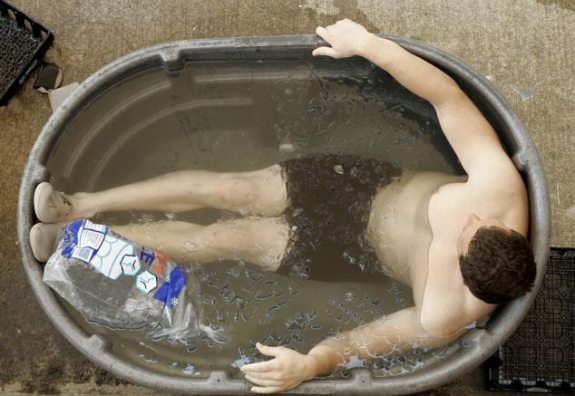
Emergency Ice Baths and Intravenous Electrolyte Replacement After a Marathon
This article appeared in The Huffington Post
I’ll never forget volunteering at the Marine Corps Marathon’s Finish Line Emergency Tent. The experience was horrifying and exhilarating at the same time.
I spoke at the marathon’s scientific conference the day before, and the other speakers — dedicated medical specialists who came from around the world — were amazing. Their expertise and dedication saved many lives at the marathon.
But what is seared in my brain forever are the exhausted runners stumbling into the emergency tent on the verge of death: Forced into ice-water baths, several doctors surrounding each tub struggling to get IVs into the runners to save their lives. It was heat stroke.
The runners were frighteningly disoriented: delicate young women and huge, strong men were screaming, cursing, defecating (the room reeked); they couldn’t remember their own names, let alone birth dates. After some time in the painful icy water, once their body temperatures were lowered, they were whisked off in waiting ambulances to nearby hospitals. Everyone survived that day.
The most essential nutrient: water
Nutrients don’t only come in the form of food; water is the most important, and often most forgotten, nutrient. You can last for some time without food, but only days without water. Your lean body mass contains about 70 percent to 75 percent water, with fat containing much less: about 10 percent to 40 percent water. Because of increased muscle mass, men’s and athletes’ bodies contain more water than bodies with proportionately lower muscle and higher fat, such as non-athletic women, people who are overweight and people who are older.
Water is:
– The solvent for important biochemical reactions, supplying nutrients and removing waste.
– Essential for maintaining blood circulation throughout your body.
– The maintainer of body temperature. As you exercise, your metabolism and your internal body temperature increase.
Water carries heat away from your internal organs before serious damage occurs, which can lead to heat stroke, and even death. The heat travels through your bloodstream to your skin, causing you to sweat. As the sweat evaporates, this allows you to cool off and maintain a safe body temperature, optimal functioning and health.
Daily water intake must be balanced with losses to maintain total body water. Losing body water can adversely affect your functioning and health. Once you start feeling thirsty, you’ve probably lost about 1 percent of your body water and are dehydrated. With a 2 percent water loss, you could experience serious fatigue and cardiovascular impairments. It’s important to note that individual fluid needs differ depending on your sweat rate, the environmental temperature, your clothing, humidity and other factors.
Hydration tips
As summer temperatures hit, here are a number of important tips.
– Drink enough water to prevent thirst.
– Monitor fluid loss by checking the color of your urine. It should be pale yellow and not dark yellow, too smelly or cloudy.
– For short-duration (less than 60 minutes), low-to-moderate-intensity activity, water is a good choice to drink before, during and after exercise.
– Any time you exercise in extreme heat or for more than one hour, supplement water with a sports drink that contains electrolytes and 6 percent to 8 percent carbohydrates. This prevents “hyponatremia” (low blood sodium), which dilutes your blood and could also lead to serious impairment and death.
– Begin exercise well-hydrated. Drink plenty of fluids the day before and within the hour before, during and after your exercise session.
– Avoid alcohol the day before or the day of a long exercise bout, and avoid exercising with a hangover.
– Consider all fluids, including tea, coffee, juices, milk and soups (though excluding alcohol, which is extremely dehydrating). The amount of caffeine in tea and coffee does not discount the fluid in them, even if they have a slight diuretic effect, according to the most recent report by the National Research Council’s Food and Nutrition Board.
– Eat at least five cups of fruits and vegetables per day for optimum health, as they all contain various levels of water and the all-important nutrient potassium.
– During exercise, for those who experience high sodium losses, eat salty foods in a pre-exercise meal or add an appropriate amount of salt to sports drinks consumed during exercise. Orange juice is high in potassium. Dilute juices, such as V-8 or orange juice, 50/50 with water so that the drinks are 6 percent carbohydrate solutions (the same as sports drinks), which will empty from your stomach quicker than 100 percent juice (juices are naturally 12 percent solutions), allowing the electrolytes and water to quickly reach your heart and organs.
– Following strenuous exercise, you need more: Protein to build muscle, carbohydrates to refuel muscle, electrolytes to replenish what’s lost in sweat, and fluids to help rehydrate the body. Low-fat chocolate milk is a perfect, natural replacement that fills those requirements.
– You can also replace fluid and sodium losses with watery foods that contain salt and potassium, such as soup and vegetable juices.
– For long hikes, when you’ll need food, dried fruit and nut mixtures contain high amounts of potassium, sodium, protein, carbs and calories — though continue to drink plenty of water.
– To determine your individualized need for fluid replacement: During heavy exercise, weigh yourself immediately before and after exercise. If you see an immediate loss of weight, you’ve lost valuable water. Drink 3 cups of fluid for every pound lost; use this figure to determine the amount of water (or sports drink) you’ll need to drink before and during your next exercise session to prevent weight/water loss in the future.
Farmers Market Recipe: Fresh Kale & Summer Peach Salad with Toasted Almonds & Balsamic Vinaigrette
- At July 19, 2013
- By Katherine
- In News, Recipes
- 0
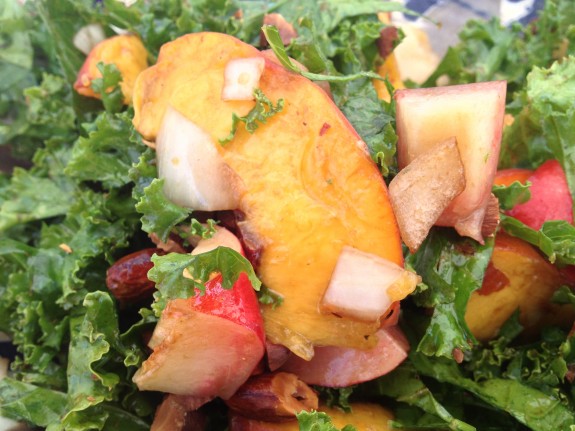
Fresh Kale and Summer Peach Salad with Toasted Almonds and Balsamic Vinaigrette
“I don’t normally like kale, but this salad is delicious!” is a comment I hear over and over when I serve this dish. Last year around this time, I was volunteering at an Anacostia Farmers Market. At the time, there was only one produce farmer at the market and all he had the day I was coming was peaches, kale and potatoes! My job at the Farmers Markets is to inspire people to buy the locally grown produce available that day, but what the heck was I going to do with kale, peaches and potatoes? I was stumped! Then I leafed through my own book, Diet Simple: 195 Mental Tricks, Substitutions, Habits & Inspirations, and got inspired by one of Chef Carla Hall’s contributions to my book, her “Hearty Greens Salad with Warm Balsamic Cherry Vinaigrette.” Aha! I can do a variation on the theme, I thought, use peaches, add some crunch with toasted almonds and VOILA! It was a HUGE HIT at the Anacostia Farmers Market. So I’ve included this wonderful recipe in my new book: Diet Simple Farm to Table Recipes (Bookbaby 2013)
Today is the 5th “Katherine’s Market Recipe” of 2013, all of which are designed to be delicious, easy, quick, famiy-friendly, nutritious (heart-healthy & diabetes-friendly), and to highlight produce found at our local farmers markets this week. At your farmers market, you’ll find produce picked at peak ripeness, which means maximum flavor, texture, and nutrition. You’re also helping save the environment when you buy at your farmers market. Here’s how…
Serves 6
Vinaigrette:
3 Tablespoons Extra Virgin Olive Oil
1 Tablespoon Balsamic Vinegar
Salt and Pepper to taste
Salad Ingredients:
6 Handfuls of fresh Kale (or other greens), washed, tough stems removed, and torn into bite-sized pieces
2 Cups Fresh Sliced Summer Peaches and/or any seasonal Berries
2 Ounces toasted slivered Almonds
½ Sweet Onion, peeled and sliced
In a large bowl, add the olive oil, vinegar, salt and pepper. Whisk together. Add the kale, onion, almonds, and peaches and toss together. Serve immediately.
CNN Report Follow-up: Katherine Explains GMOs
- At July 08, 2013
- By Katherine
- In Articles, News
- 2
Genetically Modified Foods: Part II
Your responses to my recent CNN interview were PASSIONATE – on both sides of the issue – regarding GMO’s health and environmental benefits.
Genetically modified organisms (GMOs) continue to spark passionate debate: Emotions run high regarding studies of the impacts of GMOs on health and the environment.
I was interviewed about GMOs by CNN’s “The Situation Room with Wolf Blitzer” which recently reported that Chipotle and many restaurants and food companies in the United States use GMOs. Though Chipotle is one of the few that voluntarily discloses its ingredients.
It’s important to note that scientists in general regard a GMO food nutritionally equivalent to a non-GMO food.
The U.S. government’s stance
GMOs are not allowed in any food certified as organic by the U.S. Department of Agriculture (USDA). However, in an online food Q&A, the U.S. Food and Drug Administration (FDA) stated that GMOs have been in the U.S. food supply for about 20 years. The agency also stated in a consumer update that “Foods from genetically engineered plants must meet the same requirements, including safety requirements, as foods from traditionally bred plants.” Such foods, the FDA added, “are generally as nutritious as foods from comparable traditionally bred plants… [They] have not been more likely to cause an allergic or toxic reaction than foods from traditionally bred plants.”
Additionally, Michael Jacobson, executive director of the Center for Science in the Public Interest, said there is no safety hazard in using genetically modified soybean oil over conventional soybean oil — a finding the respected organization highlighted recently in its Nutrition Action newsletter.
Hence, the federal government does not require that GMO or non-GMO foods be labeled.
“Food manufacturers may indicate, through voluntary labeling, whether foods have or have not been developed through genetic engineering, provided that such labeling is truthful and not misleading,” the agency stated. “FDA supports voluntary labeling that provides consumers with this information.”
Yes, the GMO debate is still heated and in full swing. There are pros to GM foods —increased yield in staple crops can help to combat world hunger, for example. (Viggy Parr contributed to this report)


Swedish Midsummer: Feast the Night Away!

Midsummer: This Weekend! Photo by Embassy of Sweden
For weeks on end, the sun never sets during Sweden’s summertime. It’s daylight round-the-clock. Every year, during one of those “white nights,” the Friday nearest the 24th of June, all of Scandinavia turns out to feast until morning. After long winter months of what seems like never-ending darkness, sun-starved Swedes join the rest of Scandinavia in celebrating the summer solstice – the year’s longest day.
Swedes call the celebration Midsummer Eve
It is more than just a holiday, however. Midsummer Eve, often lasting through Saturday – and sometimes the whole weekend – is the national excuse for the biggest parties of the year. The revelry is non-stop.
Beginning Friday morning, families gather to set the scene. Every spare piece of furniture is moved outdoors, setting up a festival atmosphere. Large wooden crosses are turned into maypoles decorated with flowers, ribbons and leafy branches.
The maypoles are raised, and hours of dancing, singing and community wide camaraderie get under way. By late afternoon the revelry has served its purpose. Gnawing hunger has prepared the celebrants for the main event: the feast, Sweden’s famed smorgasbord.
Smorgasbord is a Swedish invention and is literally a table of open-faced sandwiches. Though its origin was a simple array of hors d’oeuvres, smorgasbords today are exhaustive buffet-style spreads, the Swedish version being the best known.
There are appetizers, salads, main courses and desserts. The dishes signal summer’s first harvests: freshly clipped dill, tender root vegetables, fish and other seafoods, and strawberries grown in the country.
There are cured ingredients, as well. Pink rolls of cured salmon are wrapped around dill sprigs, with yellow mustard sauces and peppercorns alongside. There is marinated herring and coarse salt, as well as dill and other pickles. Dairy products also are important, including eggs, cheese and cream.
The traditional drink is aquavit, Swedish vodka spiced with anise and caraway. It is served in tiny schnapps glasses. The Midsummer toast, which loses something in translation, usually amounts to a unanimous gulp followed by a chant of “rah, rah, rah, rah.”
Actually, preparation of Midsummer food usually begins a couple of days before. Local fishermen stack their just-caught salmon in rickety wheelbarrows, roll them into town and go door to door displaying their wares for inspection by anxious cooks.
The fish are carefully examined in solemn transaction, the cook – usually my Grandmother – signaling the final selection with an abrupt, “This will do!” The fisherman nods, satisfied, and carries the fish to the kitchen where it lands on the table with a thud. The smell of the sea enters the house with the day’s catch. The best knife has been sharpened for this moment: the start of Midsummer Eve cooking.
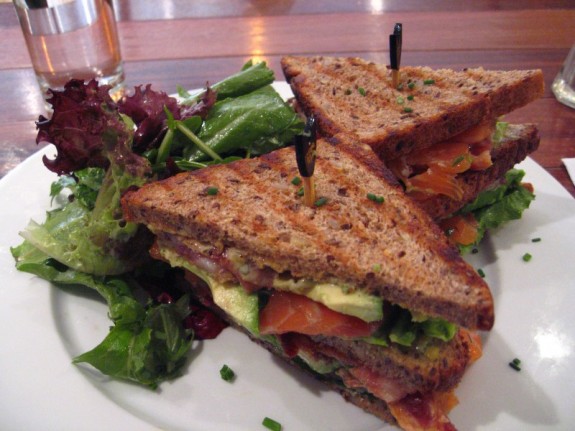
Aquavit and Marcus Samuelsson’s Gravlax Club Sandwich
Gravlax and Mustard Sauce
Are Genetically Modified Foods Safe?
- At June 19, 2013
- By Katherine
- In Articles, News
- 0
CNN’s “Situation Room with Wolf Blitzer” reported… that Chipotle Fast Food Restaurants have disclosed (good for them!) they are using some genetically modified foods
Katherine was interviewed recently for the report.
Genetically Modified Organisms: The GMO – in this case a food’s – genetic material has been altered, much like plant breeding, which has been going on for thousands of years. Nutrition and food scientists agree that a GMO food is safe and nutritionally equivalent to a non-GMO food. In fact, some foods have been altered to improve nutrition for undernourished people with great success. An example is Harvest Plus, an organization that has developed iron, zinc and vitamin A fortified seeds for farmers in underdeveloped countries like India.
Sustainable Farming: Farming which has a future, where soil, water, and the environment are protected for future generations.
Local/Seasonal: The movement which promotes eating foods grown locally and in season; when food is picked at peak ripeness for maximum nutrition, flavor, environmental protection, and sustainability. For CNN’s report (and Katherine’s article) on Farmers Markets and how they save your health and the environment…
Omega-6-Fatty Acids, high in soybean oil, compete with Omega-3-Fatty Acids in your body. If omega-6-fatty acid intake is too high in comparison to omega-3’s, this leads to increases in inflammation, a leading risk factor for many diseases including heart disease, cancer, etc. For details…
Katherine’s Market Recipe: Salad of New Potatoes & Asparagus with Lemony-Garlic-Herb Mayonnaise Topped with Poached Salmon
- At May 27, 2013
- By Katherine
- In News, Recipes
- 0
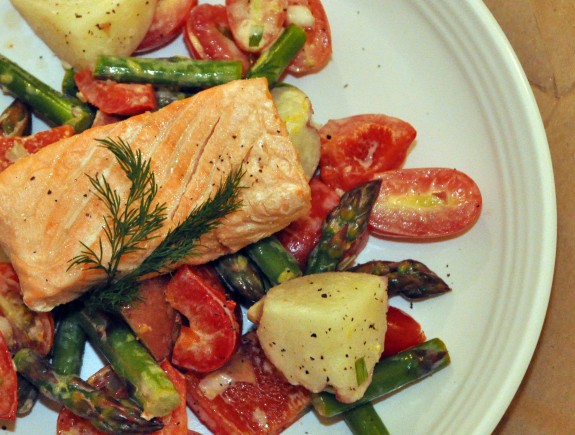
Salad of New Potatoes & Asparagus in a Lemony Garlic-Herb Mayonnaise topped with Poached Salmon (photo by Alison Eaves)
FREE: Download and print my entire new spring recipe chapter from my upcoming cookbook: “Diet Simple Farm-to-Table Recipes,” try a recipe, post its picture and your impressions on my Facebook page, and I’ll enter you in my contest for free Personalized Nutrition services. This wonderful recipe, along with many others, is included!
Today is the 4th “Katherine’s Market Recipe” of 2013, all of which are designed to be delicious, easy, quick, famiy-friendly, nutritious (heart-healthy & diabetes-friendly), and to highlight produce found at our local farmers markets this week. At your farmers market, you’ll find produce picked at peak ripeness, which means maximum flavor, texture, and nutrition. You’re also helping save the environment when you buy at your farmers market. Here’s how…
For my “Salad of ‘New’ Potatoes & Asparagus with Lemony-Garlic-Herb Mayonnaise,” I recommend you buy the asparagus, green onions, tomatoes and tiny potatoes at Wednesday’s Rose Park Farmers Market, Saturday’s Glover Park-Burleith Farmer’s Market, Sunday’s Dupont Circle’s Fresh Farm Market – OR on Sunday, come visit me demonstrating this incredible recipe at the new Downtown College Park Farmers Market.
Salad of “New” Potatoes and Asparagus with Lemony-Garlic-Herb Mayonnaise Topped with Poached Salmon
by Katherine Tallmadge, M.A., R.D.
This “salad”features the best of spring-time gifts: asparagus, green onions, thin-skinned tiny new potatoes and salmon. It can be served warm as a great holiday side dish, or enjoyed cold. The mayonnaise dressing brings out the flavor of any vegetable, especially if allowed to soak into still-warm, just cooked asparagus, haricots verts (the tender French green bean), delicate, small, thin-skinned “new” potatoes, or broccoli. The salmon can be poached, grilled, smoked or cured: your choice!
Serves 6 to 8
Mayonnaise Dressing:
1/4 Cup Mayonnaise, preferably made with Canola or Olive Oil
Grated Zest and Juice of 1 Lemon
2 Garlic cloves (or more, to taste), mashed
1 Tbsp (or more, to taste) Tarragon or other fresh herb such as Dill
Salt and Pepper, if desired (none needed)
Vegetables:
1 quart Asparagus, tough end removed, and cut into 2-inch pieces
1 pint small New Potatoes with skin, cleaned but not peeled (optional)
2 Red Bell Peppers, roasted (if desired) and chopped
1 pint cherry tomatoes, sliced in half
1 Bunch (about 4 – 5) Green Onions, chopped
Salmon:
2 pounds of salmon fillet
1 Bunch Fresh Dill
1 teaspoon Salt
Place the salmon in a frying pan large enough to hold it laid out flat. Pour cold water over salmon until it is covered. Add salt and dill to the pan. Place lid on the pan. Bring to a boil, then turn off the heat and let sit about ten minutes in the hot water. Remove the fish from the water when the flesh is opaque when checked with a fork. Let cool, if desired.
Prepare the dressing in a bowl large enough to fit the salad ingredients by mixing the mayonnaise, the lemon, garlic and fresh herb of your choice. Place in refrigerator to keep chilled.
In a frying pan large enough to fit the asparagus end to end, steam or boil the asparagus slightly (in a small amount of water) for about 3 minutes, until they are al dente (firm, but not hard, with resistance to the bite). Drain and immediately toss in ice water to stop the cooking process. Place in the bowl of cold mayonnaise dressing. Toss to coat with mayonnaise dressing. Put the bowl back into the refrigerator to halt the cooking process.
Slice the small potatoes in half or quarters, depending on their size. Boil the potatoes for about 5 or 10 minutes, until tender when pierced by a fork. Drain and place in the bowl with the mayonnaise and asparagus. Toss to coat with the mayonnaise dressing. Place in the refrigerator.
Roast the red bell peppers if desired, chop, and add to the mix. Chop the white part of the green onions, cut the cherry tomatoes in half, and place in bowl with the other vegetables; toss.
Serve the salad with about 4 ounces of salmon on top of each serving.
FREE: Diet Simple Farm-to-Table Spring Cookbook
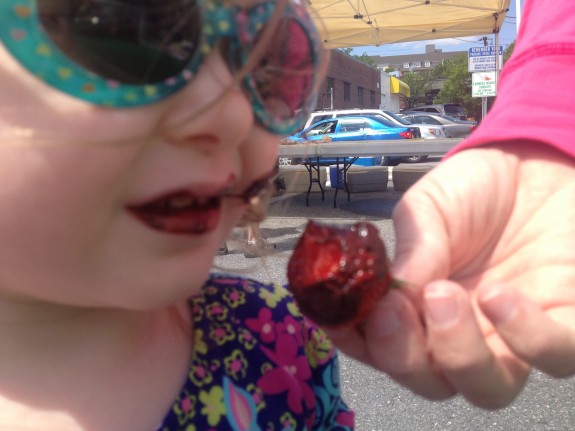
Enjoying Dark Chocolate Dipped Strawberries at the Farmers Market
Celebrate Your Transformation to a Healthier Lifestyle
I’m enthusiastically and gratefully giving you my most cherished spring recipes from my new upcoming Farm-to-Table cookbook FREE, because I appreciate you – my clients and friends – so much. I feel privileged to be part of your life – as your personal guide in your life and health transformation.
Creating a “Diet Simple” Support Community on Facebook
I really enjoy hearing from you, getting regular updates about your health, your family, and your life. So, I’m going to take it to the next level and form an online “Diet Simple” community on Facebook. It will be our online space to support each other, share our cooking adventures, and celebrate our ongoing transitions to a healthier lifestyle and body weight. To encourage you to get in the habit of Facebooking with me, I’m running a contest with prizes I think you’ll love! Follow the instructions below…
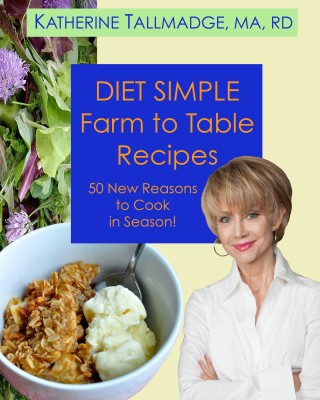
Cover design by Eagle Publishing and Viggy Parr
Click my book (above), and you’ll find my book to download…
Diet Simple Contest
1. Download and/or print my new Diet Simple Farm-to-Table Spring recipes,
2. Try one of the recipes – or more – and share a picture and your impressions on my “Diet Simple by Katherine Tallmadge” Facebook page,
3. Everyone who posts a comment or picture will be entered into the contest,
4. Refer a friend to do the same, they’ll be entered, and you’ll be entered into the drawing twice.
The Winner: Chooses From the Following Prizes
1. A guided, personal shopping trip to the Farmers Market,
2. Private chef-for-a-night (I cook dinner at your home while you provide the ingredients),
3. A 5-session nutrition counseling program,
4. A talk at your (local Washington, DC) workplace or conference, or
5. Come up with your own idea, and I’ll consider it!

Discover Puglia, Italy: The Source of the Mediterranean Diet
- At May 18, 2013
- By Katherine
- In Articles, News
- 0
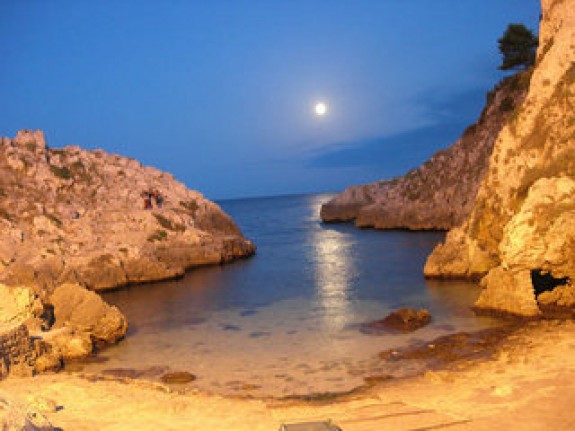
“I am very high on Puglia,” says Celebrity Chef, Mario Batali. “It is the next Tuscany for the American traveler…exotic... yet accessible”
Discover Puglia, Italy with me, and together, experience a rare, personalized, insider tour with local native, Silvestro Conte. Puglia, the source of the Mediterranean Diet and the most delicious food in the world, has amazing landscapes, mesmerizing beaches, 3,000+ years of history, exciting folklore, evocative art, gorgeous culture, and more.
Seven Reasons to Love Puglia
1. The History: 3,000+ years, still alive and part of our 21st century astoni-shingly advanced mindset. It’s alive in the languages, in the culture, in the cuisine, in the traditions and in the art. Unlike other parts of Italy, Puglia is a layercake of history.
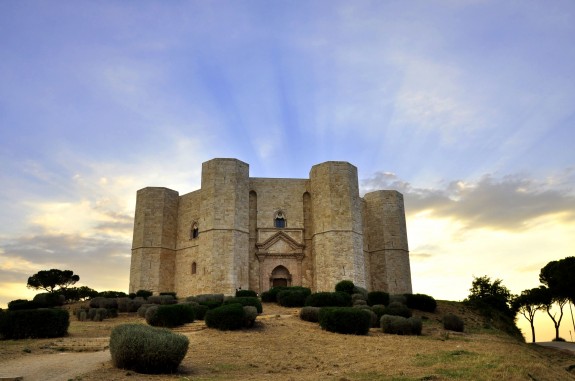
Castel del Monte (photo by Silvestro Conte)
2. The Food: “I am very high on Puglia,” says Celebrity Chef, Mario Batali. “It is the next Tuscany for the American traveler…exotic… yet accessible” Puglia’s Cuisine is the original source of the Mediterranean Diet. It’s not easy to summarize the rich simplicity and flavor of Puglia’s cuisine. Cooking is based on the FRESHNESS of the ingredients — from vegetables to seafood. You will taste and feel it at all the unique restaurants we will visit, with Silvestro’s extended family, and at the Epifani family mansion. Our tour base will be Ceglie Messapica, Silvestro’s hometown, and renowned as the Gastronomic Capital of Puglia.
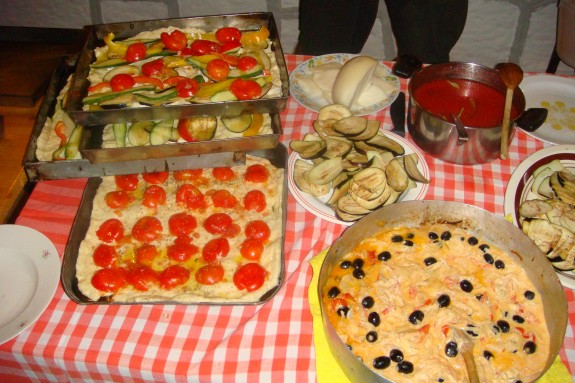
Appetizers by Silvestro's Family (photo by Silcestro Conte)
3. The Wines: “This magical wine destination is a thin peninsula packed tight with stunning beauty and surrounded by some of the bluest waters in Europe,” says Wine Enthusiast Magazine, which listed Puglia as a “TOP TEN Wine Travel Destination for 2013.” Primitivo, Negroamaro have been enjoyed for over 2,000 years, and are now familiar to the world and celebrated by wine connoisseurs. We’ll visit some little or at all unknown, yet outstanding wineries. Not neglecting homemade wine….

"This magical wine destination is a thin peninsula packed tight with stunning beauty and surrounded by some of the bluest waters in Europe," said Wine Enthusiast Magazine, which listed Puglia a TOP TEN Wine Destination for 2013
4. The Olive Oil: Puglia is Italy’s greatest producer of olive oil. Some of the purest and most flavorful olive oil you will taste in Italy comes from here. More than 65 millions olive trees are masterpieces in themselves, contorted yet majestic. Our tour includes olive oil tasting at family mills. The Mediterranean Diet was born here.
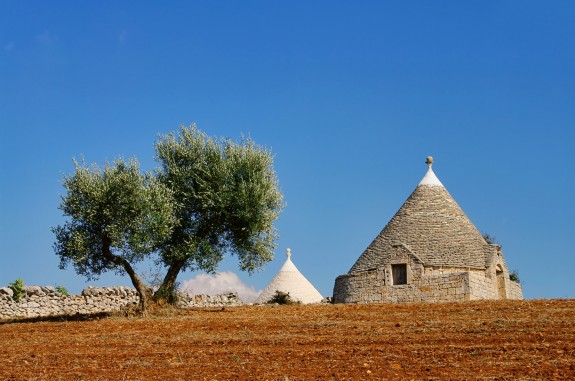
A single Olive Tree Stands Next to a Trulli, mortarless homes from the 1200s (photo by Silvestro Conte)
5. The Beaches: Puglia boasts 500 miles of coastline (sand, rocks, cliffs), surrounded by turquoise blue waters. Take Pescoluse, for instance : given the kaleidoscopic color of the water and its fine white sand, you’ll be thinking you’re in the Caribbean…or the Maldives.
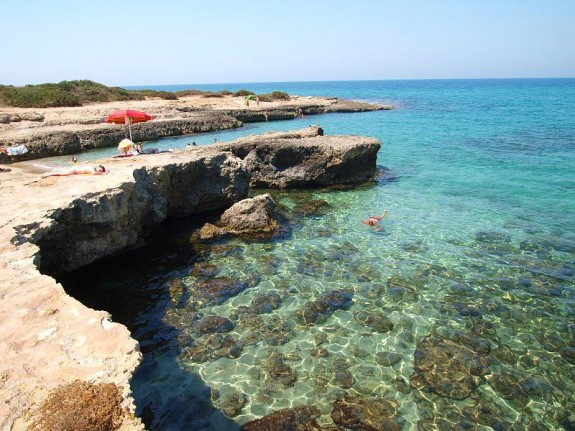
Silvestro's Favorite Local Beach (photo by Silvestro Conte)
6. The Architecture: You’ll see structures you won’t find anywhere else in Italy, such as the trulli, the conical, mortarless stone farmhouses started in the 1200s. Historically the target of many invasions, Puglia is filled with fortified farmhouses or masserie. All invaders left their architectural mark, including the mesmerizing baroque style in Lecce (known also as “Florence of Puglia”).

An Illuminated Castle in Celebration of its Patron Saint
7. The People: the Pugliese people take to the highest level the typical Italian’s warm and welcoming attitude. Guided by Silvestro, you’ll learn about the traditions, languages, wines, olive oil, pasta, bread, cheeses and mozzarella at small old family farms, ceramics, pizzica, an ancient folk dance..

Pizzica Dance
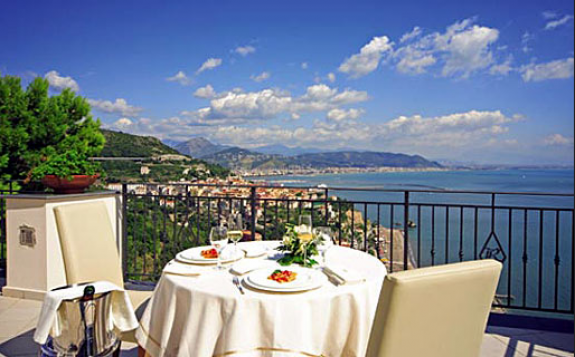
Eating out in Puglia
When: September 14 – 22, 2013 (7 full days, 7 nights, arriving in Bari September 15)
The size of the group will be limited to 18, so please book early!
For more detailed information, contact: Silvestro Conte (202)290-5835 Silvestro@YourItalia.com www.YourItalia.com
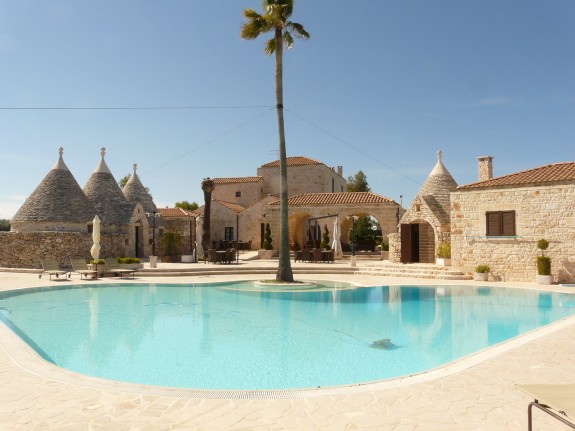
Ceglie Resort - Where We Will be Staying for 7 days & nights
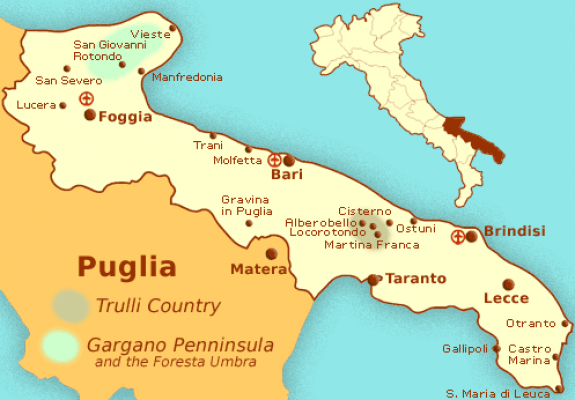
Katherine’s Market Recipe: Strawberry & Rhubarb Soup
- At May 17, 2013
- By Katherine
- In News, Recipes
- 2
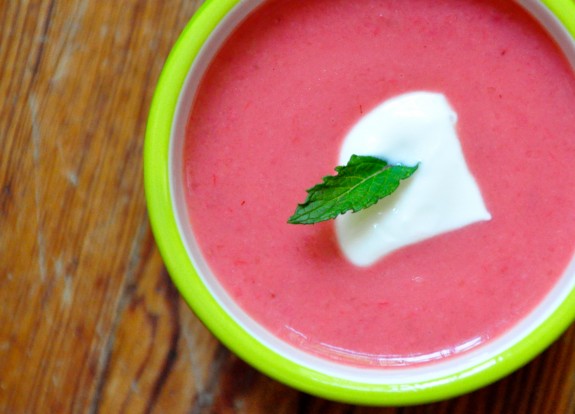
Soupe aux Fraises et Rhubarbe (photo by Alison Eaves)
FREE: Download and print my entire new spring recipe chapter from my upcoming cookbook: “Diet Simple Farm-to-Table Recipes,” try a recipe, post its picture and join the discussion on my Facebook page, then I’ll enter you in my contest to win free Personalized Nutrition services. This wonderful recipe, along with many others, is included!
Today is the 3rd “Katherine’s Market Recipe” of 2013, all of which are designed to be delicious, easy, quick, famiy-friendly, nutritious (heart-healthy & diabetes-friendly), and to highlight produce found at our local farmers markets this week. At your farmers market, you’ll find produce picked at peak ripeness, which means maximum flavor, texture, and nutrition. You’re also helping save the environment when you buy at your farmers market. Here’s how…
For my “Soupe aux Fraises et Rhubarbe,” I recommend you buy the strawberries and rhubarb at Rose Park Farmers Market on Wednesday afternoons, the Glover Park-Burleith Farmers Market Saturday, or the Dupont Circle’s Fresh Farm Market on Sunday.
Soupe aux Fraises et Rhubarbe
(Strawberry and Rhubarb Soup)
by Katherine Tallmadge, M.A., R.D.
Serves 4
Ingredients
1 Tablespoons Canola Oil
3 stalks Rhubarb, pealed and cut into 1.4 inch chunks
2 cups hulled and sliced fresh Strawberries
4 ounces fresh Orange Juice
1/4 cup Sugar
3/4 cup Nonfat or Low Fat Vanilla Yogurt
4 fresh Mint Leaves
Procedure:
Heat the oil in a saucepan over medium-high heat. Use a pan large enough to hold all of the ingredients. Add the rhubarb and saute about a minute. Reduce heat to medium, cover and cook for about 7 minutes, or until the rhubarb is tender. Remove from the heat and let cool. Add the strawberries, orange juice, sugar and 1/2 cup of the yogurt and blend with an immersible hand blender (I like the Cuisinart Smart Stick). Cover and refrigerate for at least one hour or until it is well chilled.
Presentation:
Pour the soup into four small chilled bowls. Place a 1 Tablespoon dollop of yogurt and a fresh mint leaf on each bowl.
Did you know that there are 200 seeds on each strawberry?
Strawberries are members of the Rose family and there are over 600 different varieties. Choose freshly picked, ripe berries, as they will be the tastiest and will have the most nutrients. “Look for berries fully formed, bright red, without bruising or soft spots and with fresh-looking green caps,” says Janie Hibler in “The Berry Bible.”
Strawberries are considered a “superfood.” They have one of the highest antioxidant and nutrient contents of all foods, yet they are low in calories, so you can eat them in unlimited quantities. In fact, for your health, the more the better! “A serving of eight strawberries contains more vitamin C than an orange. Strawberries are also rich in folate, potassium, and fiber. They’re especially high in cancer- and heart-disease-fighting phytonutrients (beneficial plant compounds) called flavonoids, anthocyanins, ellagic acid, quercetin, catechin, and kaempferol.
Soupe aux Fraises et Rhubarbeis adapted from “The French Culinary Institute’s Salute to Healthy Cooking” (Rodale Press, 1998), one of my favorite cookbooks, which I highly recommend!
Dark Chocolate Dipped Strawberries – Katherine Demonstrates at Farmer’s Market Sunday
- At May 09, 2013
- By Katherine
- In News, Recipes
- 1
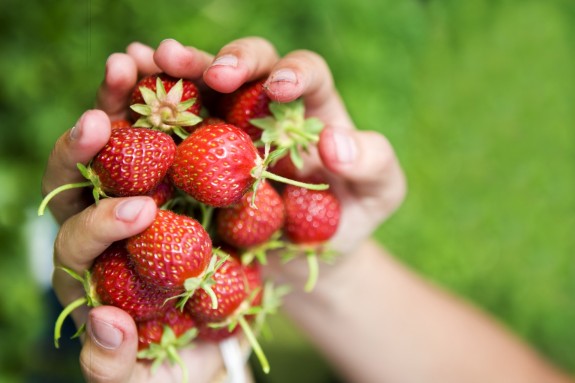
Join me this Sunday 11 am to 2 pm at the new College Park Farmers Market! I’ll be demonstrating dark-chocolate-dipped strawberries using the season’s first strawberries. I just bought several quarts at my local Rose Park Farmers Market, and they are sweet and tender – just as they should be when they’re picked locally at peak ripeness.
Today is the 2nd “Katherine’s Market Recipe” of 2013, all of which are designed to be delicious, easy, quick, famiy-friendly, nutritious (heart-healthy & diabetes-friendly), and to highlight produce found at our local farmers markets this week. At your farmers market, you’ll find produce picked at peak ripeness, which means maximum flavor, texture, and nutrition. You’re also helping save the environment when you buy at your farmers market. Here’s how…
For my “Dark-Chocolate-Dipped Strawberries,” I recommend you buy the strawberries at Rose Park Farmers Market, Dupont Circle’s Fresh Farm Market on Sunday or come visit me demonstrating this incredible recipe on Sunday at the new College Park Farmers Market.
Dark Chocolate Dipped Strawberries
by Katherine Tallmadge, M.A., R.D.
Serves 6 – 8
Ingredients:
For the Fondue:
½ cup Skim Milk
8 ounces Semisweet Chocolate, finely chopped
1 teaspoon Vanilla Extract
To Serve:
2 quarts Whole Strawberries (or other seasonal fruit)
Long toothpicks or Kebab Sticks
Finely Chopped Nuts (optional)
Course Ground Coffee (optional)
Granola (optional)
Heat the milk in a double boiler. When the milk begins to bubble around the edges, turn off the heat, and whisk in the dark chocolate chips. When melted, mix in the vanilla. Be careful not to burn the chocolate! Keep it on very low heat or in a double boiler. Pour into a fondue pot, keep on low, stirring occasionally. Spear each strawberry or piece of fruit with a long toothpick or kebab stick, and dip into the chocolate. If desired, roll in a bowl of chopped nuts, granola – or for the adults: course ground coffee for “mocha” dipped strawberries. To harden the chocolate, place each chocolate-dipped strawberry separately on parchment paper and let cool.
About 160 calories per serving, which is 1/8 of the recipe. Tthe strawberries are only 2 to 6 calories each, depending on their size.
Did you know that there are 200 seeds on each strawberry?
Strawberries are members of the Rose family and there are over 600 different varieties. Choose freshly picked, ripe berries, as they will be the tastiest and will have the most nutrients. “Look for berries fully formed, bright red, without bruising or soft spots and with fresh-looking green caps,” says Janie Hibler in “The Berry Bible.”
Strawberries are considered a “superfood.” They have one of the highest antioxidant and nutrient contents of all foods, yet they are low in calories, so you can eat them in unlimited quantities. In fact, for your health, the more the better! “A serving of eight strawberries contains more vitamin C than an orange. Strawberries are also rich in folate, potassium, and fiber. They’re especially high in cancer- and heart-disease-fighting phytonutrients (beneficial plant compounds) called flavonoids, anthocyanins, ellagic acid, quercetin, catechin, and kaempferol.
Is it true that a chocolate a day will keep the doctor away?
The cacao bean, grown mainly in Latin America, Africa and Asia, is loaded with beneficial compounds. In fact, its early uses, dating back 3,000 years were mainly medicinal. It has been highly prized for centuries, which is reflected in its scientific name, Theobroma cacao, meaning “Food of the Gods.”
Cocoa, if high in flavanols, the beneficial plant compounds scientists believe impart most of cocoa’s benefits, may help maintain a healthy vascular system, relax blood vessels, reduce blood clotting – an aspirin-like affect –reduce oxidative damage, inflammation, and improve blood flow. All of which reduces heart disease risk.
If you’re eating chocolate for health benefits, you’ll need to be very discriminating in your selections. You’ll get more flavanols, and therefore health benefits, with less processing. The first choice is cocoa, which isn’t Dutch processed – as when cocoa is “Dutch processed with alkali” the flavanols are reduced. Look for chocolate which has the highest percentage of cocoa as possible and to save calories, look for chocolate with lower fat and sugar levels. In general, cocoa is your best first choice. Second choice is a semisweet or bittersweet chocolate with a high cocoa percentage. Some chocolates go as high as 85% cocoa, but legally can be as low as 35%. I recommend no more than an ounce a day, which may be about 110 – 150 calories, depending on the chocolate. Any more than that and you’re probably going to take in too many calories for weight control.
The numbers:
Type of Chocolate Mg Flavonols Calories
1.3 oz Dark Chocolate Bars, Average*: 82 mg 187
1.3 oz Milk Chocolate Bars, Average*: 42 mg 198
1 TBSP Unsweetened Cocoa Powder, Average*: 75 mg 12
- *USDA’s Nutrient Data Laboratory